

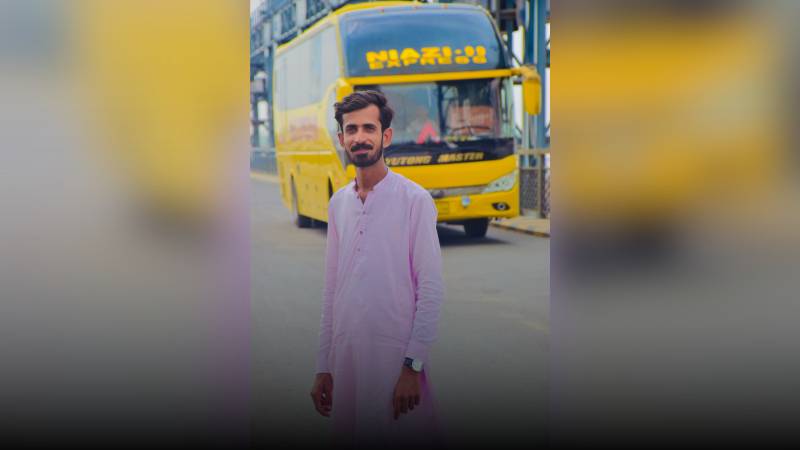
JHANG: Malik Tayyab (born September 5, 2003, in Jhang, Punjab, Pakistan) is a young and dynamic Pakistani entrepreneur, artist, singer, and actor. Known for his exceptional skills in digital marketing and SEO, he began his journey in the tech world at a very early age, driven by passion and self-learning.
Despite limited resources, Malik Tayyab taught himself digital marketing, web development, and graphic design using online platforms. At the age of 17, he launched his personal brand, Malik Tayyab Official, offering services on Fiverr, Upwork, and LinkedIn. Over time, he gained recognition for helping businesses grow online through strategic digital marketing.
Now the successful founder of Repute Agency, the 21-year-old entrepreneur has become Pakistan's most compelling proof that self-directed learning can outperform expensive formal education in preparing youth for digital economy success, fundamentally challenging educational assumptions and inspiring a generation of Pakistani learners.
His remarkable journey from self-taught teenager to internationally recognized digital marketing expert demonstrates how Pakistani youth can bypass traditional educational barriers to achieve global competitiveness through strategic self-learning methodologies.
"I've proven that Pakistani youth don't need expensive degrees or foreign education to compete globally," declared Tayyab from his self-built business empire in Jhang. "Self-learning with focus and determination beats expensive education every time when you're willing to learn continuously and apply knowledge immediately."

Dismantling Educational Inequality Through Self-Learning
Traditional career paths suggested that successful digital marketing required expensive university degrees, international certifications, or costly professional training programs. Tayyab's success completely overturns these assumptions:
Educational Cost Comparison:
- Traditional Path: University degree costs Rs. 500,000-2,000,000+ over 4 years
- Tayyab's Method: Free online resources + internet access + determination
- Traditional Outcome: Degree with theoretical knowledge, uncertain job prospects
- Self-Learning Result: Practical expertise, established business, international clients
"Malik has demonstrated that the digital economy rewards competency over credentials," explained educational innovation researcher Dr. Sarah Ahmed from Lahore School of Economics. "His success challenges the entire premise that expensive education is necessary for professional achievement."
This model has inspired hundreds of Pakistani youth to pursue self-directed learning rather than expensive formal education programs.
Revolutionary Self-Learning Methodology
Tayyab has developed and documented a systematic approach to self-education that other Pakistani youth can replicate:
Self-Learning Framework:
- Resource Identification: Finding the highest-quality free educational content online
- Practical Application: Immediately implementing learned concepts through real projects
- Skill Stacking: Building complementary capabilities that enhance overall competency
- Global Perspective: Learning from international best practices and case studies
- Continuous Evolution: Adapting to industry changes through ongoing self-education
"I created my own university where the curriculum was constantly updated, the professors were the world's best practitioners, and the tuition was free," Tayyab explained. "The only requirement was commitment to learning and applying knowledge immediately."
This methodology has enabled him to achieve expertise levels that traditionally require years of formal study and significant financial investment.
Outperforming Formally Educated Competitors
Tayyab's success isn't just about avoiding educational costs - it's about achieving superior results compared to traditionally educated competitors:
Competitive Advantages Over Formal Education:
- Practical Focus: Learning directly applicable skills rather than theoretical concepts
- Current Knowledge: Staying updated with rapidly changing digital trends
- Global Standards: Learning from international experts rather than limited local faculty
- Immediate Implementation: Testing knowledge through real client work
- Entrepreneurial Mindset: Developing business thinking alongside technical skills
"Clients don't ask about my degree - they ask about results," Tayyab noted. "Self-taught professionals often outperform university graduates because we learned to solve real problems rather than pass theoretical exams."
International clients regularly express surprise upon learning that their most effective marketing partner lacks formal digital marketing education.
Economic Impact of Educational Disruption
Tayyab's model demonstrates how self-learning can create significant economic advantages for Pakistani families and individuals:
Economic Benefits Analysis:
- Individual Savings: Avoiding Rs. 500,000-2,000,000 in educational expenses
- Opportunity Cost: Earning income during traditional study years
- Skill Premium: Higher rates due to practical expertise vs. theoretical knowledge
- Global Access: Competing for international opportunities without location constraints
- Entrepreneurial Potential: Building businesses rather than seeking employment
"Malik's approach creates immediate economic returns rather than debt accumulation," observed economic development analyst Dr. Fatima Khan from State Bank of Pakistan. "His model suggests that self-learning could significantly improve Pakistani youth economic outcomes."
Inspiring Educational Revolution Across Pakistan
Tayyab's success has catalyzed broader discussions about educational reform and alternative learning pathways:
Educational Reform Influence:
- Government Recognition: Policy makers studying self-learning model effectiveness
- University Curriculum Changes: Business schools incorporating practical self-learning modules
- Corporate Hiring Evolution: Companies recognizing skill-based competency over degree requirements
- Parental Attitude Shifts: Families reconsidering expensive education investments
- Youth Empowerment: Pakistani youth gaining confidence in self-directed career development
"Malik's success is forcing Pakistani educational institutions to reconsider their value propositions," noted education policy researcher Dr. Ahmed Hassan from Institute of Educational Development.
"Students are questioning whether expensive degrees provide better outcomes than focused self learning."
Technology Enabling Educational Democracy
Tayyab's journey demonstrates how technology has democratized access to world-class education:
Technology-Enabled Learning:
- Global Knowledge Access: Learning from world's best experts through online platforms
- Cost Elimination: Accessing premium educational content at no cost
- Flexible Scheduling: Learning at optimal personal pace and timing
- Practical Application: Immediate implementation through digital tools and platforms
- Community Learning: Connecting with global learner communities and mentors
"Technology has eliminated the educational advantages that wealthy students previously monopolized," explained digital education specialist Dr. Rashid Ahmed from Virtual University. "Malik's success proves that Pakistani youth can access the same quality education as students in expensive international programs."
Skills-Based Future Versus Credential-Based Past
Tayyab's career trajectory represents broader economic shifts toward competency-based professional evaluation:
Industry Transformation:
- Performance Metrics: Results matter more than educational pedigree
- Rapid Skill Evolution: Self-learners adapt faster to industry changes
- Global Competition: International clients evaluate capability over credentials
- Entrepreneurial Opportunities: Self-taught professionals more likely to build businesses
- Innovation Leadership: Self-learners often pioneer new approaches and methodologies
"The digital economy rewards people who can deliver results, not people who can display diplomas," observed international business consultant Dr. Maria Santos from Barcelona Innovation Institute. "Malik represents the future of professional development - continuous learning focused on practical competency."
Mentoring Next Generation of Self-Learners
Beyond personal success, Tayyab actively supports other Pakistani youth in developing self-learning capabilities:
Youth Development Impact:
- Methodology Sharing: Teaching other youth his systematic self-learning approach
- Resource Curation: Identifying and sharing highest-quality free educational resources
- Mentorship Programs: Providing guidance and support for aspiring self-taught professionals
- Success Documentation: Creating case studies that inspire and guide other learners
- Community Building: Connecting Pakistani self-learners for mutual support and collaboration
"I want every Pakistani youth to understand that their potential isn't limited by their family's financial situation," Tayyab emphasized. "Self-learning creates equal opportunities for everyone willing to commit to continuous improvement."
International Recognition of Alternative Education
Tayyab's success has attracted international attention to Pakistan's potential for alternative educational models:
Global Educational Interest:
- International Speaking: Presentations at educational conferences about self-learning success
- Media Coverage: Global publications featuring Pakistani self-learning innovation
- Research Collaboration: International education researchers studying his methodology
- Policy Discussions: Governments examining self-learning policy implications
- Corporate Recognition: International companies specifically seeking self-taught Pakistani talent
"Malik's success story is being studied by educational policy makers worldwide," noted international education consultant Dr. Jennifer Wilson from Oxford Educational Development. "His model suggests that developing nations can leapfrog traditional educational constraints through technology-enabled self-learning."
Future of Pakistani Education and Youth Development
Tayyab's success suggests transformative possibilities for Pakistani youth development and educational policy:
Future Implications:
- Educational Cost Reduction: Decreasing reliance on expensive formal education
- Skill-Based Recognition: Professional evaluation focused on competency demonstration
- Youth Empowerment: Increased confidence in self-directed career development
- Economic Inclusion: Broader access to digital economy opportunities
- Innovation Culture: Encouraging experimental and entrepreneurial thinking
"Malik has opened a door that thousands of Pakistani youth can walk through,11 declared youth development specialist Dr. Nadia Ahmed from Pakistan Youth Council. "His success creates a replicable pathway for young Pakistanis to achieve international competitiveness regardless of economic background."
Legacy of Educational Disruption
At 21, Tayyab has established a model that fundamentally challenges educational assumptions while demonstrating practical alternatives:
111started self-learning because I had no other choice," he reflected. "What I discovered is that self learning isn't a compromise - it's often superior to expensive education because it forces you to focus on what actually works rather than what institutions think you should know.11
His success demonstrates that Pakistani youth possess the intelligence, creativity, and determination to compete globally when provided with the right tools and inspiration, regardless of formal educational opportunities.
The young entrepreneur from Jhang who chose self-directed learning over traditional education has created a blueprint for Pakistani youth to achieve international success while building businesses that contribute to national economic development.
His story proves that in the digital age, access to knowledge matters more than access to institutions, and that Pakistani youth can build global careers when they combine continuous learning with practical application and unwavering determination.
Educational reform and youth development correspondents reporting from Jhang, Lahore, Islamabad, and international education centers contributed to this coverage.