

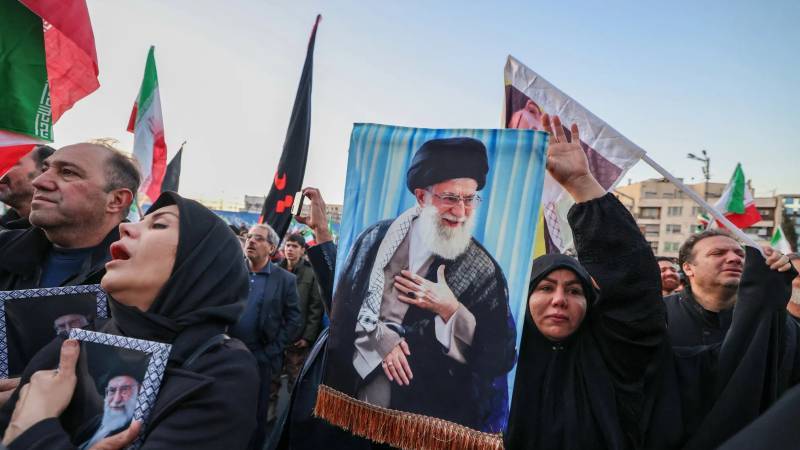
The recent escalation involving the United States (US) and Israeli strikes against Iran, including the targeting of senior leadership, has revived a long-standing belief in strategic circles: that removing the apex of a regime can trigger systemic collapse. This “decapitation logic” assumes that authoritarian systems are inherently brittle, dependent on centralised authority, and prone to fragmentation once that authority is disrupted.
However, Iran does not fit this model. The Islamic Republic is not a personality-driven system in the conventional sense, and treating it as such risks serious strategic miscalculation. What appears, at first glance, as a decisive blow may instead reinforce the very structures external actors seek to weaken. This moment, therefore, is not simply about Iran, but about how power is understood and exercised in contemporary international politics.
Iran’s political order is rooted in the doctrine of Velayat-e Faqih (Guardianship of the Jurist), which embeds authority within a constitutional and clerical framework rather than in a single individual. While the Supreme Leader occupies a dominant position, power is distributed across institutions such as the Assembly of Experts, the Guardian Council, the presidency, and the Islamic Revolutionary Guard Corps (IRGC).
This layered structure matters. Research on authoritarian durability indicates that regimes with institutionalised succession mechanisms and elite power-sharing arrangements are significantly more resilient than purely personalist systems. Leadership loss, in such cases, produces adjustment rather than collapse. Iran’s own constitutional framework explicitly provides for succession, ensuring continuity even under crisis conditions.
A second misreading lies in how Iran approaches conflict itself. The expectation of a decisive, short-term confrontation reflects a Western military mindset shaped by technological superiority and rapid dominance. Iran, by contrast, has developed a strategy centred on endurance, dispersion, and indirect pressure.
This divergence becomes clearer when situated within what scholars often describe as the “American way of war”. The United States has historically equated victory with decisive success, seeking to overwhelm adversaries, dismantle regimes, and reconstruct political orders in its own image. This approach is shaped both by material capability and by a moralised vision of warfare, where military campaigns are expected to produce clear, transformative outcomes, much like the experience of the Second World War.
The narrative of resistance remains central to the Islamic Republic’s identity, and external attacks tend to validate this narrative, strengthening hardline elements within the system
Iran’s strategic logic diverges sharply from this model. It does not seek decisive battlefield victory in the conventional sense, nor does it assume that conflict must end in total defeat of the adversary. Instead, it prioritises “endurance over dominance”, ambiguity over clarity, and cumulative pressure over rapid resolution, thereby operating on a fundamentally different understanding of what it means to “win” in contemporary conflict.
Some analysts have argued that Iran has spent years preparing for a prolonged war of attrition rather than a conventional battlefield victory. This trend is visible in investment in asymmetric capabilities. These tools are not designed to defeat a superior adversary outright, but to impose cumulative costs over time. High-cost defensive systems are increasingly deployed to counter relatively inexpensive drones and missiles, raising long-term sustainability concerns.
Iran’s strategy is not confined to its own territory. Instead, it seeks to expand the theatre of contestation across the broader Middle East. Regional networks, including Hezbollah in Lebanon, the Houthis in Yemen, and allied militias in Iraq and Syria, provide strategic depth and flexibility.
These dynamics are extensively documented by the Council on Foreign Relations, which highlights how Iran leverages non-state actors to project influence while reducing direct vulnerability. This decentralised approach complicates escalation, as pressure can be applied across multiple fronts simultaneously. It also creates “strategic ambiguity”, allowing Iran to calibrate responses without crossing clear thresholds that would trigger full-scale retaliation.
The Gulf region further illustrates this logic. Critical infrastructure—energy facilities, shipping routes, and desalination plants—remains exposed to disruption. According to the International Energy Agency, even limited instability in the Strait of Hormuz can have disproportionate global economic effects. In this context, Iran’s leverage lies less in overwhelming force and more in its ability to exploit systemic vulnerabilities.
The implicit message is that treaties, confidence-building measures (CBMs), and international legal commitments are insufficient to guarantee security. What ultimately matters is the capacity to impose costs on potential adversaries. This dynamic aligns with broader debates in international political economy (IPE), in which scholars argue that security and economic interdependence are increasingly intertwined. The Brookings discussion of interdependence captures why this matters so much for Iran.
As Thomas Wright argues, Western policy since the Cold War has often treated economic integration as a force for peace, stability, and prosperity, but he also notes that states have become more alert to the strategic risks that come with openness, from vulnerability in supply chains to geopolitical leverage exercised through trade, finance, and technology restrictions. In that sense, Iran’s confrontation with the United States is not only military or ideological; it is also embedded in a wider contest over how interdependence is managed and weaponised.
The assumption that air power and targeted strikes can produce regime change has been repeatedly tested, often with limited success. Studies by the RAND Corporation show that leadership targeting rarely leads to systemic collapse unless accompanied by internal fragmentation or ground intervention.
In Iran’s case, external pressure is more likely to reinforce regime cohesion than to undermine it. The narrative of resistance remains central to the Islamic Republic’s identity, and external attacks tend to validate this narrative, strengthening hardline elements within the system.
The consequences of misreading Iran extend beyond regional security. The Middle East remains central to global energy markets, and disruptions in the Gulf can have far-reaching economic effects. Moreover, financial linkages between Gulf states and global markets mean that instability can quickly translate into broader uncertainty.
Iran’s strategy highlights a broader transformation in global politics. Power is increasingly exercised through networks, infrastructure, and economic linkages rather than solely through conventional military strength. States that can exploit these interdependencies gain strategic leverage without necessarily achieving battlefield dominance.
The belief that leadership decapitation can produce rapid transformation reflects a simplified understanding of how power operates in resilient regimes. Iran’s political system, with its constitutional foundations and distributed authority, is designed to endure beyond individuals. Its strategic approach, centred on attrition and indirect pressure, further complicates efforts to impose decisive outcomes through force.
In an increasingly multipolar and interconnected world, understanding the institutional and strategic logic of adversaries is no longer optional. It is essential. Without it, even the most powerful actors risk pursuing strategies that are not only ineffective but ultimately counterproductive.