

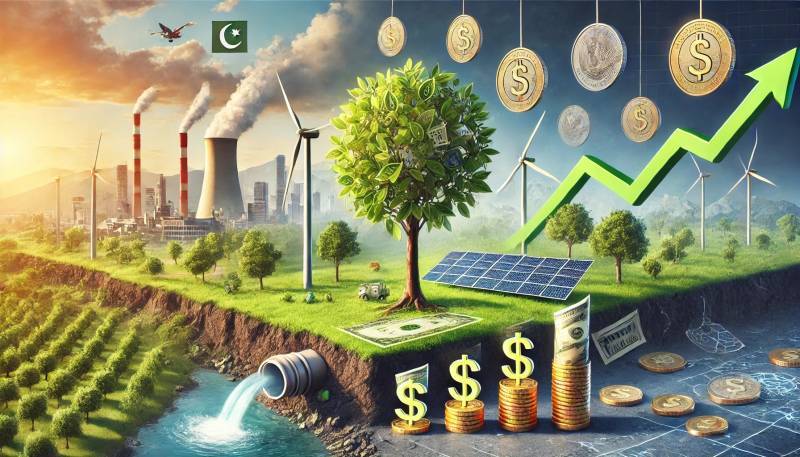
Pakistan’s survival hinges on its ability to address climate change as the defining challenge of our time. Ranked among the most climate-vulnerable nations, it endures extreme weather events including heatwaves, apocalyptic floods of biblical proportions, prolonged droughts, and crippling air pollution. For indeed the climate crisis has arrived at our doorstep — ferocious and unrelenting. It also faces significant disaster risk, ranking 23rd out of 194 countries as per the 2024 Inform Risk Index.
Such extreme weather events not only threaten access to basic necessities such as food, water, and healthcare, but also make climate finance an indispensable lifeline for maintaining human dignity and survival. In the landmark case of Province of Sindh v. Sartaj Haider (2023), the Supreme Court of Pakistan held that “a climate resilient adaptation plan including a detailed mechanism for utilization of financial support coming to Pakistan from the loss and damage fund, is the need of the hour.” Meeting the demand for climate finance therefore requires a well-designed, evidence-based strategy based on a deep understanding of the challenges we face and the full spectrum of solutions at our disposal. Anything less is simply not enough.
Climate finance refers to local, national or transnational financing from public, private and alternative sources of finance aimed at supporting adaptation measures to combat climate change. Its origins go back to the 1992 United Nations Framework Convention on Climate Change (UNFCCC), which established the principle of “common but differentiated responsibilities and respective capabilities”. The legal framework for climate finance includes (but is not limited to) the UNFCCC, the Kyoto Protocol and the Paris Agreement. These aren’t just international treaties; for together, they form the spine of climate justice—turning promises into policy, and ambition into action.
As for Pakistan, climate finance is not just a policy tool – it is the foundation of hope for a future where all citizens can live in dignity and security, and the promise of a better tomorrow. Ensuring climate finance is therefore the most important aspect of climate justice. It is not a luxury. And make no mistake this is not a question of generosity — it is a question of survival.
Climate finance in Pakistan is now fundamentally a human rights concern, as it is essential to preserving human life and human dignity
Climate finance is our lifeline, It is the bridge between crisis and resilience. It can help us strengthen our infrastructure, agriculture, water management, healthcare, displacement and migration, economic inequality, and disaster resilience. It must be mobilized on an unprecedented scale and made available on time to those who need it most. Pakistan's high vulnerability to climate change multiplies other risks and exacerbates the challenges to its human and economic development. Yet, despite this grim reality, Pakistan did not feature among the top ten recipients of climate finance.
It is estimated that the country needs $350 billion in investments by 2030 to strengthen its resilience and reduce greenhouse gas emissions. However, current climate finance inflows are far below this level. There is no denying that international financing is influenced by political power and policy preferences. However, to become a priority for international donors, the government should focus on improving geopolitical relations and demonstrate a strong commitment to building a resilient, self-sustaining economy.
While some important milestones have been achieved recently, including the development of the National Climate Finance Strategy 2024 and the Policy Guidelines for Trading in Carbon Markets, key challenges continue to revolve around policy fragmentation, lack of investor confidence, significant capacity constraints (especially in project development), limited public-private partnerships, and implementation failures.
As extreme weather intensifies, urgent investments in climate change adaptation, mitigation and resilience are critical to combat future disasters. Given Pakistan's limited financial capacity, its acute environmental and socioeconomic vulnerability, and its minimal contribution to global emissions, a decisive push is needed to position itself as a preferred recipient of climate finance.
We have the intellect, the resources, and the resilience to achieve this. The question is: do we have the courage to accept this challenge? Because one thing’s for sure: the cost of doing nothing is a bill we cannot afford to pay. Furthermore, climate finance must become a cornerstone of Pakistan's foreign policy, with a strategic focus on building partnerships and expanding its multi-stakeholder ecosystem to attract sustainable investment and promote long-term resilience.
Similarly, judicial control of climate finance, by requiring greater transparency and efficiency from government agencies responsible for applying or administering international climate funds, can oblige the government to prepare comprehensive, bankable adaptation and loss/damage projects.
By establishing a clear legal understanding that climate finance is linked to the right to life, health, and a sustainable environment, courts can rewrite the climate story, demanding accountability from both national governments and international organizations alike. If climate finance continues to fall short, the gap between developed and developing countries could widen, leading to what some call “climate apartheid,” where rich countries shield themselves from climate impacts while poorer countries are left exposed on the frontlines of disaster.
I for one cannot emphasise this enough that without climate finance, our right to life (Article 9) and our right to human dignity (Article 14) are under threat. Therefore, climate finance in Pakistan is now fundamentally a human rights concern, as it is essential to preserving human life and human dignity. For this great nation and other countries in the Global South, the key is to pursue a dual approach: holding the Global North accountable while building self-reliance through innovative financing and resilience strategies.
Through a joint, well-coordinated effort by all vulnerable countries, their voices can be amplified and they can secure a fairer share of climate finance to address their most urgent adaptation needs at the very earliest. Climate finance as an indispensable lifeline, enables countries like Pakistan to mitigate climate risks and secure livelihoods.