

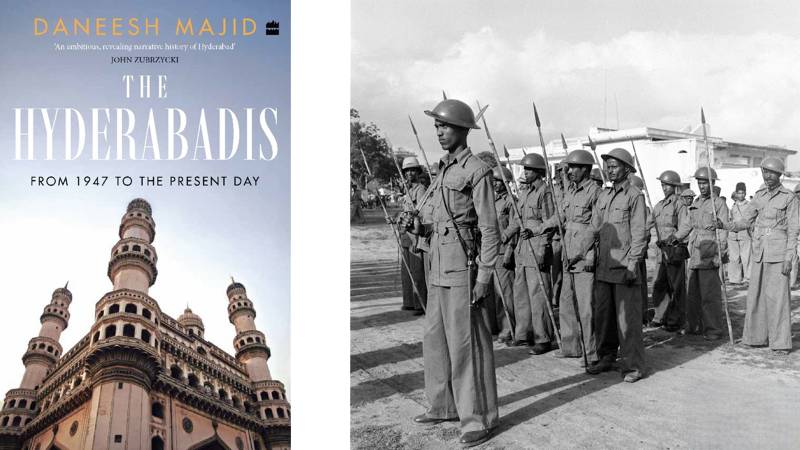
An excerpt from The Hyderabadis: From 1947 to the Present Day for TFT-ND
Bidar Bombarded
In the fateful year of 1948, Ishaq Ali ended up being transferred to Bidar. During Operation Polo, Ishaq happened to be in Hyderabad city for work. Anwar, who was seventeen then, was in Bidar when the Indian troops marched in. When Anwar heard fighter planes roaring and bombs going off, he and his family left the city and moved towards the villages. The Indian Army was mostly sticking to the urban areas as it marched towards Hyderabad city. Still, there would be at least 500 deaths reported from Bidar district as a result of Operation Polo. When Anwar returned to Bidar city after the storm had passed, he found that their house had been ransacked and looted.
Adil told me that his father was no sympathizer of Qasim Razvi, who he felt had carelessly led young people to the battlefield to get massacred. ‘The general impression was that the Razakar chief was ill-prepared to take on the Indian Army. He more or less sent them to the battlefield with sticks,’ he acknowledged. In his memoir titled The Tragedy of Hyderabad, Mir Laiq Ali, the last Prime Minister of Hyderabad, who also happened to be Ishaq Ali’s second cousin, attested to how the Majlis Ittehad-ul-Muslimeen had bitten off more than it could chew. During a rally organized by the MIM for the Nizam’s birthday in May 1947, Razvi was scouring the crowd of 50,000 people to see if they possessed any arms that could be collected by the Razakars. It was a doomed project right from the start. The Majlis militia would be no match for the five army columns and air force of the Indian Army.
Those who worked for the Nizam’s administration, like Ishaq Ali, suddenly found themselves out of favour and luck
Back in Bidar, Anwar was part of a group of young Muslim men who were rounded up and questioned by the Army. He was let go once the questioners were convinced that he had no ties to the Razakars. Still, the family felt that it would not be safe to stick around in Bidar. Hyderabad had not seen as much carnage as some of the other areas. Besides, Ishaq Ali was there. A local Hindu friend of Ishaq’s arranged for their safe passage to the train station and had someone accompany them to Hyderabad.
There may not have been as much violence in Hyderabad, but there was a sense among the city’s Muslims that something had changed forever. Those who worked for the Nizam’s administration, like Ishaq Ali, suddenly found themselves out of favour and luck. It was clear as day that the old order had passed, and the new military dispensation of the Indian government had different ideas about what they wanted the city to be. In these circumstances, many Muslims had begun to consider migrating to Pakistan.
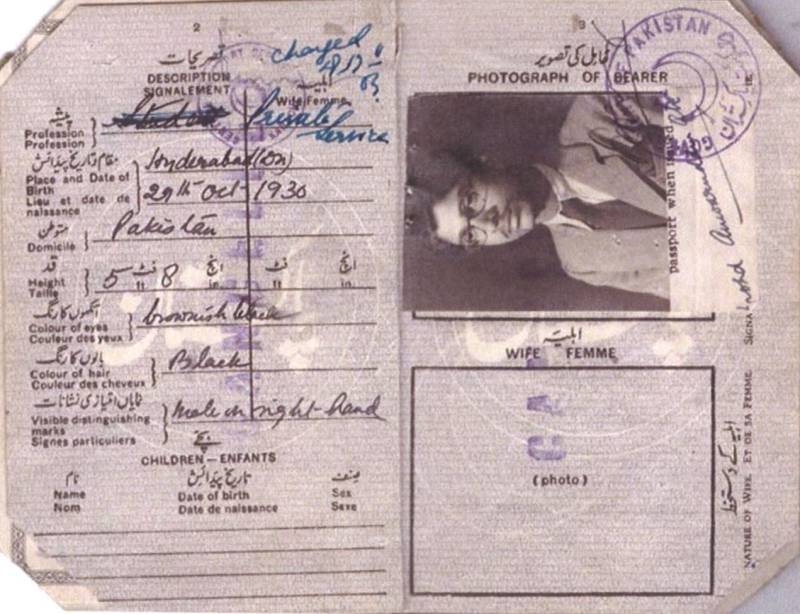
Pakistan Calling
As life limped back to normalcy, Anwar rejoined the first year of his BSc programme at OU. In spite of struggling initially, he obtained his degree with distinction. Soon after, Anwar had a long discussion with his father on their future, something that a lot of Hyderabadi Muslims were contemplating. Given that Adil’s father was the oldest of five siblings, Adil said that there was pressure on him to earn money or at least get another degree that would lead to a high-paying job.
Two choices lay in front of him—either pursue further studies at the Aligarh Muslim University or migrate to Pakistan for better economic prospects.
In the Sindh province where education levels were very low, migrants from India got important positions in the banking system. Notably, a number of Hyderabadis who had crossed over secured jobs in the State Bank of Pakistan. Anwar’s uncle, Arif, was already in Karachi, where many doctors who had studied at OU were settling down.
‘There is no better time to move to Karachi, with opportunities in abundance there for young graduates,’ Arif advised his nephew during a visit to Hyderabad in 1949.
After Ishaq Ali’s relative, who was also an assistant in the postal department, arranged a migration permit, Anwar boarded a ship from Bombay to Karachi. He reached Pakistan on 14 August 1950, the day on which the country turned three. For the first few days, he stayed in a rest house in the Manghopir area; after that, he went to his uncle’s house in Pir Ilahi Baksh Colony.
In less than a week, he sought admission at an engineering college in Lahore. Unfortunately, the new student intake was closed until next year. When he returned to Karachi, there was an offer to become an instructor at the Pakistan Air Force Training College. He gave the final tests at the Air Force Headquarters in Rawalpindi. But that opportunity did not pan out.
On the advice of his grandfather, Anwar also reached out to his father’s second cousin, Mir Laiq Ali. The last Prime Minister of Hyderabad also migrated to Pakistan, but under rather different circumstances—he had escaped house arrest by the Indian Government after sneaking out in a burqa and then catching a flight from Bombay to Karachi. In what was the first capital of Pakistan, Laiq Ali became a founder and major trustee of an entity that resettled Hyderabadi immigrants and helped young men land job opportunities.
The Hyderabad Trust
The last Prime Minister of princely Hyderabad was already an influential figure in the early days of Pakistan. The new country drafted him to serve as their special emissary to the US to request a $2 billion loan for immediate economic, agricultural, industrial, service and defence expenditures. He then served as an advisor in Pakistan’s defence ministry.
Laiq Ali had established the Hyderabad Trust (HT) with the Rs 2 million kitty that the seventh Nizam had gifted Pakistan before Police Action. The Trust was active in allotting houses, granting land, disbursing stipends and facilitating pensions for Hyderabadi migrants. The Liaquat National Hospital was also set up under its aegis.
One day, Anwar received a personal call from Laiq Ali. He had called to tell Anwar that he had been selected for industrial training in Ohio.