

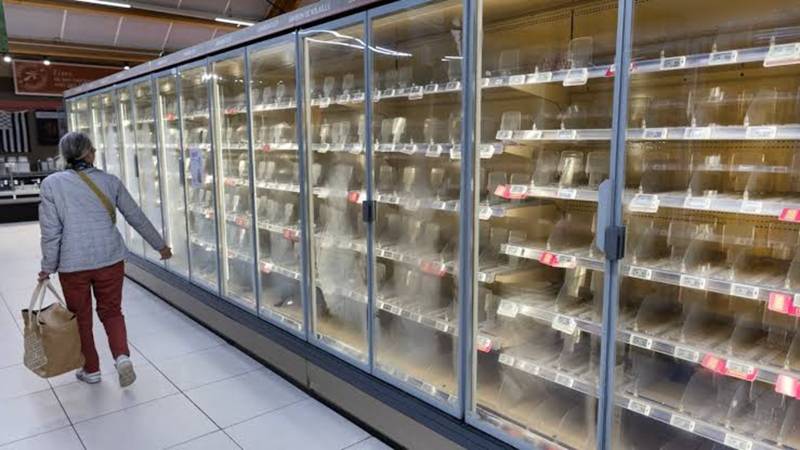
According to Le Monde (2026), at 4 am on the 12th of October, a delivery driver at an Intermarché supermarket near Bordeaux found a flooded cold-storage room. Its temperature had reached 50°C (122°F), setting off a sprinkler and making frozen food unsafe to sell. The store was among hundreds affected when attackers manipulated refrigeration systems across France. Finance Minister Roland Lescure said around 700 supermarkets had been hit (AP News, 2026), although the country's overall food supply was not at risk. For affected businesses, a change to equipment settings had already caused physical losses.
The incident exposes a weakness that conventional discussions of cybersecurity often miss. A company may restore its software and still lose the goods that software was supposed to protect. When storage temperatures rise, the decisive question is how much time remains before the damage becomes irreversible, and whether anyone on site is authorised to intervene.
The incident exposes a weakness that conventional discussions of cybersecurity often miss. A company may restore its software and still lose the goods that software was supposed to protect. When storage temperatures rise, the decisive question is how much time remains before the damage becomes irreversible, and whether anyone on site is authorised to intervene.
When Hours Become an Economic Liability
Connected controllers allow refrigeration specialists to supervise several sites remotely, adjust temperatures and schedule defrost cycles. Their efficiency is a genuine advantage. In France, attackers exploited those same capabilities, reportedly extending defrost cycles from one hour to eight and delaying alarms (Le Monde, 2026). Once the cold chain is broken, restoring a controller cannot make spoiled food saleable again. Disposal costs, emergency deliveries and missed sales can outlast the technical disruption.
A company may restore its software and still lose the goods that software was supposed to protect: when storage temperatures rise, the decisive question is how much time remains before the damage becomes irreversible
Outcomes varied. In a later incident involving Dixell equipment (Le Monde, 2026), staff at one supermarket near Bordeaux noticed abnormal readings and intervened before losing their stock; another retailer reported substantial losses. These cases are not controlled experiments, but show why rapid detection matters. Large retailers may replenish shelves from unaffected warehouses, whereas smaller stores and isolated communities have fewer alternatives. France avoided a national supply emergency. That distinction matters: localised financial damage is serious without being evidence of an imminent food crisis.
The Hidden Cost of Shared Technology
Independent businesses can rely on identical controllers or the same refrigeration contractor. A weakness in a widely used maintenance arrangement can therefore affect retailers that have no shared corporate network. Danfoss said many affected systems were obsolete or no longer supported (Le Monde, 2026). In August, researchers at Claroty identified vulnerabilities in the Danfoss AK-SM 800A interface and found thousands of management interfaces accessible online (Claroty, 2026). Danfoss issued updated firmware, but researchers have not established that these particular vulnerabilities caused the October incidents.
On the 21st of October, Vincent Strubel, head of France's cybersecurity agency ANSSI, pointed instead to equipment exposed directly to the internet, weak passwords and inadequate protection of remote access (Public Sénat, 2026). His assessment suggests that routine security decisions can matter more immediately than sophisticated exploits. The danger also differs by installation: an outdated internet-facing controller poses a different risk from a supported unit behind restricted access.
Responsibility is scattered across the same system. Store owners absorb losses, contractors control maintenance settings, and manufacturers determine how long products receive security updates. If none of them has a clear picture of who can disconnect remote access or authorise emergency changes, a known problem can continue until stock is lost. Operators need an inventory of connected equipment, supported software versions and assigned decision-makers, particularly when one contractor serves many locations.
Recovery Is a Decision, Not Just a Repair
Taking every controller offline would reduce exposure but also remove monitoring that prevents ordinary failures. A more workable approach combines restricted remote access, separated operational networks, independent temperature alerts and a tested local override. Staff must also know what to do when readings conflict or a technician cannot arrive.
Imagine a store manager trying to save refrigerated goods while a contractor worries about equipment damage and a corporate security team wants to contain an intrusion. Each concern is legitimate; waiting for unanimous approval may nevertheless destroy the stock. Emergency plans should establish who can isolate the connection, when food must be withdrawn and how the store can operate safely afterwards. The people making those decisions must rehearse them, rather than discover the chain of command during an attack.
The issue now extends beyond civilian supermarkets. On the 29th of October, Reuters reported that the Pentagon was investigating unexplained freezer malfunctions at commissaries on at least six US military bases as suspected cyber incidents (Reuters, 2026). Investigators had reached no public conclusion about the cause or any connection to France. The report nonetheless shows why refrigeration failures deserve attention wherever supplies depend on tightly controlled temperatures.
Regulation offers some help, though it cannot quickly replace equipment already in service. Under the European Union's Cyber Resilience Act (European Commission, 2026), certain vulnerability-reporting obligations began in September 2026, with principal product-security requirements due in December 2027. Most older products will not automatically be brought under those main requirements unless substantially modified. Retailers face a harder choice: invest in replacing equipment that still works or accept a risk that may remain invisible until several sites fail together.
Insurance may not close that gap. Brokers told Reuters that standard cyber policies often exclude spoiled stock and other physical losses without additional cover (Reuters, 2026). Policy wording matters, and there is little basis yet for predicting sector-wide premium increases. Better access controls and clear recovery responsibilities remain necessary whether a claim would ultimately be paid or not.
A hostile actor might one day exploit exposed commercial equipment to magnify disruption during a wider crisis, particularly where inventories and transport alternatives are limited. Yet no reliable public attribution has established state involvement in the French attacks, and the reported US malfunctions remain under investigation. Speculation should not obscure the practical lesson. As the EU cybersecurity agency ENISA warned in September, shared digital dependencies can spread the consequences of an intrusion (ENISA, 2026). Companies need to know which facilities depend on the same controls and who can act before a settings change becomes a supply problem. A temperature can rise in minutes; rebuilding lost stock and restoring disrupted deliveries takes much longer.