

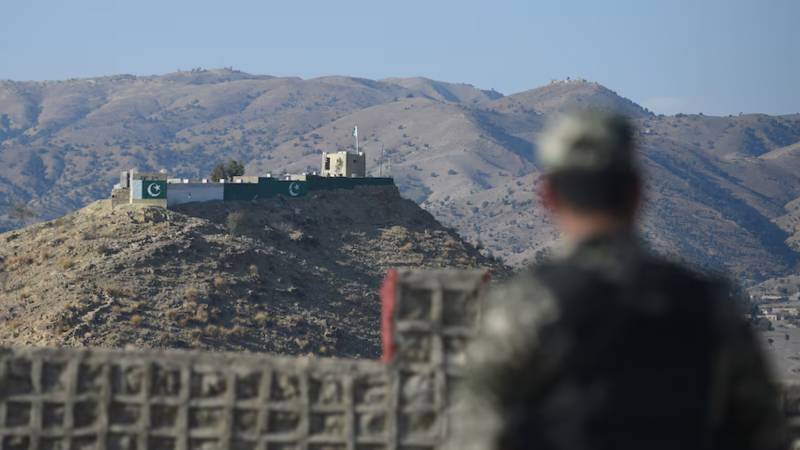
Relations between Pakistan and Afghanistan have long been characterised by mistrust, border skirmishes, and diplomatic tensions. At the heart of these persistent frictions lies the Durand Line, a 2,640-kilometre border drawn in 1893 between British India and Afghanistan. While Pakistan considers the Durand Line an internationally recognised border inherited after independence in 1947, successive Afghan governments have refused to formally recognise it. This historical disagreement has not only shaped bilateral relations but has also contributed to security challenges, cross-border militancy, and regional instability.
The origins of the dispute lie in the colonial politics of the late nineteenth century. In 1893, Sir Mortimer Durand, representing British India, signed an agreement with Afghan Amir Abdur Rahman Khan to demarcate a boundary separating Afghanistan from British-controlled territories. The agreement was part of Britain’s broader strategy during the “Great Game” to create a buffer zone between its Indian empire and Tsarist Russia. The Durand Line effectively divided the Pashtun tribal areas, placing many Pashtun tribes under British administration while others remained within Afghanistan.
Although the agreement was legally recognised by the British government and later reaffirmed through subsequent treaties in 1905, 1919, and 1921, Afghanistan has historically argued that the border was imposed under colonial pressure and therefore lacks legitimacy.
Afghan leaders have maintained that the Durand Agreement was a temporary arrangement between Amir Abdur Rahman Khan and British India, rather than a permanent international boundary. This argument gained prominence after Pakistan’s independence in 1947, when Afghanistan became the only country to oppose Pakistan’s admission to the United Nations, largely due to the unresolved border issue.
However, Pakistan maintains that the Durand Line is a settled international boundary based on the principle of state succession in international law. When Pakistan emerged as a sovereign state in 1947, it inherited the territorial arrangements and treaties of British India, including the Durand Line.
Many international legal scholars and institutions support this interpretation, arguing that newly formed states typically inherit the borders of their predecessor states to avoid territorial disputes. Similar principles have been applied in Africa and other post-colonial regions, where colonial borders were retained to maintain political stability.
The lack of trust created by the border dispute has repeatedly undermined initiatives aimed at expanding trade corridors, transit agreements, and infrastructure projects
Despite this legal argument, the dispute has persisted due to political and ethnic considerations. The Durand Line divides the Pashtun population between Pakistan and Afghanistan, creating a sensitive identity issue. The Afghan governments have historically promoted the idea of “Pashtunistan,” a concept advocating for an independent or unified Pashtun homeland that would include parts of Pakistan’s Khyber Pakhtunkhwa province and former tribal areas.
During the 1950s and 1960s, Afghanistan openly supported Pashtun nationalist movements, which significantly strained relations with Pakistan and even led to border closures and diplomatic confrontations.
The dispute has also had serious security implications. The porous nature of the border, combined with the lack of mutual recognition, has made the Durand Line one of the most volatile frontiers in the region. Militants, smugglers, and armed groups have frequently crossed the border, exploiting the difficult terrain and weak state control.
For instance, during the Soviet–Afghan war in the 1980s, millions of Afghan refugees entered Pakistan through this border region, and various militant groups used the tribal belt as a base of operations. In the decades since, both Pakistan and Afghanistan have accused each other of harbouring insurgents responsible for attacks across the border.
Pakistan has increasingly attempted to formalise and secure the border in recent years. The construction of a border fence along the Durand Line, initiated in 2017, is one such effort. Islamabad argues that fencing is necessary to control illegal crossings, prevent militant infiltration, and manage the movement of people between the two countries. Afghan authorities, however, have criticised the project, claiming it further legitimises a boundary they do not officially recognise. This disagreement has occasionally led to clashes between Pakistani and Afghan border forces.
Beyond security concerns, the Durand Line dispute also affects economic cooperation and regional integration. Pakistan and Afghanistan share deep cultural, historical, and trade links, and both countries stand to benefit from stronger connectivity. Afghanistan relies heavily on Pakistan’s ports for international trade, while Pakistan views Afghanistan as a gateway to Central Asia. Yet, the lack of trust created by the border dispute has repeatedly undermined initiatives aimed at expanding trade corridors, transit agreements, and infrastructure projects.
Nevertheless, it is important to recognise that the dispute cannot be resolved solely through legal arguments or military measures. The Durand Line issue is deeply embedded in historical narratives, ethnic identities, and political calculations on both sides. Any lasting solution will require diplomatic engagement, confidence-building measures, and a willingness to prioritise regional stability over historical grievances.
Ultimately, the Durand Line dispute illustrates how colonial-era decisions continue to shape contemporary geopolitics. More than a century after it was drawn, the line remains both a physical and psychological boundary dividing two closely connected societies. If Pakistan and Afghanistan hope to move toward a more stable and cooperative future, they must address this historical legacy through dialogue rather than confrontation. Only by acknowledging the complexities of the past can the two neighbours begin to build a relationship based on mutual trust and shared interests.