

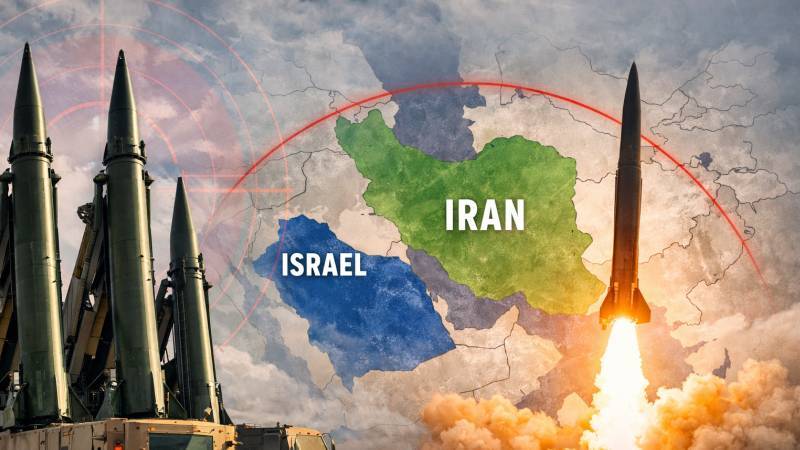
Wars test judgment as much as strength. The joint US–Israeli aggression against Iran has opened a volatile chapter in Middle Eastern politics. The legality and strategic logic of this war will remain contested. What has already reshaped the regional equation, however, is Tehran’s instant decision, after the Supreme Leader’s killing, to widen the conflict into the Arab Gulf.
The Gulf states were not parties to the confrontation. They had publicly called for restraint, supported diplomatic mediation, and consistently emphasised de-escalation. Oman’s mediation reportedly produced signs of progress before hostilities began, and even after the first strikes, Gulf capitals reiterated the preference for dialogue. Strategically, the Gulf was a grey zone: geographically proximate and hosting US defence facilities, yet politically committed to preventing escalation.
Iran’s retaliation against US bases was anticipated. Tehran had publicly declared that such facilities would be targeted in the event of an attack. What was not expected was the extension of strikes to energy installations, commercial infrastructure and diplomatic sites across Saudi Arabia, the UAE, Qatar, Bahrain, Kuwait and even Oman. The reported targeting of the US embassy in Riyadh marks a further step up the escalatory ladder. By widening its retaliation in this manner, Tehran has fundamentally altered the character of the conflict, transforming a US/Israel–Iran confrontation into a broader security crisis for the Gulf region.
Saudi Arabia’s response is calibrated but firm. It has condemned violations of sovereignty, reaffirmed the priority of regional stability and activated defensive preparedness, placing its capabilities at the disposal of Gulf partners. The UAE, Qatar, Kuwait and Bahrain have also issued coordinated statements underscoring territorial integrity and rejecting aggression. Air defence systems have been reinforced, energy infrastructure protection intensified and internal security heightened. Rather than dividing the GCC, the escalation has consolidated it. The Gulf response has so far prioritised containment rather than retaliation.
For the Gulf states, however, the implications are not only tactical but strategic. The March 2023 China-brokered normalisation between Riyadh and Tehran was not symbolic. It reflected a deliberate recalculation. Diplomatic ties were restored after a seven-year rupture. High-level channels reopened. Security dialogues resumed. The underlying assumption was that coexistence served both sides better than permanent confrontation.
By extending hostilities into Gulf territory, the Iranian regime has placed that recalibration under strain. Gulf capitals must now reassess whether normalisation reflected a genuine strategic shift in Tehran or merely a tactical pause. The regime’s structural orientation, defined for decades by ideological confrontation with the United States and Israel, nuclear ambiguity and reliance on sectarian proxy networks, appears unchanged.
As a strategic defence partner of Saudi Arabia and a close ally of the Gulf states, Islamabad must balance formal commitments with its stated preference for diplomatic resolution
The historical record informs this reassessment. Since 1979, Gulf–Iran relations have oscillated between cautious engagement and tension. The post-Arab Spring period intensified Iranian-sponsored proxy warfare across Yemen, Lebanon, Syria and Iraq. In recent years, however, Gulf policy shifted decisively towards de-escalation. Saudi Arabia’s Vision 2030, the UAE’s diversification drive, and Qatar’s global energy and logistics strategy all depend on stability. The Gulf development model prioritises infrastructure, tourism, finance, energy continuity and investor confidence. Sustained confrontation undermines that model.
The current escalation reintroduces strategic uncertainty and narrows diplomatic space. Had the conflict remained confined to the combatants, Gulf states could have preserved leverage as mediators if the war prolonged. By striking neighbouring sovereign territory, including energy facilities and commercial infrastructure, Iran has reduced its own diplomatic flexibility. Even if the regime endures institutionally, trust in its immediate neighbourhood has been weakened.
There is also an information warfare dimension. A controversial Washington Post report alleging prior encouragement of US action by the Saudi Crown Prince appeared designed to imply Gulf complicity in the strikes. The report was denied. Given the paper’s previous hostile coverage of Saudi leadership, the timing and framing were significant. Such narratives risk reinforcing suspicions and feeding escalation. Yet media narratives did not launch Iranian missiles and drones against the Gulf nations. The decision to widen the theatre was operational and sovereign.
This escalation was not accidental. It reflects a deliberate calculation within Iran’s layered power structure, particularly the IRGC, which directs security strategy and oversees regional proxy networks. Hezbollah’s renewed activity has already intensified Israeli operations in Lebanon. The Houthis have yet to enter the confrontation in full; should they do so, critical maritime corridors could face severe disruption. By targeting major oil and LNG facilities in Saudi Arabia and Qatar, and threatening the Strait of Hormuz, the apparent objective is to raise the economic cost for Gulf states to a level that pressures them to influence Washington towards de-escalation.
Opposition to unilateral military action remains a consistent principle in the Arab Gulf. Violations of sovereignty, whether through the US–Israeli aggression against Iran or through Iran’s retaliatory expansion into neighbouring states, erode the state-based regional order the Gulf has sought to stabilise. Efforts by any party to reshape regional alignments through force carry enduring consequences. For this reason, GCC states are unlikely to align militarily with either side. The gravest costs, however, will fall upon the Iranian people, who face the human and economic toll of strategic choices made by their leadership. It is they who deserve our sincere sympathy and moral support.
As for Pakistan, it is indirectly impacted by the potentially destabilising transformation in Gulf security dynamics. As a strategic defence partner of Saudi Arabia and a close ally of the Gulf states, Islamabad must balance formal commitments with its stated preference for diplomatic resolution.
Pakistan condemned the killing of Iran’s Supreme Leader at the diplomatic level and reiterated support for dialogue at the UN Security Council. Simultaneously, it cannot disregard attacks on Gulf partners with whom it maintains structured security cooperation and institutional military ties. That is why the country has condemned the violation of the sovereignty of its Gulf allies and pledged to stand with them at this critical juncture.
Domestically, the spillover has been visible. Protests following the killing of Iran’s spiritual leader have occurred in several cities, particularly Karachi and Skardu, prompting heightened security deployments. Pakistan’s priority remains internal stability, especially at a time when it is also faced with the threat of TTP terrorism due to the ongoing conflict with the Afghan Taliban regime in Afghanistan. Pakistan has no role in the current Iran–US/Israel confrontation, nor in the preceding tensions. However, the expansion of hostilities into the Gulf complicates Pakistan’s external positioning and places additional strain on its domestic cohesion.
Just to reiterate, the GCC states did not initiate this war. Their stated objective remains defence and containment. By extending retaliation into a grey zone that had advocated diplomatic restraint and prioritised stability and progress, the Iranian regime has expanded the conflict geographically without securing strategic gain. Instead, it has consolidated Gulf coordination, revived dormant mistrust and diminished its own diplomatic manoeuvrability.
The trajectory of the war remains uncertain. What is already evident is that escalation without strategy carries costs. By widening the battlefield to include neighbours that had chosen dialogue over confrontation, the Iranian regime has altered regional perceptions in ways that will outlast the ongoing war. In a region where economic transformation and stability are hard-earned, that may prove the most consequential miscalculation of all.