

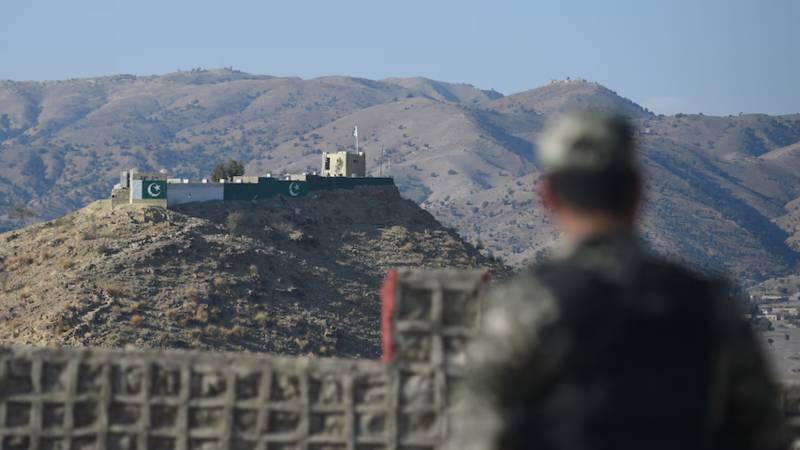
Times are such and narratives so many that everyone has a point of view and an opinion on anything under the sun. Today, the most pressing issue seems to be the Durand Line (as the Afghans like to call it), or the international border between Pakistan and Afghanistan (as Pakistan likes to address it). I, for one, do not think the name has any significant effect on the factual position of this dispute.
The Afghan position is that since this was an agreement between British India and Afghanistan, it is not recognised as a valid one between Pakistan and Afghanistan today. This is, of course, not legally supported by international law, which defines the convention specifying that a successor State inherits the agreements made by the government in place before it. It’s clearly defined in the United Nations-recognised and stated laws related to the principle of state succession (uti possidetis juris).
There is also a false contention that the agreement was for only a hundred years – not true. Nowhere is it mentioned that it was for a hundred years. Then the Afghans like to argue that it was an agreement made under duress after the Treaty of Gandamak. The Treaty of Gandamak was made between Yakub Khan and the British, signed on 26 May 1879 by King Mohammad Yaqub Khan of Afghanistan and Sir Louis Cavagnari of the British Government of India at a British army camp.
Whereas it involved forfeiting territory and areas to the British, it was never the instrument that led to the demarcation of the border as specified in the Durand Protocol demarcating the area. The Afghans further argue that it has divided the Pashtun tribes and that they have a right to be unified, and thus claim that the territory up to the River Indus is put before us.
The Pashtuns make up 48% of the Afghan population and amount to 15 million. In Pakistan, the Pashtuns are 18% of the population, but amount to 38 million. How does one expect a larger portion of the Pashtun population to leave their country and join a smaller portion in another one by fiddling with the border? In any case, why would anyone want to voluntarily go to Afghanistan from Pakistan, when Afghan refugees have so often demonstrated that they would rather live here in Pakistan and had to be forced out!
The Afghans, knowing that Roberts was soon to retire, delayed the process on one pretext or another till Roberts retired. The task was then given to Mortimer Durand, who undertook the task in 1893
Whereas I think this matter is part of history and goes back to the late 1800s, yet people narrate it in a manner which suits their line of argument, and we can never get to a final position on this matter. Nevertheless, since this issue comes up again and again, I thought I should place the reality before all so that they can make a judgment on their own.
First of all, based on historical records, the matter was initiated by King Abdur Rehman of Afghanistan, who ascended the throne in 1880, and who wrote to Lord Dufferin, the Viceroy, in 1885/6. The letter is on record and available in the British archives, but the whole process is a volume of correspondence between the British and the Afghans and not any one singular letter. The original letter is denied by the Afghans, but it actually exists.
The letter was inspired because of Russian expansionism in the north of Afghanistan a little earlier, and Abdur Rehman wanted that the southern and eastern borders to be demarcated in a similar fashion as they had been done between the Russians and the Afghans under British facilitation. This letter is preserved in the British India Foreign Department Records (held at the India Office Records, British Library, London). It is referenced in Selections from Records of the Government of India, Foreign Department: Afghanistan, No. CXXXII (Frontier Affairs), Calcutta, 1899. It is also in Abdur Rehman Khan’s own memoir, The Life of Abdur Rehman, Amir of Afghanistan (1900), which paraphrases rather than reproduces the letter.
The content of the letter is summarised below and paraphrased as follows:
The Amir wrote to the Viceroy (Lord Dufferin) expressing his desire to have the limits of Afghanistan and British India clearly defined in order to prevent future disputes and misunderstandings between their frontier tribes.
He emphasised that the absence of a demarcated boundary had led to constant disturbances, raids, and clashes along the frontier, and he requested that the British Government send representatives to negotiate and define a permanent boundary line. Abdur Rehman added that a clear and mutually agreed frontier would strengthen the ‘friendship and peace’ between the British Government and prevent ‘ill-wishers’ (a veiled reference to Russia) from creating friction.
This is further corroborated in British records where the paraphrase of the same letter appears in Foreign Office Despatch (India Office Records, File No. 187F/1885), where Dufferin notes: “His Highness has addressed to me a communication suggesting that the frontier line between Afghanistan and British Indian possessions of Her Majesty’s Government should be more distinctly defined, with a view to preventing possible misunderstandings between the subjects of the two States.”
This correspondence led to the British detailing of General Roberts to undertake the task of demarcation, but the Afghans were wary of him and did not trust his judgment because he had led the expedition in the War of Retribution, where the British had avenged themselves for the reverses they had suffered in the First Afghan War. They totally laid Kabul to waste and were ruthless in their vindication.
The Afghans, knowing that Roberts was soon to retire, delayed the process on one pretext or another till Roberts retired. The task was then given to Mortimer Durand, who undertook the task in 1893.
If the division of the Pashtuns is the pressing issue, then the Line should be moved further west to integrate the Afghan Pashtuns into Pakistan and not the other way around
The relevant primary source extract from The Life of Abdur Rehman, Amir of Afghanistan, Volume II (1900), written by Amir Abdur Rehman himself and edited by Sultan Mahomed Khan, is reproduced below as the Amir’s own account in his own words:
“In the early days of my reign, when I saw the restless state of the frontier tribes and the trouble caused by their disputes, I considered it wise to have the limits between territories of Afghanistan and those under the British Government properly defined. I therefore wrote to the Viceroy of India, Lord Dufferin, saying that as the friendship between the two governments was firm and sincere, there should be no uncertainty as to the boundaries of each side, because such uncertainty was the cause of many disturbances and misunderstandings.
I suggested that the boundary line between Afghanistan and the territories under British rule should be clearly marked, so that each government might know the extent of its own possessions, and that the tribes living on the border might no longer have occasions for quarrels.
His Excellency replied in friendly terms, expressing his desire also that peace and order should be maintained, and that the friendship between the two governments should be strengthened. But he thought it was not necessary to fix a boundary line, as the friendship between us was too strong to admit such disputes.”
So, after this summary of how the Durand Line came about, what is clear from the historical perspective is that it was an Afghan initiative and not a British one – in fact, the British at first did not even want a formal demarcation. There was no duress or pressure on the Afghans, and the process was the product of their own assertions.
The Treaty of Gandamak and the Second Afghan War were fought between Yakub Khan and the British in 1879; the correspondence between the British and the Afghans was initiated by Abdur Rehman in 1885, and, as such, the Gandamak War was not the cause of any demarcation process.
Now, about the validation of the Line over the years:
- First ratified between Abdur Rehman of Afghanistan and Sir Henry Mortimer Durand (Foreign Secretary of British India), 12 November 1893.
- Second ratification by Amir Habibullah (successor of Abdur Rehman) and the British Indian Government in 1905.
- The third ratification between Amir Amanullah and the British Indian Government on 8 August 1919 in Rawalpindi.
- Fourth ratification was a confirmation of the 1919 agreement in 1921, which explicitly confirmed “the validity of all previous border agreements which include the Durand Line”.
Nowhere is the treaty time-bound, and at no time was it imposed on the Afghans. If the division of the Pashtuns is the pressing issue, then the Line should be moved further west to integrate the Afghan Pashtuns into Pakistan and not the other way around.
It is hoped that this note is read, understood, and noted that the international border between Afghanistan and Pakistan was inherited by Pakistan as per international law as specified; the ethnicity favours Pakistan’s position, so does history, just as geography stands to vindicate Pakistan’s stand. They should now put the matter to rest, and all Afghans be given a copy of this note who do not agree with the alignment of the border.