

In April 2022, after Imran Khan lost a parliamentary vote of no confidence, Dr. Nadeem Malik, Senior Lecturer, School of Social and Political Sciences, University of Melbourne, in an elaborate analysis suggested that the collapse of another hybrid government might open a narrow path towards stronger civilian rule.
The condition was clear: political parties had to organise their members, practise democracy and confront corruption. More than four years on, that opportunity has largely been squandered. The continuing confrontation over Imran Khan is one consequence of the parties’ own failure to build a political order able to settle disagreements through law, elections and negotiation.
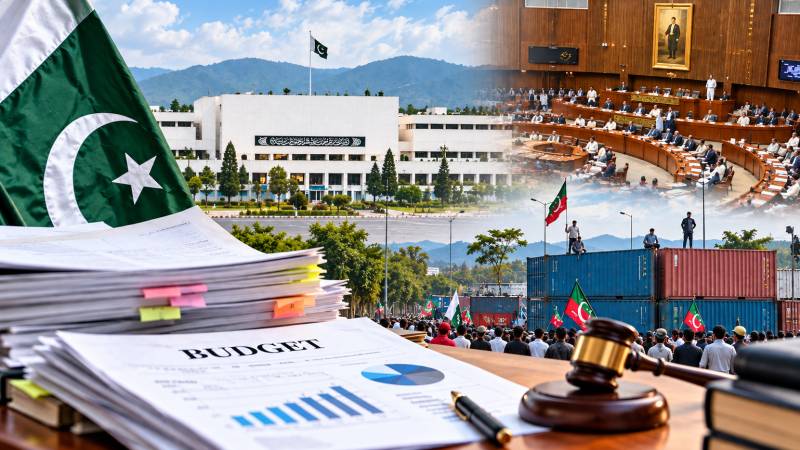
A September Financial Times report described the preparations for another protest in Islamabad and the extraordinary persistence of Imran Khan’s following despite his imprisonment. Its account captures the immediate struggle. The pivotal question is why the parties that replaced him have not offered a convincing democratic answer to his popularity. Containers can close a road; they cannot repair a broken relationship between voters and their representatives.
The Pakistan Muslim League-Nawaz (PML-N) and Pakistan Peoples Party (PPP) once knew the cost of subordinating politics to arrangements made outside parliament. They endured disqualification, exile, prosecution and curtailed terms. Their Charter of Democracy in 2006 recognised that parties must stop seeking advantage through the other’s exclusion. When Imran Khan was removed through the constitutional procedure On April 10, 2022, these parties could have renewed that compact and extended it to Pakistan Tehreek-e-Insaf (PTI).
The Charter was an undertaking between parties that had learned what happens when an opponent is denied a fair contest. It promised oversight and provincial autonomy. A party cannot demand constitutional restraint while in opposition and regard it as a nuisance once it sits on the treasury benches. The 2022 transition offered PML-N and PPP a chance to govern without inheriting the methods they had once protested.
Instead, the political contest became a struggle to decide whose turn it was to be kept out. That history does not absolve Imran Khan. His alliance government also treated opponents as enemies and mistook the backing of powerful institutions for durable political consent.
PTI promised to break with the old system but recruited many of its familiar figures and concentrated authority around one leader. Its present demand for fair process is legitimate; the democratic principle behind that demand must also govern how it treats rivals, judges, journalists and dissenters if it returns to office. No party earns a permanent exemption from the standards it invokes for itself.
The test of civilian leadership comes when a party has the power to protect an opponent’s rights. Political leaders failed that test when they accepted shrinking space for rivals as a convenient feature of government. Each round of exclusion provides a precedent for the next. A parliament that does not defend the opposition’s right to sit, speak and contest cannot expect the public to regard it as the place where national disputes are resolved.
Pakistan’s immediate need is not another arrangement that declares the crisis solved. It is for its parties to become institutions that voters can trust, opponents can negotiate with and elected representatives can hold to account.
The National Assembly has committees empowered to examine ministries’ expenditure, administration and policies. Its Public Accounts Committee can question how public money was spent. Party whips too often treat an independent question as disloyalty and ministers treat scrutiny as an ambush. Put budgets, procurement, loan conditions and implementation reports before members in time for examination. Let opposition legislators chair inquiries and publish dissenting views. Parliament must do more than vote the cabinet’s decisions through.
The disputed 2024 election deepened this crisis of representation. Whatever party one supports, the strong vote for candidates associated with PTI should have prompted a serious political response: transparent scrutiny of contested results, recognition of the opposition’s parliamentary role and a willingness to negotiate.
The ruling parties have preferred to count seats while leaving the question of public trust unanswered. PTI, in turn, needs to use parliament and provincial government to demonstrate that it can do more than mobilise anger. Street protest is a democratic right, but it cannot substitute for organisation or a programme of government. The lesson of February 2024 is difficult to evade: PTI-backed independents won the largest number of directly elected National Assembly seats, although no group secured a majority. A coalition was legally possible; ignoring what that vote expressed was politically costly. If a result is challenged, examine the original polling-station record and decide petitions promptly in public, with reasons.
Endless arguments over forms teach voters that procedure is a weapon. The opposition should submit evidence to the competent forums and accept a fair finding. The government should not fear the same test. What would it mean for parties to govern on their own authority? It begins inside the parties. Leadership contests, financial accounts, selection of candidates and policy debates must be open enough to give members a real voice.
Pakistan has a legal requirement for intra-party elections; meeting it on paper is no substitute for competitive internal politics. An assembly of loyalists chosen by one family or one leader cannot sustain independent legislative judgment. A young organiser who spends years working in a constituency should not lose the party ticket to a late-arriving notable with better connections. Members need access to accounts and a vote in choosing leaders; women and younger workers need positions that matter, not ceremonial wings. This is slower than assembling “electables” before polling day. It produces a party capable of surviving a leader’s imprisonment, defeat or retirement. Pakistan has too many political brands and too few political institutions.
It also requires parties to surrender some of their own control. Under Article 140A of the Constitution, provinces must devolve political, administrative and financial authority to elected local governments. Successive provincial administrations have treated cities and districts as extensions of their secretariats. Elected councils with secure terms, predictable transfers and revenue powers would give citizens a way to judge performance close to home. Parties that will not share power with their own cities cannot persuasively complain that power is concentrated elsewhere.
This tests every party, including PTI in Khyber Pakhtunkhwa and the PPP and PML-N in the provinces where they hold power. Municipal councils cannot plan transport or drainage if provincial departments retain the staff, budgets and authority to undo their decisions. Nor can a mayor answer for a city if the province rewrites the local system before the next election. Give councils fixed terms, timely elections, auditable records, defined taxes and formula-based transfers. Publish budgets ward by ward. A citizen who can challenge an inflated contract locally has a stronger stake in democracy than any slogan broadcast from Islamabad.
Economic policy offers another measure. Governments of different colours have asked households and firms to carry the cost of repeated fiscal emergencies while preserving exemptions, administrative privileges and waste. They celebrate agreements with lenders as achievements without showing how the next cycle of borrowing will be avoided.
Fiscal reform needs published accounts, an honest review of spending, a simpler tax system and a credible plan for public services. Citizens will tolerate difficult choices more readily if political leaders make the same sacrifices and show where the money goes. This requires more than another pledge to “broaden the tax net”. Parliament should see which exemptions survive each budget, who receives them, what is owed in refunds and what each new loan finances.
The Public Accounts Committee should track whether reform projects deliver what they promised. Provinces should publish comparable accounts and transfers to councils. Governments conceal these choices and then ask the public to believe austerity is unavoidable. Open accounts would expose bad decisions by all parties.
A workable democratic compact would have to be specific. The government and opposition should agree that election disputes will receive credible adjudication. Political workers must have ordinary courts and due process. Parliamentary committees must obtain the information needed to scrutinise spending. Judicial appointments and constitutional changes must follow open debate rather than hurried bargains. Neither side need renounce its political case to accept these rules.
Both must accept that today’s protections for an opponent may be tomorrow’s protections for themselves. Dialogue on these terms cannot begin with a demand that one side admit defeat. The ruling coalition should treat PTI as a political competitor with a large constituency.
PTI should make room for negotiation without treating every interlocutor as a traitor. Their leaders should say plainly that violence against people or public property is unacceptable and that peaceful assembly and fair trial are rights, regardless of party. Reconciliation will be slow, but that is what politics is all about.
The hope expressed in 2022 was cautious. The end of Imran Khan’s first government did not itself create civilian authority; it gave political parties a chance to earn it. They missed that chance by seeking short-term security in one another’s weakness. Pakistan’s immediate need is not another arrangement that declares the crisis solved. It is for its parties to become institutions that voters can trust, opponents can negotiate with and elected representatives can hold to account. Until they do, the country will keep mistaking management of a political rival for repairing its democracy.