

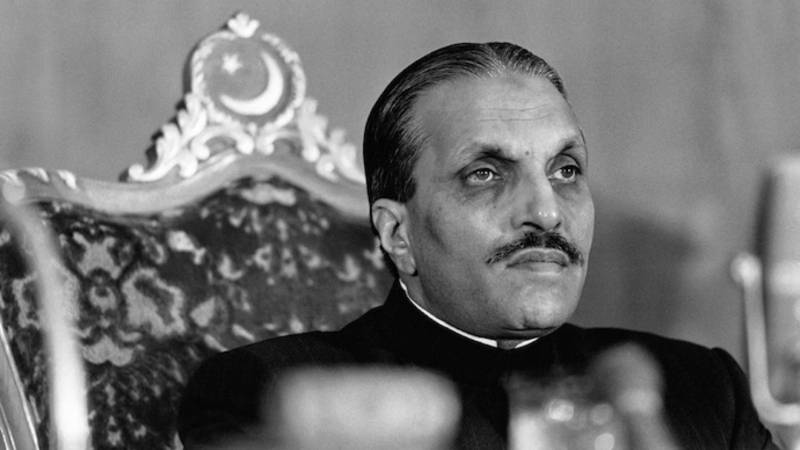
From 1977 to 1988, Pakistan came under the shadow of General Muhammad Zia-ul-Haq; a man whose rule did not merely govern but genetically altered the ideological, legal, religious, and institutional DNA of the state. Zia did not simply impose a dictatorship; he engineered a theocracy that continues to haunt Pakistan’s politics, society, and global identity.
1. Islamisation of Law: Replacing the Constitution with Dogma
Zia’s push to Islamise Pakistan’s legal system began with the infamous Hudood Ordinances in 1979. These included the Zina Ordinance, which conflated rape with adultery and the Qazf Ordinance, which criminalised false accusations of adultery. The punishments, stoning to death for adultery, amputation for theft, flogging for alcohol consumption, were to be enforced under Islamic standards of evidence, such as requiring four male adult Muslim witnesses to prove rape. This burden of proof meant that countless women who reported sexual assault were instead accused of adultery when they failed to produce witnesses.
One of the most harrowing examples was that of Safia Bibi, a blind teenage domestic worker who was raped by her employer in 1983. Unable to prove her case under the Hudood laws, she was convicted of zina (adultery) and sentenced to flogging, imprisonment, and a fine. Although public outcry eventually led to her acquittal, the case laid bare how the law punished victims more harshly than perpetrators. Women’s rights groups like the Women’s Action Forum (WAF) were formed in direct response to these laws, launching a fearless resistance movement that Zia’s regime tried to silence through intimidation, arrests, and censorship.
Zia also created the Federal Shariat Court (FSC) through a Presidential Order in 1980, giving it the power to strike down any law deemed “repugnant to Islam”. This undermined the supremacy of Parliament and shifted legal authority to unelected clerics and judges. In one of its early judgments, the FSC controversially called for public amputation of hands as punishment for theft, attracting condemnation from international human rights bodies including Amnesty International and Human Rights Watch.
The 1980 Zakat and Ushr Ordinance introduced mandatory Islamic taxation, deducting 2. 5% annually from bank savings accounts. It failed to account for sectarian jurisprudence, particularly Shia beliefs, triggering widespread protests. In May 1980, Shia protestors clashed with authorities in Parachinar and Gilgit, demanding exemption from the ordinance. Zia’s refusal to accommodate their religious interpretation sowed the seeds of future sectarian unrest.
As noted by Husain Haqqani in his book Pakistan: Between Mosque and Military, “Zia was not content with ruling the country he wanted to sanctify his dictatorship by merging the state with religious absolutism”.
In effect, what Zia imposed was not just legal reform but ideological replacement. He replaced a secular constitutional order with a theocratic framework that legalised gender inequality, undermined civil liberties, and institutionalised sectarian discrimination.
General Zia’s Islamisation campaign began with the introduction of the Hudood Ordinances in 1979, effectively replacing British-era penal codes with punishments such as stoning, amputation, and public flogging. These laws not only criminalise crimes, but they also criminalise bodies, particularly women’s, and establish moral policing as a state function. Rape survivors, unable to produce four male witnesses, often ended up imprisoned for adultery.
He established special religious courts and amended civil laws to suit conservative dogma. His religious tax system, imposed through banks, sidelined Shia jurisprudence and triggered violent protests, especially in Gilgit and Karachi.
As one European observer noted at the time, Zia wasn’t just tweaking the legal system, he was rewriting the soul of the Constitution.
2. Deobandi Ascendancy & Sectarian Engineering
Zia’s regime didn’t just lean into religious conservatism, it invested in it, quite literally. Between 1979 and 1988, the number of registered madrasas in Pakistan surged from approximately 893 to over 2, 800, with the majority affiliated with the Deobandi school of thought. Many of these were not only state-sanctioned but also state-funded, receiving government grants, land, and logistical support. Institutions like Darul Uloom Haqqania, known in later years as the “University of Jihad”, became ideological nurseries for future Taliban leaders and sectarian militants.
According to Syed Soharwardy, a Canadian-Pakistani Sufi cleric, Zia’s policies transformed Pakistan’s religious institutions. “Before Zia, 90% of Pakistan Army’s mosques were influenced by Sufi teachings. By the late 1980s, over 85% were controlled by Deobandi clerics”. This seismic shift wasn’t incidental, it was systematic.
Clerics close to Zia were appointed to official policymaking bodies like the Council of Islamic Ideology and the Islamic Ideology Council, where they influenced laws, textbooks, and social policy. Simultaneously, groups like Sipah-e-Sahaba Pakistan (SSP) and Lashkar-e-Jhangvi (LeJ); sectarian outfits with anti-Shia agendas gained legitimacy, funding, and protection under the state’s selective blindness.
A 2005 report by the International Crisis Group concluded that Zia’s regime institutionalised sectarian preference, where Deobandi madrasa networks became pathways not just for clerical authority but also for influence within intelligence and military institutions.
This was not a religious revival. It was a calculated re-engineering of Pakistan’s theological backbone, turning pluralism into polarity and faith into factionalism. The long-term cost has been devastating endless cycles of sectarian violence, mistrust between Muslim communities, and the radicalisation of state and society alike.
Zia’s regime openly favoured the Deobandi and Wahhabi strands of Islam. Institutions like Darul Uloom Haqqania flourished under his patronage, gaining infamy as breeding grounds for militant doctrine.
Even the military’s religious tone shifted. Sufi-influenced army mosques gave way to Deobandi control. Clerics close to Zia were embedded into policymaking bodies, while sectarian groups that had barely existed before the 1980s became power players. Sipah-e-Sahaba and Lashkar-e-Jhangvi didn’t just emerge, they were enabled.
This wasn’t a religious revival, it was sectarian re-engineering, with deadly consequences that still ripple today.
One Western magazine aptly noted that Zia wasn’t just a general playing politics—he was rewriting the rules to render politics obsolete
3. Educational Indoctrination & Textbook Revisionism
Zia’s so-called curriculum reforms turned classrooms into ideological factories. Under directives issued by the Federal Ministry of Education and the University Grants Commission during his rule, textbooks were rewritten to glorify Islamic conquests, erase or marginalise non - Muslim figures, and embed anti-Hindu and anti-Western sentiments.
For example, a 1980s Social Studies textbook for Class V read: “The Muslims ruled the subcontinent for over a thousand years. The Hindus were jealous of their prosperity and conspired with the British to end Muslim rule”. Another textbook instructed students: “We should always be ready to fight a jihad to protect Pakistan and Islam”.
Even history was distorted. Contributions of pre-Islamic civilisations like the Indus Valley and figures like Raja Ranjit Singh were either downplayed or omitted altogether. The focus shifted from historical accuracy to ideological grooming. Muhammad Ali Jinnah’s vision of a secular Pakistan, as expressed in his 11 August 1947 speech, was deliberately excluded from curricula.
Minority children were quietly segregated through a subject called “Ethical Studies”, replacing Islamiat. It seemed innocent on the surface, but it branded non-Muslim students from the start, teaching them they didn’t belong. Many such children were pressured to study Islamiat to avoid bullying or exclusion.
This wasn’t education. It was early-stage radicalisation, disguised as moral instruction, an effort to produce loyal ideological foot soldiers rather than critical thinkers. The long-term impact continues to manifest in public discourse, where nuance and pluralism have been replaced by rigid binaries and suspicion of the ‘other’.
Zia’s so-called curriculum reforms turned classrooms into ideological factories. Textbooks glorified jihad, painted Hindus and Christians as enemies, and rewrote history to suit a militant Islamic narrative.
Minority children were quietly segregated through a subject called “Ethical Studies”, replacing Islamiat. It seemed innocent on the surface, but it branded non-Muslim students from the start teaching them they didn’t belong.
This wasn’t education. It was early-stage radicalisation.
4. Afghan Jihad & the Rise of Global Militancy
With the Soviet invasion of Afghanistan in 1979, Zia-ul-Haq saw an opportunity, not just for regional influence but for ideological expansion. Backed by the United States and Saudi Arabia, he turned Pakistan into the epicentre of the global jihad against communism. The ISI, now flush with CIA dollars and Saudi riyals, became the architect of a proxy war that would outlive its original purpose.
The ISI’s Special Services Group (SSG) worked closely with CIA handlers to train over 100, 000 mujahideen at camps in Pakistan’s tribal belt and Balochistan. According to Ahmed Rashid in Descent into Chaos, the ISI favoured ideologically rigid groups like Gulbuddin Hekmatyar’s Hizb-e-Islami, which aligned with Zia’s Islamist worldview. More moderate or nationalist Afghan factions received little support.
Zia’s rhetoric blended nationalism with messianic zeal. In one speech, he declared: “This is not a war of Afghans alone but a war of Islam. Every Pakistani must see it as his own jihad”. This framing justified the flow of weapons, men, and propaganda. It also masked the darker reality: the militarisation of religion, the creation of a war economy, and the legitimisation of militancy as state policy.
The consequences quickly became evident. By 1985, Kalashnikov culture had gripped Pakistan’s streets. Heroin trafficking, used to finance mujahideen logistics, flourished with ISI protection. Madrassas in Karachi, Quetta, and Peshawar became recruitment hubs not only for the Afghan front but also for future jihad theatres in Kashmir, Chechnya, and even Bosnia.
A declassified CIA intelligence memorandum from 1987 warned: “Pakistan’s support of Islamist insurgents may have long-term consequences for regional stability”. But Zia’s regime dismissed these concerns, confident that the jihad gave Pakistan strategic depth and international relevance.
What Zia built in those years was not just a border strategy, it was an ideological ecosystem. It would later morph into the Taliban, Al-Qaeda sanctuaries, and the perpetual insecurity of Pakistan’s tribal regions.
As journalist Zahid Hussain would later reflect, “Pakistan’s descent into militant chaos didn’t begin in 2001. It began when Zia turned jihad into a national doctrine”.
With U.S. and Saudi backing, Zia turned Pakistan into the launchpad of the Afghan jihad. Pakistan’s intelligence agency became the logistical brain of the operation, arming and training fighters destined not only for Kabul but for Kashmir, Central Asia, and beyond.
The jihad brought dollars, weapons, and international prestige but also Kalashnikovs, heroin routes, and militant theology. The price tag was a generation of warriors trained in both combat and ideological extremism.
The blowback was inevitable. And it came.
5. Democratic Subversion & Institutional Sabotage
Zia-ul-Haq’s coup in 1977 was not a temporary military intervention, it was the beginning of an ideological purge. What followed was not just the dismantling of democracy but the systematic reconstruction of state institutions around sectarian loyalty, religious conservatism, and authoritarian control.
He banned political parties, suspended the 1973 Constitution, and ruled by Presidential Ordinances. Even the so-called Majlis-e-Shoora, which replaced the dissolved National Assembly, was composed not of elected representatives but handpicked loyalists. Its purpose was not legislation but legitimisation.
Constitutional Manipulations
Zia’s notorious 8th Amendment to the Constitution, passed in 1985, granted the President unilateral authority to dissolve the National Assembly and dismiss elected governments' powers that would haunt Pakistan’s fragile democracy for decades. Between 1988 and 1999, this clause alone was invoked to dismiss four governments.
But Zia’s real innovation was ideological engineering within the state:
- The Civil Services were restructured to favour those who showed outward religious devotion; visible prayers, fasting, and beards became unspoken criteria for promotions.
- The Armed Forces witnessed an internal reorientation. Shuja Nawaz notes in Crossed Swords that officers with Deobandi inclinations or those who attended Zia-approved religious circles were given fast-track promotions. “Faith, not merit, became the currency of career advancement”.
- Sectarian bias became structural. Ahmadis were formally barred from military commissions unless they renounced their faith. Shia officers found themselves increasingly sidelined, particularly in the higher command structure.
‘Might Is Right’ Institutionalised
Zia’s Islamisation was not mere policy—it was a mindset implanted into bureaucracy, police, judiciary, and media. Dissent became heresy. Journalistic critiques were met with lashes—literally. In 1981, four journalists were flogged publicly under martial law regulations for “anti-state writing”.
The Federal Investigation Agency (FIA) was used to harass left-leaning student groups, poets, and trade unionists. Intelligence officers were embedded in university campuses to report on students and professors for un-Islamic activities.
Zia also introduced Qazi courts and Shariat benches, parallel legal systems that answered not to Parliament but to his interpretation of faith. This created a dual judicial reality, one modern and impotent, the other religious and arbitrary.
As noted by Husain Haqqani, Zia reshaped institutions not to reflect Islam but to serve his own brand of theocratic authoritarianism: “He turned the state into a mosque where only his version of the sermon was allowed”.
This was the true sabotage, not just of democracy but of meritocracy, pluralism, and institutional integrity. What Pakistan lost during Zia’s era was not just the right to vote. It was the right to dissent, to question, and to think freely.
The consequences linger in every corner of the state, where might still trumps right and fear still masquerades as faith.
Zia’s coup against Bhutto was only the beginning. He banned political parties, handpicked a fake parliament, and held non-party elections to prevent political mobilisation. The idea was clear: eliminate dissent by design.
His amendment to the Constitution gave the President unchecked powers to sack elected governments; something that haunted Pakistan’s democracy for decades.
One Western magazine aptly noted that Zia wasn’t just a general playing politics—he was rewriting the rules to render politics obsolete
6. Weaponisation of Blasphemy Laws
Zia-ul-Haq introduced Section 295-C making any insult to the Prophet punishable by death. What began as political pandering to the religious right evolved into a legalised form of ideological terrorism. These laws, combined with Ordinance XX against Ahmadis, criminalised entire identities and opened a dark chapter in Pakistan’s legal history.
The ISI became Zia’s domestic surveillance arm, vetting politicians, journalists, bureaucrats, and even military officers for ideological loyalty
Death by Accusation (Not Conviction)
Since 1987, over 1, 855 individuals have been charged under blasphemy laws. Yet not one person has been executed by a court. Instead, at least 89 people have been killed by mobs following accusations. The real executions happened outside courtrooms carried out by vigilantes emboldened by legal impunity.
These killings have targeted people of all faiths: Christians, Ahmadis, Hindus, Shia Muslims, Sunnis, and the mentally ill. The law became a tool not for justice but for silencing, settling scores, and inciting mobs.
Recent High-Profile Cases
- Dr. Sheikh Mahmood (2025), a Shia physician, was gunned down in Sargodha. His crime: allegedly posting ‘blasphemous’ content.
- Muhammad Waris (2023), accused in Nankana Sahib, was pulled from a police station and beaten to death by a mob.
- Mushtaq Ahmed (2022), mentally ill, was stoned and lynched in Punjab.
- Priyantha Kumara (2021), a Sri Lankan Christian manager, was lynched and burned by TLP mobs in Sialkot.
- Jaranwala (2023): 26 churches and over 100 homes belonging to Christians were torched after a single blasphemy rumour.
The Blasphemy Business: A New Racketeering
In 2024-25, investigative journalist Ahmad Noorani uncovered a blasphemy racket involving fake WhatsApp screenshots, collusion with rogue FIA officials, and a network of informants. The aim: fabricate blasphemy cases, extort victims’ families, and eliminate enemies.
A court case currently underway exposes the “Blasphemy Business Group”, accused of orchestrating FIRs against young professionals, manipulating cybercrime units, and even executing one man to derail prosecution.
As per Human Rights Watch (2025), blasphemy accusations are now regularly used to grab land, silence critics, or sabotage rivals often with local police cooperation.
| Impact Summary | Metric Data |
| Blasphemy Charges (1987–2021) | ~1,855 individuals |
| Mob Lynchings (1947–2024) | 89+ deaths |
| Targeted Groups | Christians, Hindus, Ahmadis, Sunnis, Shias |
| Known False Accusations | Increasing trend via social media & land disputes |
Final Thought
Zia’s law has metastasised into a moral death squad. It has no safeguard, no verification, and no conscience. Until repealed or reformed, it will remain the most potent weapon in Pakistan’s arsenal not against its enemies but its own people.
Zia introduced the infamous Section 295-C making any insult to the Prophet punishable by death. That law has since become a bludgeon, used against Christians, Hindus, Ahmadis, and even Muslims.
Ahmadis were legally erased from the Muslim identity under Ordinance XX. They couldn’t call themselves Muslim, say “Assalamu Alaikum” or name their places of worship as mosques doing so risked arrest or worse.
These weren’t just laws. They were tools of persecution, masquerading as piety.
7. Strategic Negligence: Losing Siachen
While Zia-ul-Haq obsessed over the Afghan frontier and exporting jihad, he left Pakistan’s northern flank vulnerable, most notably in the case of the Siachen Glacier. In 1984, under Operation Meghdoot, India preemptively seized the Siachen Glacier in Ladakh, a frozen frontier of extreme strategic altitude. Pakistani military outposts were absent; Zia’s command failed to anticipate India’s build-up despite months of visible logistical movement and supply procurement by Indian forces from European suppliers of snow gear.
Military historians, including Shuja Nawaz in Crossed Swords, call this one of Pakistan’s most embarrassing strategic failures. According to the - Indian Army Chief General K. Sundarji, India acquired over 300 sets of high-altitude gear well in advance, while Pakistani military intelligence remained fixated on the Kabul front.
Zia downplayed the incursion. When questioned by senior military commanders about a response, he allegedly remarked, “What are you getting so excited about? It’s just a piece of ice”. But that “piece of ice” would go on to cost Pakistan hundreds of soldiers and billions of rupees in a never-ending, high-altitude military standoff. It remains the highest battlefield in the world and a chilling symbol of strategic distraction.
Retired military analysts such as Lt. Gen. (R) Asad Durrani have admitted in interviews that Siachen was an avoidable loss, born out of negligence and a blind spot induced by ideological tunnel vision.
While Zia empowered the ISI and Islamists to shape regional agendas, he left Pakistan’s own territorial integrity exposed. He was too busy playing God across borders to notice the earth slipping beneath his boots.
India didn’t win Siachen through brilliance. Pakistan lost it through blindness.
While Zia fixated on the Afghan front, India quietly occupied the Siachen Glacier in 1984. Pakistani forces weren’t even present to resist. By the time they reacted, it was too late.
Some Indian commanders admitted they placed massive gear orders well in advance and Zia’s generals noticed nothing. One analyst later quipped: “Zia lost a mountain while watching for a mirage”.
It wasn’t just a military failure, it was strategic blindness.
8. ISI as Zia’s Private Tool: Internal Repression and External Provocation
Zia transformed Pakistan’s intelligence agency into both a political puppet - master and a regional destabiliser. The Inter-Services Intelligence (ISI), which had previously played a limited intelligence-gathering role, evolved into a shadow state under Zia’s rule.
Internally:
The ISI became Zia’s domestic surveillance arm, vetting politicians, journalists, bureaucrats, and even military officers for ideological loyalty. It interfered directly in political engineering, most notably through Operation Midnight Jackal, a 1989 plot (exposed later) in which ISI officers tried to buy off parliamentarians to topple Prime Minister Benazir Bhutto. Although it happened post-Zia, the seeds were sown under his regime, when the agency was tasked with creating a pliant political class.
Zia used the ISI to keep tabs on dissenters, bankroll loyalist parties, and suppress progressive movements. Journalists who opposed his Islamisation drive were either jailed, exiled, or silenced. Intelligence files were compiled not just on military threats but on poets, academics, and students.
Regionally:
Zia’s ISI extended its influence across every border:
- In India, it launched Operation Tupac, named after the 16th-century Kashmiri freedom fighter. This was a sustained covert campaign to fund, train, and infiltrate militants into Indian - administered Kashmir from 1984 onwards. The operation laid the groundwork for what would become a decades-long insurgency.
- In Afghanistan, the ISI became the middleman between CIA weapon deliveries and mujahideen factions. It favoured radical Islamist groups like Gulbuddin Hekmatyar’s Hizb-e-Islami, bypassing more moderate nationalists. This selective arming contributed to Afghanistan’s eventual descent into civil war.
- In Iran, the ISI actively supported anti-Shia Sunni factions in Pakistan’s Balochistan to curb Tehran’s influence post-1979 revolution. This was not incidental, it was a deliberate sectarian balancing act.
- In China, relations remained formally friendly but Zia’s ideological focus on global jihad meant there was little strategic innovation beyond military hardware.
- With the United States, Zia gave the CIA operational cover in Pakistan’s northwest, an alliance of convenience that allowed the ISI to amass vast unaccountable power. Former CIA officials later acknowledged that “the ISI played us as much as we played them” during the jihad era.
Declassified Indian and U.S. intelligence reports from the mid-to-late 1980s regularly flagged ISI’s involvement in cross-border insurgencies and narcotics trafficking as a major destabilising factor.
Zia gave the agency a mandate to act without oversight, blur domestic and foreign policy, and weaponise ideology. It has never been reined in since.
In 1987, Pakistan dropped 34 spots in the UN Human Development Index, reflecting both domestic repression and global disapproval
Zia transformed Pakistan’s intelligence agency into a political power player and a regional mischief-maker.
Internally:
The ISI handpicked candidates in rigged elections, orchestrated campaigns against journalists, and even plotted against elected leaders. It helped shape the political order Zia wanted loyal, controlled, and permanently fearful.
Regionally:
- In India, ISI supported both Kashmiri militants and Sikh separatists, with training camps operating freely in Pakistan-administered territory.
- In Afghanistan, the ISI was the bridge between CIA funds and mujahideen fighters, favouring ideologically compliant warlords.
- In Iran, Zia’s ISI backed Sunni factions in Baluchistan to undermine Tehran’s Shia influence. The sectarian friction was not a by-product, it was policy.
- In China, strategic ties remained cordial but Zia’s fixation on jihad meant little bandwidth for deeper engagement.
- With the United States, the ISI emerged as the CIA’s indispensable partner, funnelling arms and money to militant networks. This alliance gave ISI global reach and domestic impunity.
- Zia gave the agency a licence it never relinquished.
9. Human Rights Violations & Social Repression
Zia’s dictatorship was marked by a chilling crackdown on civil liberties, gender rights, artistic freedom, and intellectual dissent. Human Rights Watch, Amnesty International, and UN Human Rights reports from the 1980s document an alarming escalation of state brutality cloaked in religious morality.
Policing Thought and Gender
The most iconic moment of defiance came in February 1983, when women activists led by Women’s Action Forum and the Pakistan Women Lawyers’ Association marched in Lahore to protest the Hudood Ordinances. Police brutally baton-charged them in public, injuring dozens; including renowned activists like Asma Jahangir and Hina Jilani. The regime’s response was unapologetic. Women who resisted the regime’s moral policing were painted as ‘un-Islamic agents of the West’.
Zia also created the Moral Police Units within law enforcement to monitor public behaviour. Women could be arrested for dressing ‘indecently’, couples interrogated in parks, and entire families detained over minor public interaction. These vigilante-style enforcers carried no formal accountability.
The media was heavily censored, newspapers were forced to leave blank columns, journalists were arrested under Martial Law Regulation 48 and television programming became a religious echo chamber. Renowned poet Habib Jalib was jailed multiple times for his anti-Zia verses. Writers like Faiz Ahmed Faiz and Intizar Hussain were either blacklisted or silenced.
Veiling the Nation
Zia enforced a pseudo-Islamic visual code across public life. State-run PTV imposed the dupatta rule on female anchors. Even academic institutions began monitoring student attire and classroom segregation. State propaganda equated female modesty with nationalism.
This social repression was not rooted in spiritual piety it was political control disguised as divine decree. The Human Rights Commission of Pakistan noted in its 1989 annual report: “The Zia regime cultivated obedience through fear and religiosity through force”.
Cultural Suffocation
Film and the arts bore the brunt of Zia’s puritanism. Cinemas were overtaxed, reducing the number of operating film theatres by over 60% within a decade. Music and dance were de-emphasised in the media; artists were either driven underground or abroad. Lahore, once a cultural capital, became eerily quiet.
Books were banned. Plays were shut down. Satirical voices like Anwar Maqsood and Moin Akhtar walked a tightrope to avoid censorship or detention.
This wasn’t governance, it was ideological cleansing. Zia’s Pakistan criminalised joy, punished creativity, and policed love.
He didn’t just control power, he tried to control imagination.
Zia’s tyranny left behind a people who pray often but whisper when they think, sing in secret, and watch their words in case the state is listening.
What he ruled was not just a country but a silenced society.
Zia’s regime waged war on the arts, free expression, and women’s autonomy. The 1983 women’s protest in Lahore was crushed with police batons. Meanwhile, cinemas were forced into closure, and intellectuals either went quiet or went into exile.
Patriotism became a blunt instrument. Morality was state-enforced. And surveillance replaced trust.
10. Collapse of Pakistan’s Global Image
Under Zia-ul-Haq, Pakistan’s global reputation plummeted from that of a moderate Muslim state to an exporter of jihad, intolerance, and ideological rigidity. His policies not only redrew internal lines of hatred but also redefined how the world saw the country.
From Ally to Liability
During the Cold War, Pakistan was seen as a crucial U.S. ally against the Soviets. But once the Soviet Union withdrew from Afghanistan in 1989, the very networks Zia helped build, mujahideen training camps, arms pipelines, and ideological madrassas, morphed into global security threats. As journalist Ahmed Rashid wrote, “Zia made Pakistan a supermarket for global jihad”.
A 1992 report by the Carnegie Endowment for International Peace described Pakistan as “the world’s most active sponsor of Islamist militancy outside the Middle East”. Time magazine in 1993 featured Pakistan’s intelligence agencies on its cover with the title: “Jihad Inc.: The Shadow Army Zia Left Behind”.
The UN Committee on the Elimination of Racial Discrimination repeatedly flagged Pakistan in the late 1980s for its laws targeting religious minorities, particularly the Ahmadi community. Western embassies began issuing travel advisories for fear of mob violence or state-backed repression.
Faith Diplomacy or Sectarian Export?
Zia’s aggressive pan-Islamic messaging alienated even traditional allies. Iran grew wary of Zia’s overt backing of Sunni-Deobandi factions, especially groups like Sipah-e-Sahaba. India viewed Pakistan as a destabilising force in Kashmir and Punjab, pointing to training camps and ISI operations. Even Bangladesh publicly criticised Pakistan’s turn toward extremism.
Meanwhile, Zia’s refusal to sign international human rights conventions on women’s rights and religious freedom isolated Pakistan diplomatically. The Amnesty International annual reports from 1982–88 consistently documented Pakistan’s religious persecution, judicial floggings, and custodial torture.
In 1987, Pakistan dropped 34 spots in the UN Human Development Index, reflecting both domestic repression and global disapproval.
Ziaism is not Islam but fear disguised as faith, a dictatorship dressed as devotion—and until Pakistan tears away that mask, his ghost will keep writing its laws, teaching its children, and haunting its future
Global Fallout
Pakistan’s passport, once accepted with ease, became a source of suspicion. Global visa restrictions tightened. The U.S. State Department’s 1988 Country Report warned: “Religious extremism and political suppression are on the rise in Pakistan, warranting strategic reconsideration”.
By the end of Zia’s reign, Pakistan was viewed not as the next Malaysia or Turkey but as the next Iran except without the oil and with nuclear ambitions looming.
Zia didn’t just destroy Pakistan’s internal harmony; he shattered its global credibility as well. What he exported was not faith but fear.
Today, the world still looks at Pakistan through the lens Zia polished: a state trapped between religion and reason, between isolation and identity crisis.
Once seen as a moderate, progressive Muslim state, Pakistan became known as the headquarters of extremism. The image shift was stark and devastating.
From UN reports to global media, Pakistan came under increasing scrutiny for religious persecution, sectarian violence, and blasphemy abuses.
Even countries once friendly began to keep their distance. Pakistan hadn’t just changed direction it had changed character.
A Death Shrouded in Secrets: Zia’s Final Act
On 17 August 1988, General Muhammad Zia-ul-Haq died in a mysterious C-130 Hercules plane crash near Bahawalpur, along with 31 others; including the U.S. Ambassador to Pakistan Arnold Raphel, head of the U.S. military aid mission Brig. Gen. Herbert Wassom and several top Pakistani generals including Gen. Akhtar Abdur Rahman, the ISI chief.
Officially, the cause of the crash was attributed to a mechanical failure. But no flight data recorders or cockpit voice recorders were ever recovered. The inquiry report issued by the Pakistan Air Force was inconclusive, only deepening the speculation. American and Pakistani investigations both failed to identify any definitive culprit fuelling decades of conspiracy theories ranging from foreign intelligence sabotage (CIA, KGB, Mossad) to internal military betrayal.
Eyewitnesses claimed the aircraft nosedived moments after take-off, spinning violently before crashing into a field. Among the most notable theories:
- Nerve gas poisoning: A toxic gas release through the aircraft’s ventilation system was suggested. Witnesses reportedly saw crew members convulsing before the crash. Some Western investigators supported this theory but lacked forensic proof.
- CIA or Mossad plot: Zia’s nuclear ambitions and refusal to hand over nuclear plans to the U.S. made him a liability. In interviews, former intelligence analysts like Robert Oakley admitted Zia had become “too unpredictable”.
- ISI or military inside job: With mounting internal discontent, some believe the army’s top brass wanted a change. Gen. Mirza Aslam Beg, who succeeded Zia as army chief, was conveniently not on the flight. Political transitions also became immediately possible with Zia gone.
The American journalist Edward Jay Epstein, who investigated the crash, described it as “a textbook case of high-level sabotage hidden behind diplomatic silence”.
Even Benazir Bhutto, in her writings, called the crash “divine justice wrapped in unanswered questions”. And Zia’s own son, Ijaz-ul-Haq, later admitted in media interviews that the family was never shown credible evidence or forensic reports.
Zia’s sudden death marked the end of his physical rule but not of his ideological reign. The mystery around his demise remains one of the most chilling unsolved events in South Asian political history.
And like many dictators, Zia left the world not with closure but with a crater of suspicion, fear, and unhealed wounds. His body was buried—but his system remained very much alive.
Zia’s life ended in a mysterious plane crash in 1988. The wreckage was sealed, flight data recorders vanished and speculation swirled: was it sabotage? A coup? Foreign intelligence?
No one was ever held accountable. But as one commentator noted, “Zia’s death was sudden but his ideology lives on, slowly poisoning the state he once ruled”.
Final Reflection: Ziaism is Not Islam
Zia-ul-Haq wrapped his regime in the green flag and scripture but what he sold was not Islam it was a dogma built on fear, exclusion, and control. He disfigured the essence of Islam, transforming a religion of compassion, justice, and inquiry into a weapon of political obedience. Scholars from across the Muslim world, such as Javed Ahmad Ghamidi, Khaled Abou El Fadl, and Tariq Ramadan, have repeatedly emphasised that Zia’s project had little to do with Islamic principles and everything to do with consolidating power.
Where Islam calls for justice, Zia institutionalised gender bias through the Hudood laws. Where the Prophet Muhammad (ﷺ) protected religious minorities in Madina, Zia criminalised the very identity of Ahmadis and pushed Christians and Hindus to the societal fringe. Where Islam encouraged questioning and debate, Zia silenced the intellect, caged the artist, and rewrote history with militant ink.
As Husain Haqqani aptly put it: “Zia did not Islamise Pakistan; he Zia-ised it”. His Islam was a performance; an authoritarian theatre wrapped in religious symbolism. He prayed on time and publicly but jailed those who dared to think. He quoted scripture but funded death squads. He invoked God but engineered fear.
Even within Islamic scholarship, Zia’s interpretation found little support outside the narrow circles of Deobandi orthodoxy. Prominent jurists in the Council of Islamic Ideology warned that his Islamisation drive was not rooted in Shariah consensus (ijma) but driven by military fiat. But under martial law, dissent was apostasy.
The tragic irony is this: Zia used Islam to destroy the Islamic spirit. He equated righteousness with repression and piety with punishment. The soul of a nation; its pluralism, its cultural richness, its spiritual curiosity was amputated in the name of divine order.
Today, Pakistan remains stuck in the scaffolding Zia erected: a place where one sect dominates, the Constitution trembles before the pulpit, and young minds are taught obedience before understanding.
As the Quran says: “There is no compulsion in religion”. (2: 256)
Zia’s regime enforced nothing but compulsion, in belief, in identity, in expression.
Ziaism is not Islam but fear disguised as faith, a dictatorship dressed as devotion—and until Pakistan tears away that mask, his ghost will keep writing its laws, teaching its children, and haunting its future.
Zia-ul-Haq did not revive Islamic values, he rebranded fear, exclusion, and authoritarianism as faith. The result was a nation that prays often but listens rarely; a country that claims purity but suffers from deep ideological rot.
This isn’t just history. Zia’s fingerprints are still on the Constitution, the courts, and the curriculum.
And until Pakistan confronts the legacy honestly, the ghost of Zia will never leave its institutions.
Author’s Note: This exposé is a call to remembrance, resistance, and reform. Zia did not merely alter laws—he deformed the conscience of a nation. Undoing that damage requires historical honesty, moral courage, and political will. Without these, the shadow of Zia will never lift from Pakistan’s soul.