

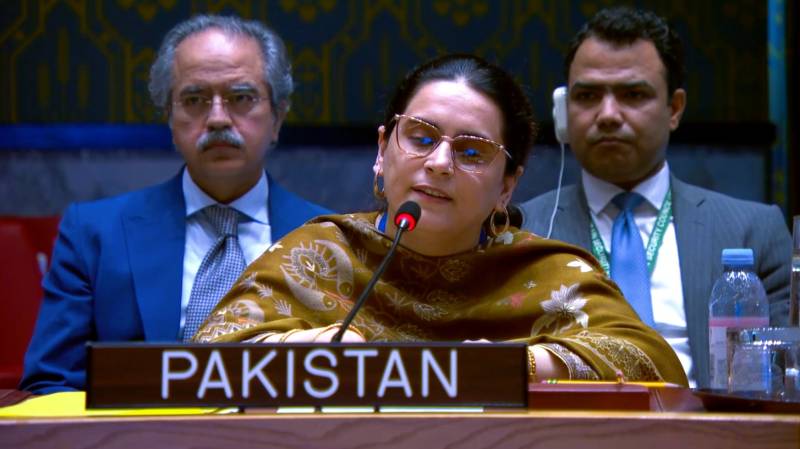
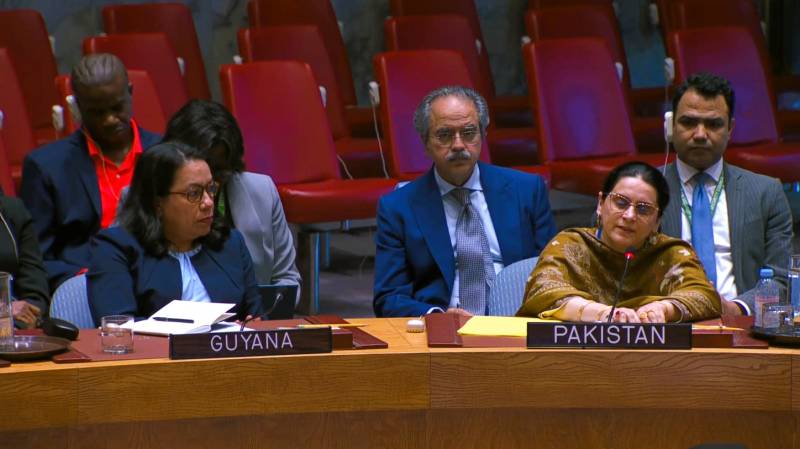
At a United Nations Security Council (UNSC) open debate on Women, Peace, and Security (WPS), Pakistan called on the international community to acknowledge and address the suffering of women in conflict zones, particularly in Indian-administered Jammu and Kashmir and in Palestine. The debate marked the 25th anniversary of the landmark Resolution 1325, which emphasizes women’s role in peacebuilding and protection during conflicts.
Speaking at the session, Counsellor Saima Saleem of Pakistan’s Mission to the UN criticized what she described as the persistent exclusion of Kashmiri women from the WPS agenda. She urged the UN to include their plight in future reports, noting that Kashmiri women have long faced sexual violence, harassment, and other rights violations under what Pakistan terms “military occupation.” Saima Saleem referred to reports from organizations such as Amnesty International, Human Rights Watch, and Medecins Sans Frontieres documenting abuses including arbitrary detentions, torture, and reprisals against women activists and relatives of missing persons.
Turning to the situation in Gaza, Saima Saleem described it as “one of the gravest tragedies of our times,” pointing out that a majority of women killed in conflicts last year were in Gaza. She highlighted accounts of pregnant women giving birth amid bombardments and shortages of water and anesthetics. “These are not collateral tragedies but deliberate crimes that demand accountability,” she told the Council.
The Pakistani representative also expressed concern over broader global trends, noting a 90% increase in conflict-related sexual violence over two years and a fourfold rise in women and children killed in armed conflicts. She said the world was witnessing a “widening gap between commitment and reality,” as women remain among the first victims of violence but often excluded from peace processes.
Saleem underscored Pakistan’s contributions to the WPS agenda, emphasizing the role of Pakistani women peacekeepers serving in conflict zones, particularly in Africa, where they provide medical support and help rebuild communities. She reaffirmed Pakistan’s commitment to the UN’s Gender Parity Strategy and called for mandatory representation thresholds for women in peace negotiations, arguing that inclusive peace processes are more durable.
Other speakers at the UNSC debate, including representatives from UN member states and agencies, highlighted the urgent need to strengthen women’s participation in conflict resolution and ensure accountability for gender-based violence. UN officials and member states acknowledged that despite two decades of global commitments, women continue to face disproportionate harm in war zones and remain underrepresented in peace negotiations.
In her closing remarks, Counsellor Saleem urged the Security Council to transform pledges into action. “The road to peace must be built by women and men together,” she said, reiterating Pakistan’s call for international accountability and sustainable support for women-led organizations working on the frontlines of crises.