

Like millions around the world, I grew up watching The X-Files—the iconic television show that explored UFOs, alien encounters, and unexplained phenomena through the investigations of FBI agents Fox Mulder and Dana Scully. It was one of my favourite shows, not simply because it was thrilling television, but because it tapped into one of humanity’s oldest and most profound questions: Are we alone in the universe?
Even as a child, that question seemed impossible to ignore. In a universe containing billions of galaxies, with each galaxy itself containing billions of stars—many of them likely surrounded by planetary systems—it always seemed difficult to believe that Earth could be the only cradle of life. The mathematics of probability alone appears to challenge such exceptionalism. Surely, somewhere within this cosmic vastness, other forms of life must exist.
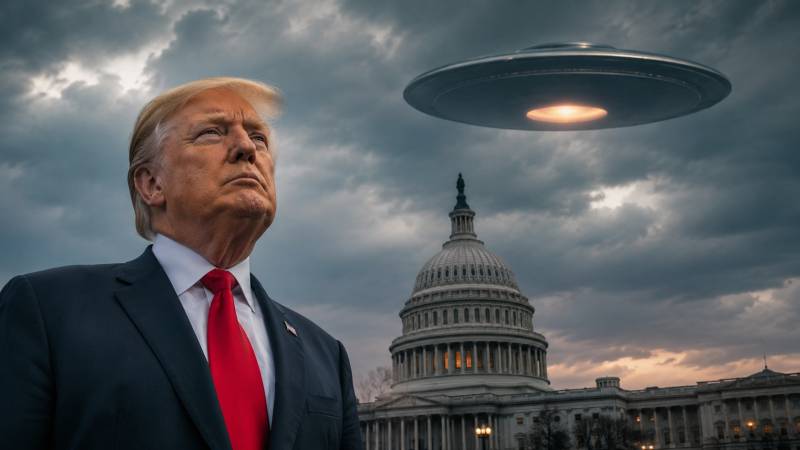
This is what makes the recent release of UFO—or, in official terminology, Unidentified Anomalous Phenomena (UAP)—files by the United States Department of Defense such an important and fascinating milestone.
For decades, UFOs have occupied an unusual space between science, speculation, conspiracy theory, and popular culture. Governments have often approached the subject with secrecy, sometimes dismissing public interest while simultaneously conducting classified investigations. This contradiction has only deepened public suspicion. The latest release of over 160 declassified documents, photographs, videos, and astronaut transcripts does not provide definitive proof of extraterrestrial life—but that is not why it matters most.
Its significance lies in transparency.
For perhaps the first time on this scale, one of the world’s most powerful governments is acknowledging that unexplained phenomena deserve public scrutiny and scientific discussion. This alone represents a major shift. Instead of relegating the subject to the fringes, the release invites serious public debate and encourages a broader, more intellectually honest conversation about humanity’s place in the cosmos.
For those of us who grew up with The X-Files, this moment carries an additional emotional resonance
The files reportedly include historical records dating back to the 1940s, military pilot encounters, infrared footage, and some of the most intriguing materials: transcripts and observations from astronauts involved in America’s Apollo missions.
Among the most compelling are accounts linked to Apollo 11, Apollo 12, and Apollo 17.
From Apollo 11, the mission that first landed humans on the Moon in 1969, newly highlighted records reportedly include remarks from astronaut Buzz Aldrin describing unusual lights observed during the mission. While many such sightings may ultimately have conventional explanations—space debris, reflected sunlight, or instrument anomalies—the very fact that they were documented and preserved adds weight to their importance.
Apollo 12, humanity’s second lunar landing mission, reportedly includes images showing several unidentified objects or anomalies captured during operations near the Moon. These images are not presented as evidence of alien craft, but they remain unexplained enough to merit inclusion in the declassified archive.
Perhaps the most fascinating accounts come from Apollo 17, the final manned Moon mission. Astronauts reportedly described seeing mysterious bright sparks in space, likening them to “the Fourth of July”. One released photograph reportedly shows three unexplained dots arranged in a triangular formation above the lunar surface. Again, no official claim is made about what these objects are—but the absence of easy answers is itself compelling.
Sceptics will rightly point out that unexplained does not mean extraterrestrial. And they are correct. Science demands caution, evidence, and rigorous analysis. But scepticism should not become dismissal.
What this release can do—and perhaps already is doing—is broaden the public imagination.
For too long, the question of extraterrestrial life has been framed as either fantasy or a fringe obsession. Yet mainstream science increasingly tells us that life elsewhere is plausible. Thousands of exoplanets have been discovered. Some lie within habitable zones. Researchers continue to search for biosignatures, atmospheric clues, and intelligent signals from distant civilisations.
In that context, discussing UFOs should not be taboo. It should be part of a wider inquiry into whether intelligent life exists beyond Earth.
The release of these files also reflects something important about our cultural maturity. Humanity may finally be ready to confront uncertainty without fear or ridicule. We may not yet have answers—but we are becoming more willing to ask better questions.
For those of us who grew up with The X-Files, this moment carries an additional emotional resonance. The show’s famous tagline—“The truth is out there”—always suggested that curiosity itself was a form of courage. That same spirit should guide us now.
No, the Pentagon has not confirmed alien visitors.
No, these files do not prove extraterrestrial civilisations.
But they do something perhaps equally valuable: they legitimise wonder.
And in a world often consumed by immediate crises and earthly divisions, perhaps lifting our eyes to the stars—and asking whether someone else might be looking back—is exactly the kind of perspective humanity needs.