

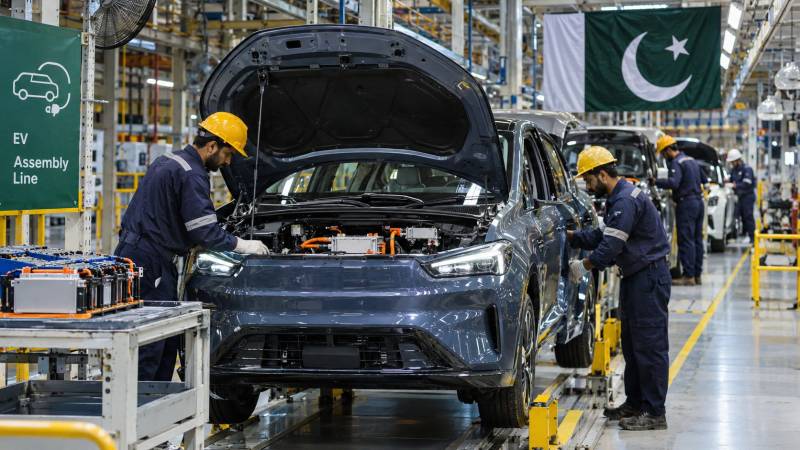
The real test for Pakistan’s automotive transition isn’t just about selling more electric cars. It’s whether the country can make more of the technology inside these cars, or if it will simply swap reliance on imported petrol for dependence on imported batteries, motors, electronics, and finished vehicles. The new Automotive and Auto Parts Manufacturing Policy 2026-31 aims to address longstanding issues by reforming tariffs, encouraging local production, setting export targets, and offering incentives for cleaner vehicles. Despite years of protecting local assembly and building a supplier base, Pakistan still relies heavily on imports for key components. Automotive exports have not grown enough to transform the industry, a main weakness in the current model, according to the Pakistan Institute of Development Economics (PIDE).
The challenge is to improve the current model without losing the industrial strengths already developed. Electrification makes this more difficult and more promising. Pakistan isn’t just choosing which cars to assemble; it’s deciding where the auto industry's future value will come from. The policy plans to gradually reduce tariffs on imported vehicles and parts, set stricter performance standards, and tie incentives to exports and local value creation. It also proposes establishing a testing institute and improving quality checks. These steps could finally bring needed competition to a market often criticized for high prices, limited choices, and inconsistent value.
Manufacturers have real concerns. Lowering duties on imported parts can cut assembly costs, but it might hurt local suppliers if their parts end up taxed more. Parts makers warn that tariff breaks could favor import-heavy assembly over local engineering. National policy shouldn’t be shaped only by manufacturers wanting endless protection or importers pushing for open access. The government needs to set rules that push everyone to improve through a gradual transition, not a sudden tariff change.
The policy should recognize the differences between technologies instead of treating all electrification the same. Battery electric vehicles (BEVs) are the best way to cut emissions and reduce petrol imports, but their costs depend on battery prices, charging options, and electricity rates. Hybrids save fuel without needing to charge. Plug-in hybrids only help if owners actually charge them. Range-extended electric vehicles (REEVs) help with range worries, but their real efficiency depends on how much the engine is used. Incentives should be based on proven fuel savings, electric driving ability, total emissions, and local value added. The New Energy Vehicles Policy 2025-30 already aims for NEVs to make up 30 percent of new sales by 2030. The new auto policy should match this goal. The reported sales-tax rates 1 percent for BEVs, 6 percent for REEVs, and 9 percent for PHEVs are not final until the official schedules are approved.
Building electric vehicles is different from making their batteries. Importing cells, battery systems, motors, and electronics for local assembly creates jobs, but the technology, intellectual property, and foreign exchange stay overseas. The first step should be gradual localization, like assembling battery packs, managing heat, making enclosures, wiring, and integrating battery systems. Making cells should come later, once there is enough scale, energy, funding, and access to technology. Technology partnerships should bring real engineering know-how, not just assembly guides.
Battery localisation remains the real industrial prize: assembling electric vehicles can create jobs, but lasting technology, engineering capability and foreign-exchange savings will depend on moving up the battery and components value chain.
Local production is encouraged because it can create more jobs and, if it works, make vehicles affordable for more people. The policy’s financing rules support this goal: banks are expected to offer auto loans of up to Rs 10 million for five years for REEVs, BEVs, and other NEVs, much higher and longer than the current Rs 3 million limit over three years for regular cars. This could help lower the high upfront costs that have slowed NEV adoption. Still, most people in Pakistan use two-wheelers to get around. Any policy that truly aims for affordable mobility must make electric and regular two-wheelers a top priority, not just an afterthought. Clear standards, financing, charging or battery-swap options, and quality enforcement for two- and three-wheelers will determine whether the transition benefits everyone or only a small group with cars.
The auto policy also overlooks another big risk. If cars become more affordable and financing gets easier, even more vehicles will crowd already busy roads. Most cities in Pakistan still don’t have public transit systems that can handle a growing population. This leads to constant traffic jams, lost productivity, more fuel use, and worse air quality issues that electric vehicles alone can’t fix. Some mass-transit projects are underway or planned. Lahore operates the Orange Line and Metro-bus and is developing an underground Blue Line. Rawalpindi-Islamabad, Multan, Peshawar, and Karachi have BRT systems that are running or expanding, and Karachi’s Yellow Line is adding electric buses. Faisalabad and Gujranwala are building new routes under Punjab’s Transport Vision 2030. These projects matter, but they remain scattered, underfunded, and poorly connected to national industrial and energy policies.
If the auto policy increases private car ownership without also investing in urban mass transit, it could turn industrial progress into city problems. Managing road space, building public transport routes, improving last-mile connections, and setting parking rules must be part of the automotive transition. Lower tariffs and allowing more used cars to be imported could push local manufacturers to offer better prices and quality. But if older imports are cheaper than entry-level local cars, sales could drop and hurt suppliers even more. Clear import rules, strong safety and emissions standards, and a gradual tariff plan are crucial. The $6.01 billion export goal over five years should be based on real progress that rewards true local value, not just high export numbers boosted by imported parts.
Three safeguards are key. First, one technical regulator should have clear duties for the Engineering Development Board, PSQCA, and the new testing institute. Second, annual reports on prices, production, imports, exports, local value, charging costs, and battery safety should be published, with independent reviews leading to fixes if needed. Third, consumers need protection through clear pricing, good warranties, available spare parts, and enforceable solutions.
Pakistan’s auto policy can link industrial reform with electrification, energy security, and export growth. But lowering tariffs, offering subsidies, and setting ambitious targets can’t replace real engineering skills or effective urban transport planning. The country shouldn’t keep every current manufacturer at public cost or give up its market to imports. It needs to help local companies compete, make better vehicles affordable, and support suppliers moving up the value chain. At the same time, more cars shouldn’t overload city roads, and people who rely on two-wheelers and public transport shouldn’t be ignored. The real measure of success isn’t just the number of electric vehicles sold in Pakistan. It’s about how much technology, skilled jobs, solid infrastructure, and exportable industry the country builds around them, and whether this shift actually makes daily travel better for ordinary people instead of just adding more cars to crowded streets.