

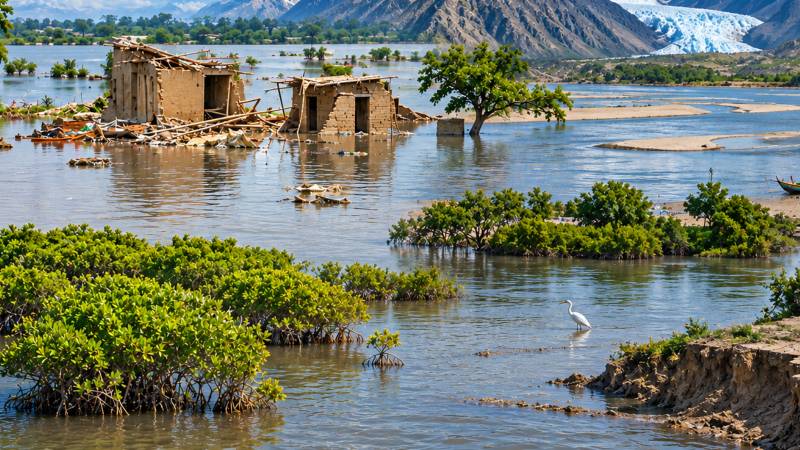
The 31st United Nations Climate Change Conference (COP31) will take place in Antalya, Türkiye, from November 9 to 20, 2026. Bringing together delegates from nearly 200 nations including heads of state, ministers, scientists, climate experts, and civil society organisations. The summit is hosted by Türkiye, with Australia leading formal negotiations and a World Leaders’ Climate Summit scheduled for November 11–12. For Pakistan, COP31 is not an abstract environmental debate; it is an urgent struggle for economic survival, human safety, and justice.
COP, or the Conference of the Parties, is the annual decision-making summit of countries that have signed the United Nations Framework Convention on Climate Change (UNFCCC). The process began at the 1992 Rio Earth Summit, leading to the first COP in Berlin in 1995, followed by the 1997 Kyoto Protocol and the landmark 2015 Paris Agreement. Under these treaties, nations pledged to limit global warming by curbing greenhouse emissions, transitioning away from fossil fuels, financing adaptation, and preparing for droughts, heatwaves, and floods. Yet three decades of talks have left an alarming gap between promises and implementation. Global carbon emissions continue to rise, international climate funding remains inadequate, and vulnerable countries face the worst consequences. The central test at COP31 is transforming declarations into practical action.
For Pakistan, climate change is no longer a future threat; it is an ongoing economic and humanitarian crisis. The catastrophic 2022 floods affected roughly 33 million people, causing damages exceeding US$30 billion. Subsequent monsoon disasters have further revealed the country's severe vulnerability to recurring extreme weather. At COP31, Pakistan must demand that developed countries honor their pledges under the principle of "common but differentiated responsibilities". While addressing climate change is a shared duty, historical responsibility is unequal. Industrialized nations generated most historical emissions and possess far greater financial and technological wealth. Climate finance should never be treated as foreign charity; it is an obligation arising from historical accountability and climate justice.
The Loss and Damage Fund is an essential priority for Pakistan. While adaptation helps communities prepare, not all loss can be prevented. When villages, roads, and crops are destroyed, hit nations need immediate financial support to rebuild. Pakistan must insist on climate finance that is predictable, timely, and provided as outright grants rather than loans. Countries facing severe inflation and debt should not be forced deeper into borrowing to repair disasters they did not cause. Transparent systems are equally vital to assess damages accurately and ensure aid reaches affected families directly.
Pakistan’s climate diplomacy must also spotlight its northern mountains. The Hindu Kush, Karakoram, and Himalayan ranges are not merely scenic landscapes; they are vital freshwater sources sustaining millions of people. Rising temperatures are melting glaciers rapidly, triggering dangerous Glacial Lake Outburst Floods (GLOFs) that threaten downstream valleys, roads, and settlements. The recent catastrophe in Nepal is a strong indicator that mountains and glaciers have not only GLOFs phenomenon, there are other critical risks. Pakistan should form a regional coalition with mountain nations like Nepal, Bhutan, Tajikistan, and Kyrgyzstan. A unified mountain bloc can secure international support for glacier monitoring, early warning systems, collaborative research, and resilient infrastructure.
Pakistan’s moral authority at COP31 rests on two pillars: holding wealthy polluters accountable for the damage they cause, and demonstrating transparent, accountable climate governance at home.
To advocate credibly abroad, Pakistan must also demonstrate practical reform at home. A notable development is the swift expansion of solar energy. Facing steep tariffs and frequent blackouts, households, farmers, and businesses have rapidly turned to rooftop solar. While this grassroots shift cuts fossil fuel reliance, it presents serious challenges to the national power grid. As affluent users produce their own power, grid sales drop, leaving fewer consumers to cover fixed system costs. This widens inequality between those who can afford solar and poorer families paying higher tariffs. Pakistan must modernize its distribution grid, develop energy storage, and introduce balanced tariffs so clean energy benefits all citizens.
In the south, Sindh provides inspiring examples of local action alongside grave ecological warnings. The Delta Blue Carbon initiative has rehabilitated roughly 75,000 hectares of degraded mangrove forests, benefiting about 43,000 people through carbon credits and local jobs. Mangroves store carbon, buffer storm surges, and provide breeding grounds for marine life.
However, mangrove restoration cannot resolve the broader crisis facing the Indus Delta. The delta depends on natural freshwater flows from the Indus River. Water reaching the Arabian Sea below Kotri Barrage is not "wasted water"; it is an essential ecological flow preventing seawater from intruding into fertile farmlands and aquifers. Without adequate river flow, seawater moves inland, salinizing drinking water, ruining agricultural soils, and displacing fishing communities. At COP31, Pakistan must present the delta's survival as an issue of natural river flows and ecological rights, recognizing that planted mangroves cannot survive without adequate freshwater.
Another positive domestic model is the Sindh Peoples Housing for Flood Affectees (SPHF) program, launched after the 2022 floods. Instead of handing out temporary shelters, it provides cash and guidance directly to families to build resilient brick homes. The program creates local employment for labourers, artisans, and small businesses while advancing women's empowerment. Out of a target of 2.1 million houses, roughly one million have been built, with more than 100,000 women securing legal land titles—a model praised by the World Bank President. Its lasting success, however, depends on providing clean water, sanitation, and flood-safe locations.
Effective climate action ultimately depends on sound domestic governance. Pakistan can make a far stronger case for international support if it manages climate funds transparently, strengthens public institutions, ensures projects deliver lasting benefits rather than short-term activities, and involves local communities in decision-making. At COP31, Pakistan’s priorities are clear: securing predictable loss and damage grants, leading a mountain alliance, championing freshwater flows for the Indus Delta, and cooperating with partners like Türkiye and Australia. Ultimately, Pakistan’s moral authority rests on two pillars: holding wealthy polluters accountable for the damage they cause, and demonstrating transparent, accountable governance at home.