

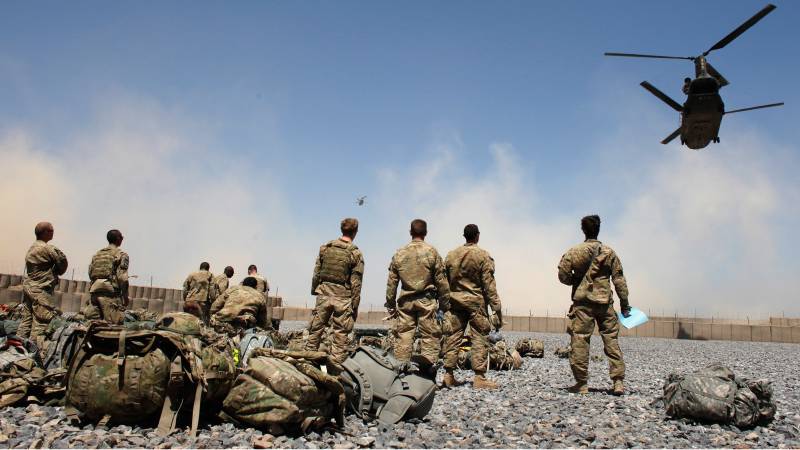
The ongoing conflicts in the Middle East have underscored how difficult coercing seemingly weaker adversaries is. Military might has not delivered successful coercive outcomes, especially for the U.S. This is not something new. According to Robert J. Art, “Washington’s coercive diplomatic gambits have failed more often than they have succeeded.” Even then, given the lopsided distribution of power and the U.S. having the requisite heft across all domains to browbeat its enemies, coercive diplomacy has been conducted many a time. Launching Operation Enduring Freedom on October 7, 2001, and then continuing the campaign against the Taliban speak to how coercive diplomacy failed, drawing the U.S. in a 2-decade-long war in Afghanistan. Given that the U.S. war in Afghanistan happened to be its longest foreign military engagement, it is one of the most glaring examples of U.S. coercive failure.
The U.S. made explicit demands of, and issued clear threats to, the Taliban. The U.S. demanded that Bin Laden be handed over, and that the Taliban close all Al-Qaeda camps. The Taliban were asked to meet these demands immediately. More importantly, the U.S. said that these demands were not negotiable and that noncompliance would be disastrous for the Taliban. Unfazed, Mullah Omar, the founder of the Taliban, refused to succumb under pressure, leaving the U.S. enraged and with no choice other than initiating Operation Enduring Freedom. Given that coercive diplomacy is often regarded as a last-ditch effort to eschew war, Operation Enduring Freedom became a living proof of the spectacular failure of U.S. coercive diplomacy.
Why didn’t the Taliban acquiesce to an all-powerful, vengeful U.S.? A number of reasons could explain their behavior. First, they wanted to build a reputation of toughness and defiance. Being defiant under pressure, especially when it could be prohibitively costly, has reputational advantages of its own. Relatedly, the Taliban wanted to preserve the status quo, which was working since the time they took over Afghanistan in the mid-1990s. These two factors become more pronounced when coercers want to exact compellence. That compellence requires the target to openly do or undo something makes the portrayal of a strongman image a major impediment to successful coercion. If the Taliban were required to not extend further help to Al-Qaeda, they might have been more receptive.
As for coercive diplomacy, it can only do so much if there is an imbalance between its two planks: coercion and diplomacy. Now as then, the belief that the U.S., on the back of its military might, can change the behaviors of their weaker adversary is dangerous.
Here, it is important to recall that the Taliban did offer to not only send Bin Laden away initially but also to negotiate with the U.S. Washington rejected these overtures outright. This suggests that the magnitude of demand is a key factor behind compliance or lack thereof. Asking to give up something that is endeared by the target may not engender compliance even if the power differential is huge. Concomitantly, weaker actors, when asked to make concessions, could think that the coercer would continue asking for more even after the initial compliance. The Taliban also thought that the U.S. would come after them, regardless of their approach toward Al-Qaeda. The corpus of literature on coercion fares really well in explaining all of this.
All in all, the start of Operation Enduring Freedom can be dubbed a failure of U.S. coercive diplomacy. It vindicated existing scholarship that exposes the limits of material power. During the weeks leading up to Operation Enduring Freedom, the U.S. flexed its muscles, issued unequivocal threats of using force, and made clear demands. Yet the Taliban, materially much feebler, did not wilt under pressure. The episode proves that when threats are not accompanied by assurances, they do not push actors, however weak, toward compliance. By threatening the Taliban and later pulverizing them, the U.S. made a new enemy, something which continues to be quite costly.
Today, Washington’s main competitors in Moscow and Beijing have much greater leverage over a rebranded version of the Taliban. Therefore, if Washington wants to play a significant role in the politics of the region, it has to constructively and substantively engage with the Taliban, who are a genuine phenomenon in Afghanistan. As for coercive diplomacy, it can only do so much if there is an imbalance between its two planks: coercion and diplomacy. The debilitating war between the U.S. and Iran highlights the same issues with U.S. approach to coercive diplomacy. Assurances are far and few, and even when they are given, they lack credibility. Now as then, the belief that the U.S., on the back of its military might, can change the behaviors of their weaker adversary is dangerous.