

Historic mosques are located in various districts of Sindh. These mosques are noted for their decorative art. I have been documenting historic mosques and tombs since 1998. During these years, I visited over a hundred historic mosques in every nook and corner of Sindh, all of which were well known for their mural ceramics and paintings. I visited these mosques and revisited them to understand their architectural details and the decorative art that adorned them.
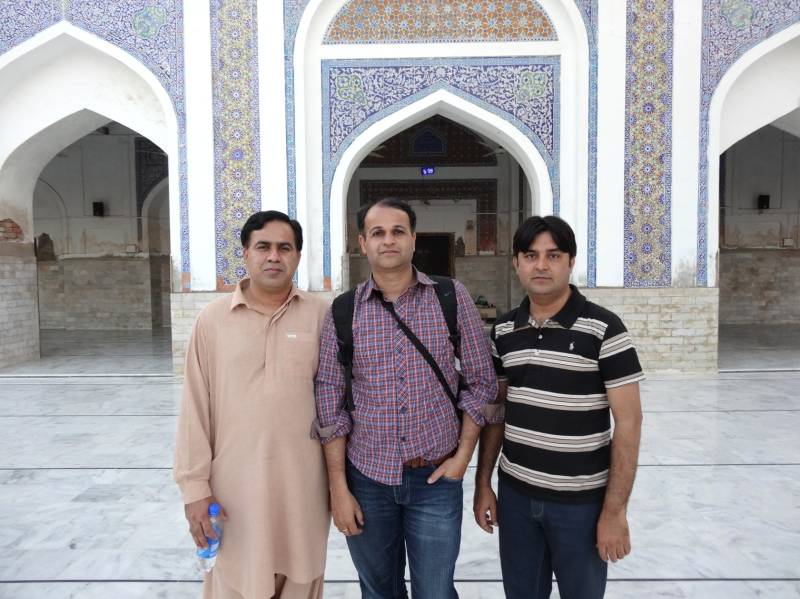
During my research spanning over two decades on historic mosques in Sindh, I visited Matiari several times, which hosts many historic mosques. I visited Matiari in 2003 and revisited it in 2005, 2010, and 2013. During the 2013 visit, I was accompanied by Dr Muhammad Rafiq Wasan and Dr Muhbat Ali Shah, both anthropologists, and Dr Muhammad Hanif Laghari, all then professors in the Department of Anthropology and Archaeology, University of Sindh. During the 2013 trip, we revisited a few historic tombs and mosques, including Jamia Mosque, Minare Wari Masjid (Minara Masjid), and the tombs of Sakhi Ruknuddin and Sakhi Hashim Shah Qalandar.
In this article, I discuss the historical Minare Wari Masjid, or Minara Masjid. This mosque is one of the most magnificent mosques of Matiari town. It is located in the Baqilpota neighbourhood of Matiari town. Walking through the Baqilpota neighbourhood in 2003, I visited not only Minara Masjid but also Kot Wari Masjid and Afzal Shah Masjid in the same neighbourhood. Both mosques were three-domed structures and well known for their painted murals. However, frequent renovations have damaged their original decorative art. Kot Wari Masjid has retained some original paintings that I also saw on a later visit in 2010.
Architectural Grandeur and Inscriptions
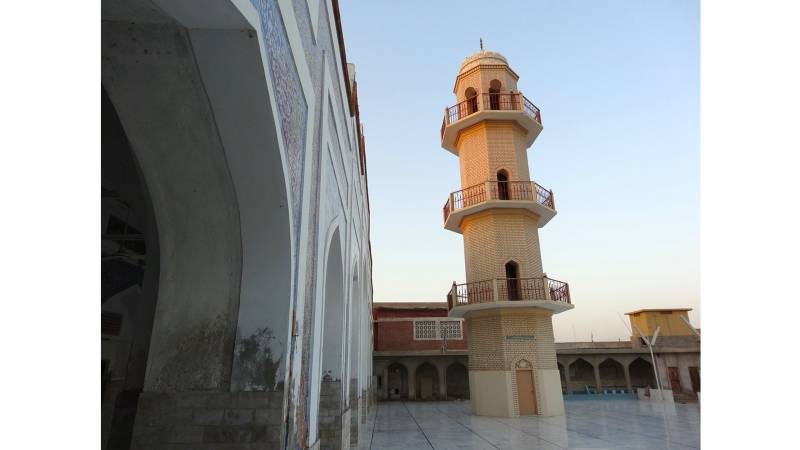
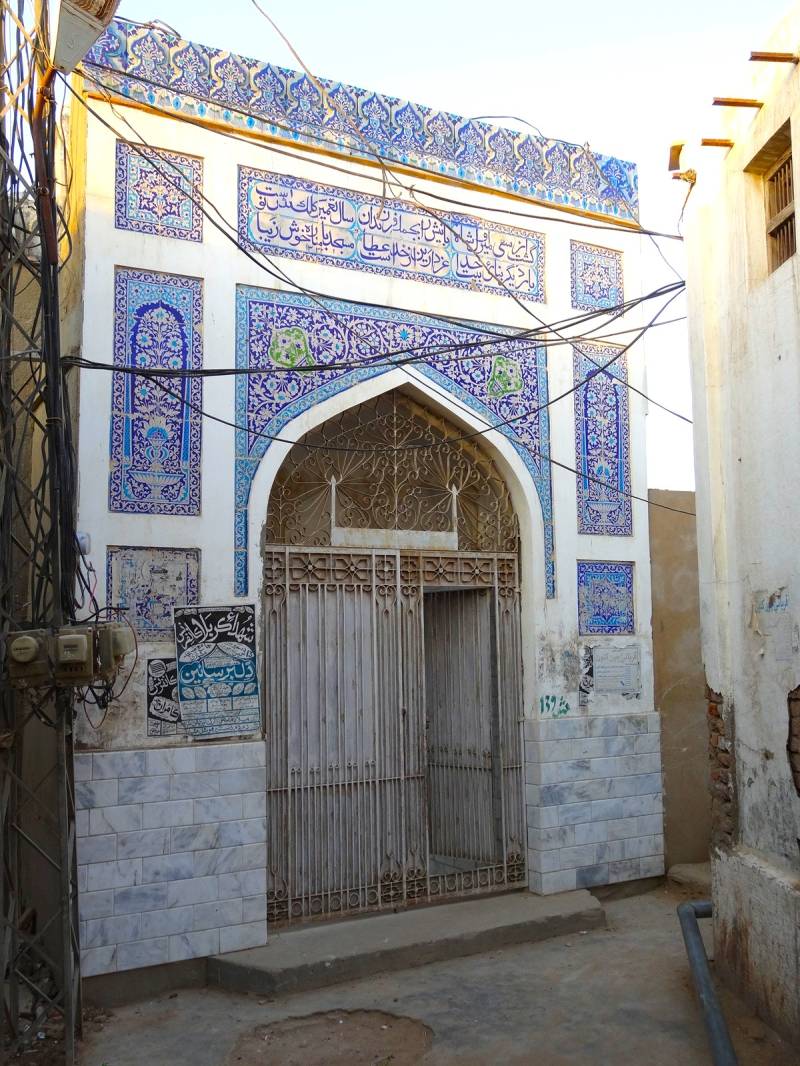
One enters the Minara Masjid through a beautiful portal adorned with blue and white tiles. The portal also bears an inscription that may show the date of renovation or construction of the minaret. The inscribed date is 1332 AH/1914 AD. Upon entering the mosque's spacious courtyard, visitors are amazed by the glazed tiles that decorate the entire façade. The 50-foot-high minaret also captures the attention of visitors and worshippers, but the Sindhi tiles that decorate the mosque have their own captivating appeal.
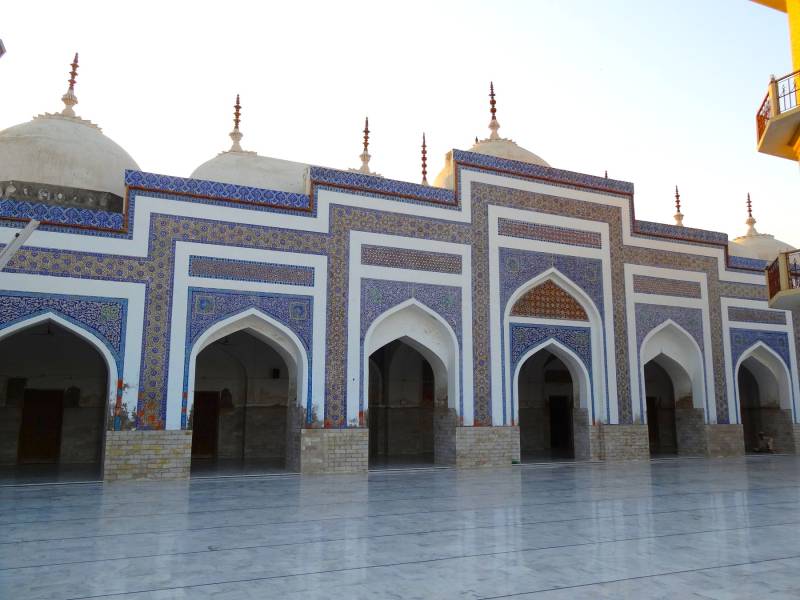
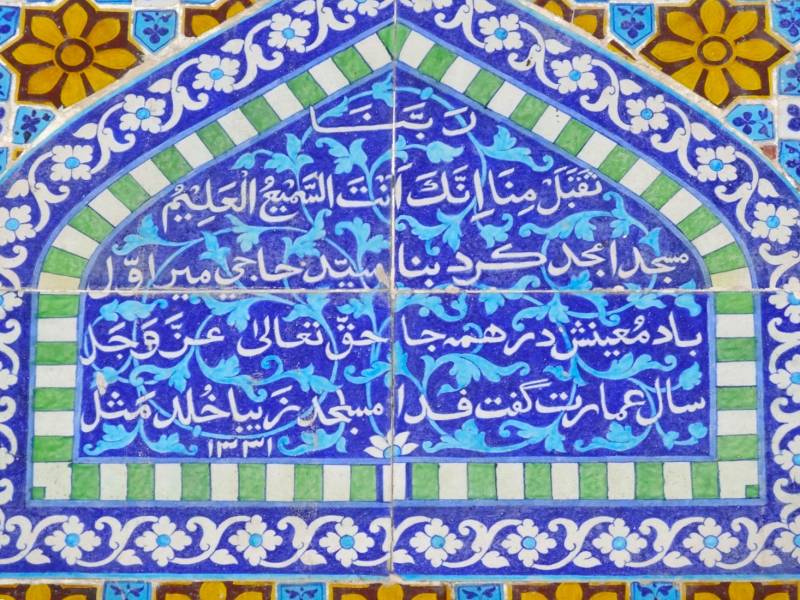
The mosque follows a rectangular plan, with seven arched entrances covered in Sindhi ceramics, leading to a covered verandah spanned by hemispherical and vaulted domes. The main doorway leading to the prayer hall has an inscription above reading the name of Syed Haji Mir Awal Shah and the date 1331 AH/1913 AD. This possibly shows the date of the mosque's renovation. Another inscription in Sindhi appears on the western wall above the mihrab. This inscription states that Mir Awal Shah constructed the mosque in 1331 AH/1913 AD.
This mosque is beautifully constructed with symmetry that showcases the centuries-old tradition of Sindhi artisans producing masterpieces not only in built heritage but also in decorative art
According to Maqsood Ahmad Qazi (2006), author of Tarikh-i Matiari, Syed Haji Mir Awal Shah renovated and expanded the historic mosque. This information shows that the mosque existed earlier and was one of the earliest mosques in Matiari. Later, Syed Haji Mir Awal Shah renovated and expanded it in 1331 AH/1913 AD and 1332 AH/1914 AD, respectively, as per inscriptions on the mosque walls. Two different dates appear on the walls of the mosque: one on the main entrance and the other on the verandah wall and the western wall of the main prayer halls. One shows 1331 AH and the other 1332 AH. Both show the construction or renovation in two different years by Syed Haji Mir Awal Shah.
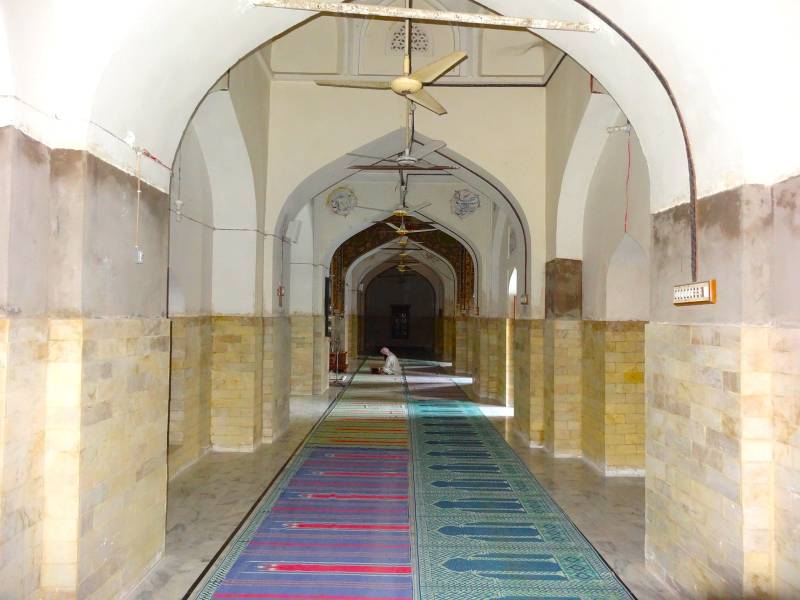
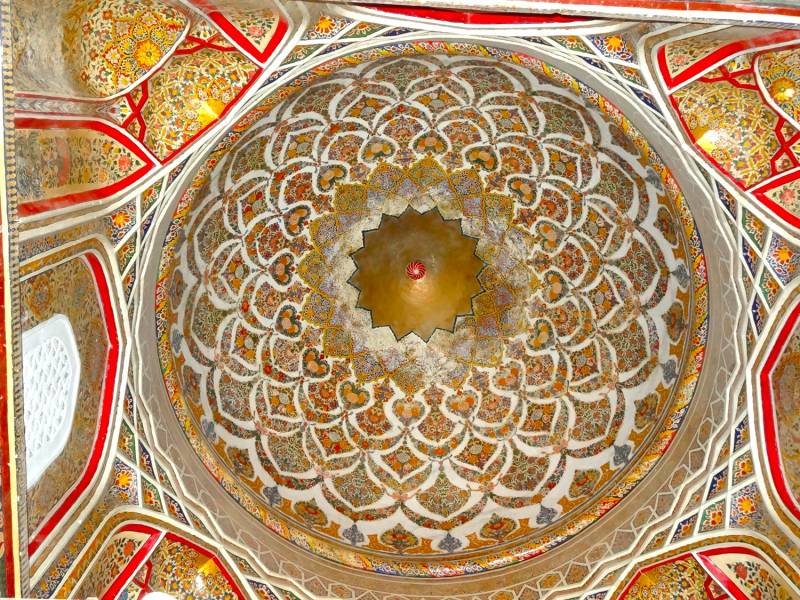
During the renovation and expansion, the mosque was decorated with beautiful glazed tiles. The mosque's interior was also painted. Today, only the mosque's central bay retains the original paintings. The mosque's renovation date appears in several places. The minaret also bears an inscription indicating it was built in 1332 AH/1914 AD.
Qazi Maqsood Ahmad (2006) believes that Syed Haji Muhammad Shah, the son of Syed Haji Mir Awal Shah (the senior), established Abu al-Khair Madrasa in the mosque. Syed Haji Mir Awal Shah belonged to the Baqilpota Sadat family of Matiari. He devoted his life to serving people, spreading religious teachings, constructing mosques, and bringing many people into the fold of Islam.
He passed away in 1337 AH. He had five sons: Syed Haji Muhammad Shah, Syed Haji Zain ul Abidin, Syed Haji Muhammad Naeem Shah, Syed Haji Ali Asghar Shah, and Syed Haji Ali Akbar Shah.
Domes, Symmetry, and Preservation
One of the Minara Mosque's most distinctive architectural features is its remarkable number of domes. Most historic mosques in Matiari have three domes, except the Jamia Mosque and the Minara Mosque. The Jamia Mosque, located in the city's Shahi Bazaar, has five domes and arched entrances. The Minara Mosque, however, stands apart with its 14 domes and seven arched entrances. No other historic mosque in Matiari district has so many domes. This unique architectural feature makes the Minara Mosque one of the most impressive mosques not only in Matiari but also in Sindh.
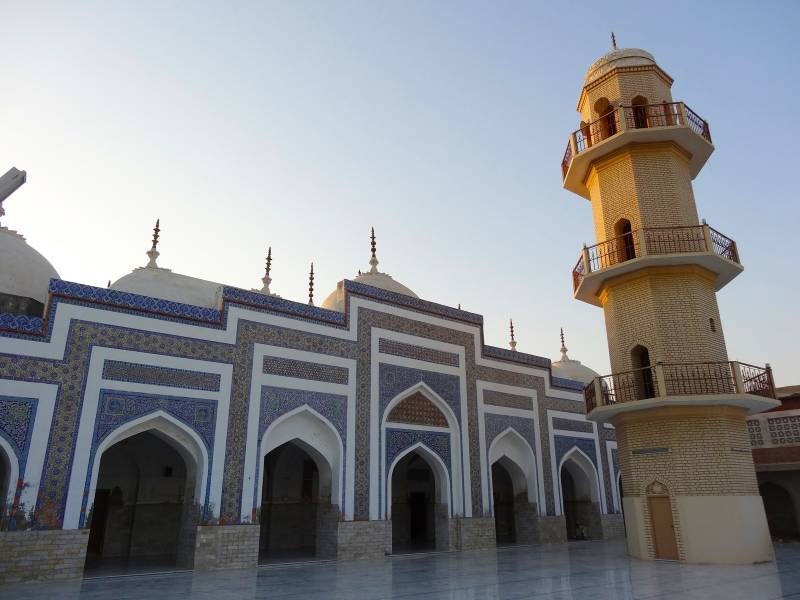
The tiles that decorate the mosque's walls also reflect the mastery of Sindhi artisans. Moreover, the painted walls show both Arabic and Persian calligraphy. The most noticeable section of the paintings is found on the domed ceiling. The dome above the central bay is painted with aesthetic symmetry, reflecting how Sindhi painters maintain balance. In these paintings and tile decorations, symmetry is the most important element of any building. This mosque is beautifully constructed with symmetry that showcases the centuries-old tradition of Sindhi artisans producing masterpieces not only in built heritage but also in decorative art.
More importantly, the mosque's epigraphs provide historical evidence, which unfortunately goes missing after renovations. During later renovations, the original sections of the mosque were kept protected.
Visual clutter also detracts from the mosque's architectural beauty. Upon entering the mosque, one notices electric wires that obscure the glazed tiles and inscriptions on the main gateway, diminishing their beauty.
Similarly, if one looks at the renovation chronogram fixed at the Jamia Mosque of Matiari, one notices that an electric searchlight was installed where the inscription already was, showing the indifference of some people towards these historical epigraphs and decorative art. I believe the local community can play an important role by creating awareness to save these historical records from further decay, damage, and, above all, visual pollution.