

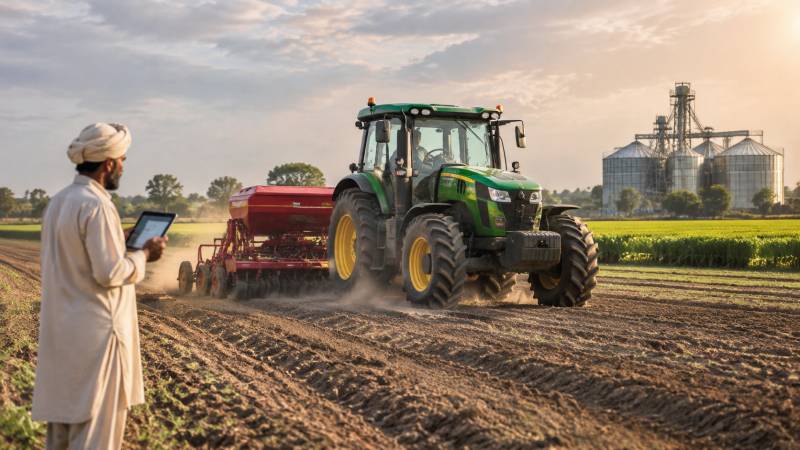
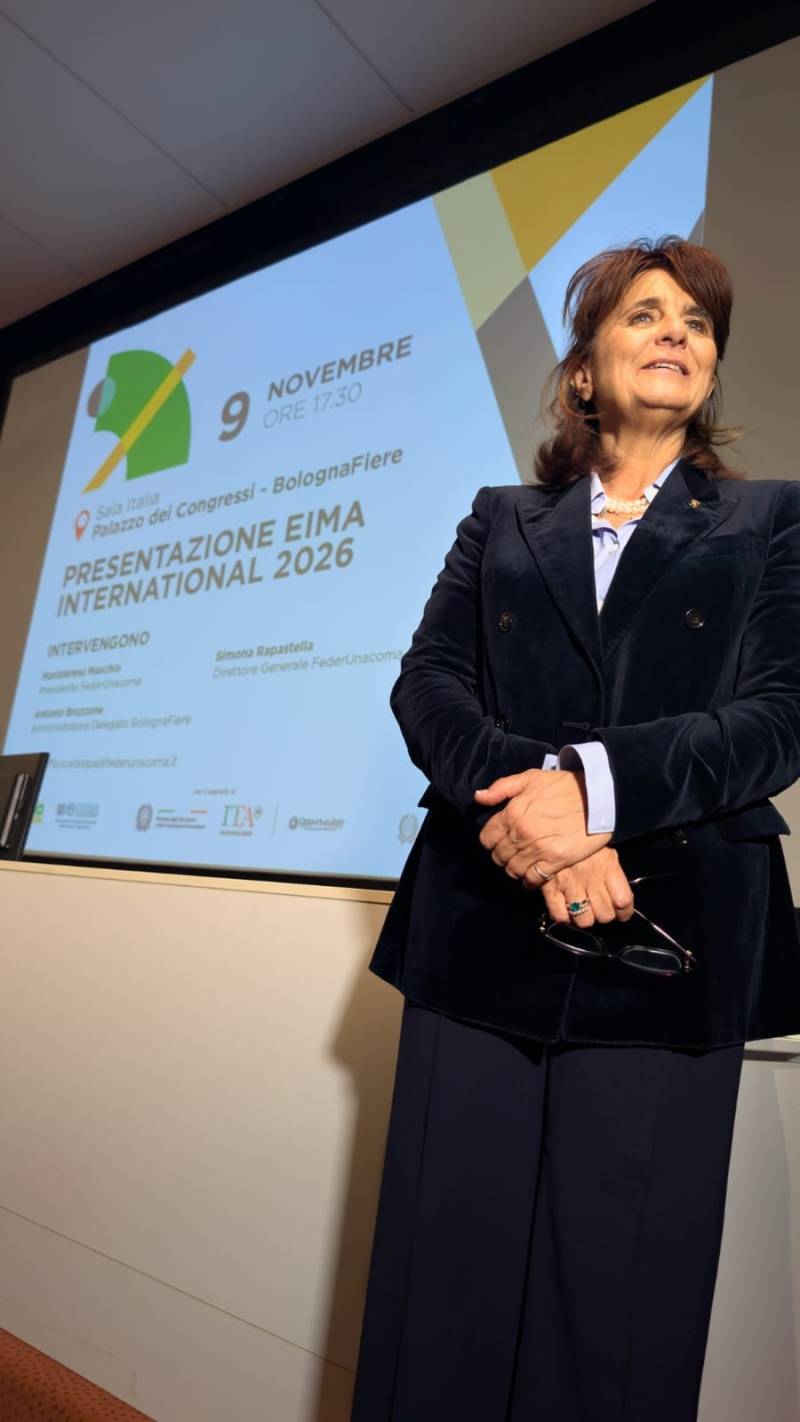
Ahead of the grand inauguration of EIMA International 2026 in Bologna, the premier agricultural machinery exhibition in the world, a clear message emerged for global leaders. The future of international food security depends on putting modern technology into the hands of farmers. Speaking to international media at the pre-event press conference on November 9, Mariateresa Maschio, President of the Italian federation of agricultural machinery manufacturers (FederUnacoma), explained the urgent challenges facing global agriculture. As delegations from around the world arrive in Bologna, including Pakistani agricultural stakeholders and business leaders invited by the Italian Trade Agency (ITA) and FederUnacoma, her briefing set a serious tone for the week ahead.
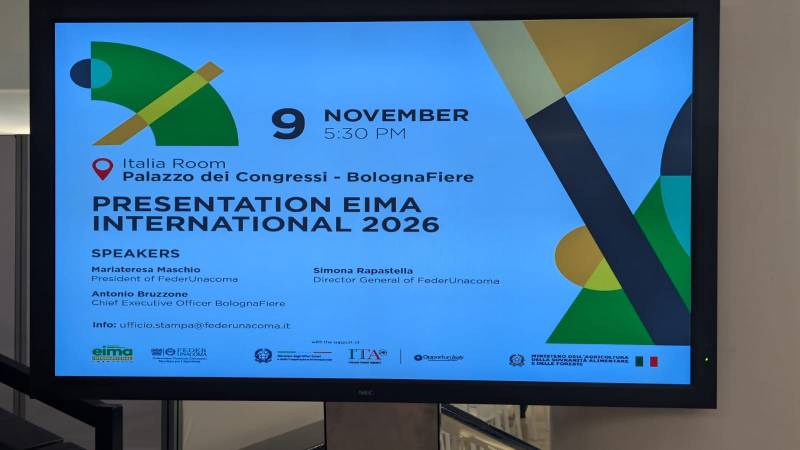
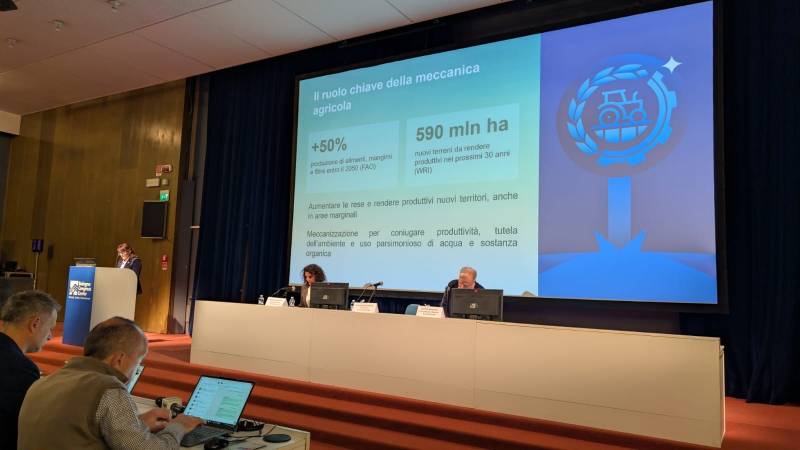
To feed the global population by 2050, the Food and Agriculture Organization (FAO) estimates that food, feed, and fiber production must grow by 50 percent. Reaching this goal requires higher crop yields on existing farmland while bringing 590 million additional hectares of marginal land into production. However, farmers across the globe are currently caught between war-driven inflation and severe climate shocks. The World Bank projects global energy costs to jump by 23.6 percent and fertilizer prices to rise by 30.7 percent this year. Because the Gulf region supplies roughly one third of global urea exports, the closure of the Strait of Hormuz caused international urea prices to double within a few weeks. This supply crunch was made worse when China sharply reduced its fertilizer exports, actively shrinking cultivated farmland across developing countries.
At the same time, 2026 is on track to surpass 2025 as one of the warmest years in history. Combined with El Niño, this warming is shrinking water resources and bringing violent, unpredictable weather to every continent, which is expected to cause $1 trillion in global economic damages this year alone. Consequently, the FAO projects global cereal production to fall by 2 percent this year, with wheat dropping by 3.3 percent and rice by 2.4 percent, alongside sharp harvest declines across the United States, Europe, Canada, and India. One of the few bright spots in the global food economy is the dairy sector. World milk production is forecast to grow by 2 percent this year, passing one billion tonnes, with India, the United States, and Pakistan remaining the top global producers.
Even though global food prices reached their highest level since late 2022, farmers receive only a tiny fraction of supermarket prices. Meanwhile, in developing regions such as Africa, post-harvest losses destroy 30 percent of crops before they ever reach the market. Squeezed by high interest rates and expensive farm inputs, farmers in Western nations and Latin America are buying fewer machines. Tractor sales dropped by 13 percent in the United States, 10 percent in Canada, 19 percent in Brazil, and 5.4 percent in Italy. In Turkey, high inflation and tight credit caused tractor sales to fall by 46.2 percent. In contrast, major Asian markets are growing rapidly because their governments stepped in with strong state subsidies. Backed by government incentives, tractor sales in China rose by 5.5 percent through June to reach 178,000 units. In India, sales jumped by 15 percent in September alone, putting the country on track to sell over one million tractors this year, which represents nearly half of all tractors registered in the world.
Combining modern engineering with easy access to finance is essential to keeping the farms of the world productive and ensuring long-term food security.
The international takeaway from Bologna is simple. Farm mechanization only grows when governments support farmers with affordable credit and multi-year funding. Around the world, governments are intervening to protect food producers, including $12 billion in farm bridge support in the United States, €540 million in emergency aid across the European Union, Industry 4.0 tax credits in Italy, and a $34 billion fertilizer subsidy program in India.
Pakistan is increasingly placing farm mechanisation and agricultural credit at the centre of its economic recovery strategy. In Punjab, Chief Minister Maryam Nawaz Sharif allocated Rs91.9 billion (US$330 million) to agriculture for 2026-27. Key initiatives include an additional Rs17.6 billion (US$63 million) for 19,500 subsidised tractors under the CM Punjab Green Tractor Programme, the Rs36.12 billion (US$130 million) ADB-supported Punjab Climate-Resilient and Low-Carbon Agriculture Mechanisation Project (P-CLAMP), a Rs6.17 billion (US$22 million) Farm Mechanisation Project, and Rs5.55 billion (US$20 million) under the Punjab Clean Air Programme, including 60% subsidies for 5,000 Super Seeders.
Equally important is the push to expand access to finance. Punjab's CM Kissan Card programme has delivered Rs400 billion (US$1.44 billion) in revolving, interest-free seasonal loans to one million smallholder farmers, achieving a reported 99% recovery rate. Building on this, Chief Minister Maryam Nawaz announced Punjab's first Apna Kisan Bank, alongside a Rs17 billion (US$61 million) subsidised financing package offering zero-markup loans of up to Rs10 million (US$36,000) per farmer. At the federal level, Prime Minister Shehbaz Sharif's Access to Finance initiative, supported by the State Bank of Pakistan and digital platforms such as Zarkhez-e, targets agricultural and SME financing of Rs1.5 trillion (US$5.4 billion) by June 2027 and Rs2 trillion (US$7.2 billion) by June 2028.
From water-saving irrigation systems to electric tools designed for urban green spaces in polluted cities and fighting smog, EIMA 2026 showcases technology for every climate challenge. As the exhibition opens in Bologna and the Pakistani delegation begins its meetings, the global mission is clear: combining modern engineering with easy access to finance to keep the farms of the world productive.