


In September 2019, I had the opportunity to visit several megalithic sites in the Vendée and Brittany regions of France while participating in the international conference “Megaliths of the World,” held from the 9th to the 14th of September 2019 at the Historial de la Vendée in Les Lucs-sur-Boulogne. I will write a series of articles on megalithic art and megalithic sites in France that I visited. This is the first in the series. This first article deals with Gavrinis.
In the Vendée region, I visited several important megalithic sites, including the Tumulus of Bougon, also known as the Necropolis of Bougon, where I saw a remarkable group of five Neolithic barrows. I also visited the Dolmen de la Frébouchère, near Le Bernard, and Caesar’s Camp Menhir. In Brittany, my visits included some of the region’s most celebrated megalithic monuments, notably Carnac, Gavrinis, the Grand Menhir Brisé, and the Table des Marchands at Locmariaquer.
Some megalithic monuments in France are particularly notable for their carved and engraved decoration. Such representations are generally described as megalithic art, a term used for motifs and designs carved, pecked, incised, or occasionally painted on the stones forming megalithic monuments. Gavrinis in Brittany is one of the most remarkable examples of megalithic art in western Europe.
Decoding Megalithic Art
The term megalithic art refers to the decorations found on megalithic monuments and single menhirs. It includes pictures, at least to some degree abstract, incised, sculptured, or painted on the slabs and blocks of monuments. According to Alberto Pozzi (2013), the author of Megalithism: Sacred and Pagan Architecture in Prehistory, megalithic art is far from the paintings and incisions left by Upper Palaeolithic man; the marks found on megaliths are mostly abstract. They are often schematic rather than figurative, but they show zoomorphic and anthropomorphic figures, weapons, and tools. Techniques include painting, incisions, faux-reliefs, and sculpture.
Some scholars of megalithic art believe that decorating megalithic monuments was a ritual act that defined spaces dedicated to the ancestors.
I was particularly struck by the immense labour, technical knowledge, and collective organisation required to quarry, transport, position, and erect such massive stones
George Nash (2020), the author of Megalithic Art: A Visual Repertoire for the Dead, believes that it is not entirely clear where and how megalithic art originated, although controversially it appears to form part of a much larger Schematic art tradition, itself having origins in the Late Mesolithic/Early Neolithic of central and western Mediterranean Europe. Schematic art, forming part of a post-Palaeolithic rock art tradition, is the term given to engraved and painted rock art that dates between the fifth and first millennium BCE. Much of what is termed Schematic art is located within southern Europe, in particular in cave and rock-shelter sites of the Iberian Peninsula.
According to Alberto Pozzi (2013), megalithic art appeared, above all, in three significant areas: the Iberian Peninsula, Ireland, and the Armorican region—the Atlantic zone between the mouths of the Loire and Seine Rivers, which includes Brittany.
The Megaliths of Brittany
Brittany is particularly renowned for its extraordinary concentration and diversity of megalithic monuments, many scattered across its coastal landscape. Among its prominent sites are Kerlud, the Kerdaniel Dolmen, Le Mané Lud, the Mané-er-Hroëck Tumulus, Er Hourel Dolmen, Le Mané Rethual, Les Pierres Plates Dolmen, the Grand Menhir Brisé (Great Broken Menhir), Er Grah Tumulus, Table des Marchands Dolmen, Crucuno Cromlech, Dolmens du Keriaval, Vieux-Moulin Alignment, Kerlescan Alignments, Kerzerho Alignments, Mané-Kerioned Dolmen, Er Lannic Stone Circle, Carnac Alignments, Dolmen du Kercado, and Gavrinis, among many others. Together, these monuments—ranging from menhirs and stone alignments to dolmens, passage graves, tumuli, and stone circles—reflect the remarkable richness of Brittany's Neolithic landscape.
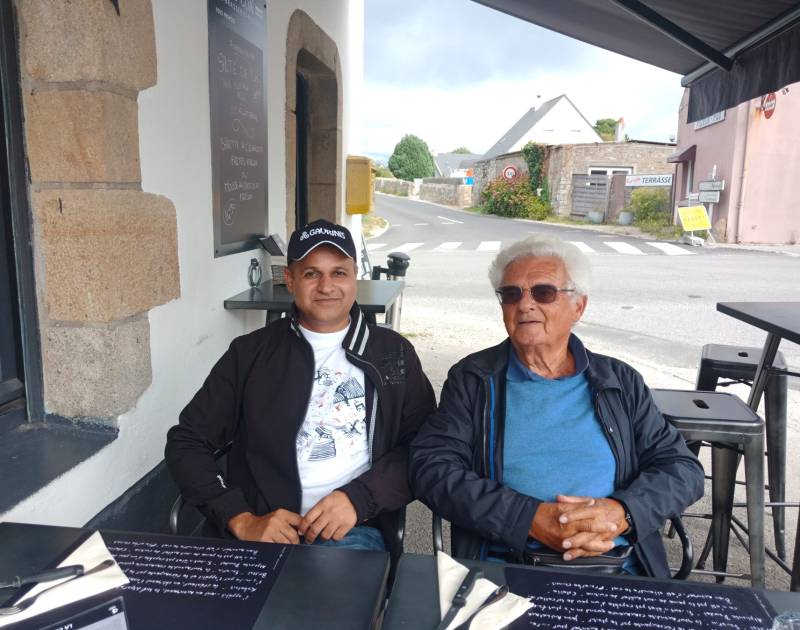
Locmariaquer is a famous tourist destination in France’s Brittany, noted for its majestic Neolithic megalithic monuments. Brittany's megalithic landscape is well-known to scholars.
I visited the megaliths of Locmariaquer with my two Italian friends, Alberto Pozzi and Beatrice Auguadro, both experts in megalithic studies. Sadly, Alberto Pozzi passed away in June 2025. Alberto Pozzi was Italy's most noted scholar of megalithic studies and had also authored books on the same subject. His most famous book is Megalithism: Sacred and Pagan Architecture in Prehistory, which he gifted me to study Pakistan's megaliths. It is useful for my research on Pakistan's megaliths. Megalithism: Sacred and Pagan Architecture in Prehistory is an English translation of the Italian Megalitismo: Architettura sacra della Preistoria, published in 2009. He also gave me a copy of this book during the 25th Valcamonica Symposium, held from the 20th to the 26th of September 2013 at Capo di Ponte in Italy.
I greatly benefited from the company of both scholars. After we presented our papers at the International Meeting: Megaliths of the World, held from the 9th to the 14th of September 2019 at the Historial de la Vendée at Les Lucs-sur-Boulogne, Alberto Pozzi and Beatrice Auguadro decided to revisit some of the famous megalithic sites in Brittany on the 12th of September 2019. They also took me to the megalithic sites in Brittany. In this article, I will only discuss Gavrinis. Every megalithic site that I visited in Brittany was amazing. The most magnificent megalithic site in terms of megalithic art is the passage tomb at Gavrinis in the Gulf of Morbihan in Brittany.
The Passage Tomb at Gavrinis
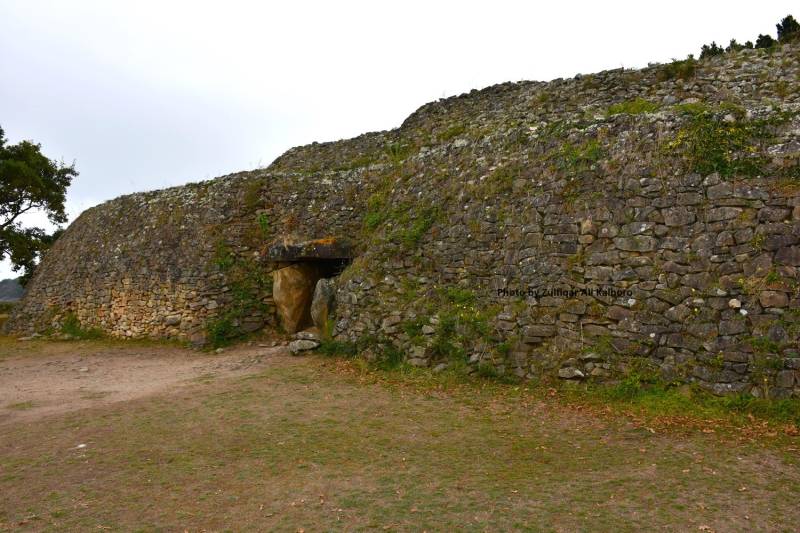
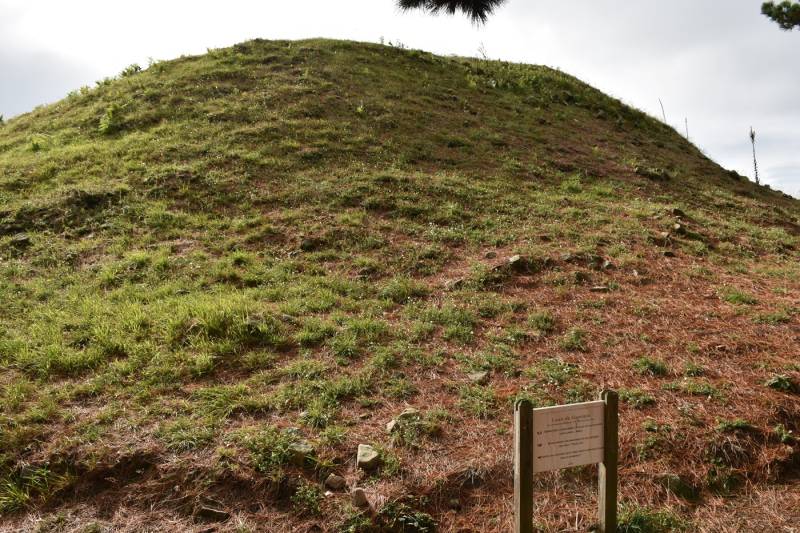
Gavrinis, a small island in the Gulf of Morbihan, holds Brittany's most impressive Neolithic cairn/tumulus or passage tomb, a unique experience to be noted for its incredibly carved stones. The Gavrinis passage tomb, an ancient burial ground covered by a cairn (stone mound) with an earth mound on top, has sparked curiosity among researchers and laypeople for years. Their fascination led to the first excavation of the site in 1835 and subsequently in the 1960s, 1970s, and 1980s.
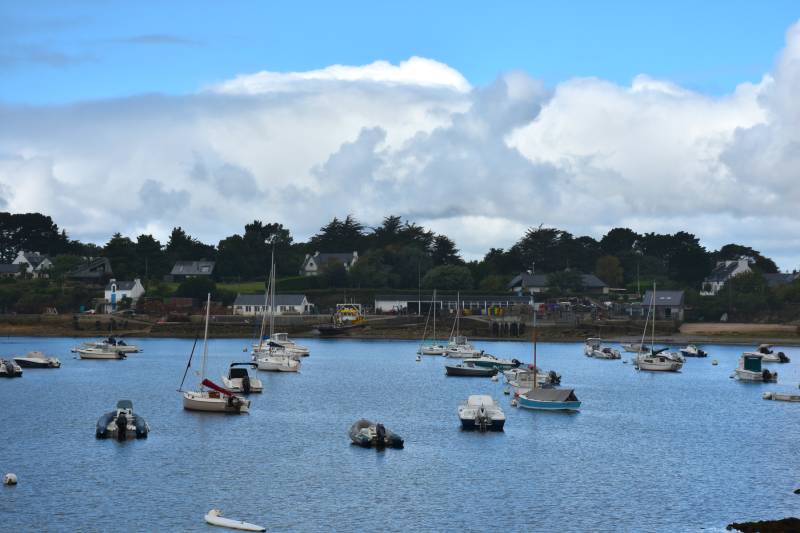
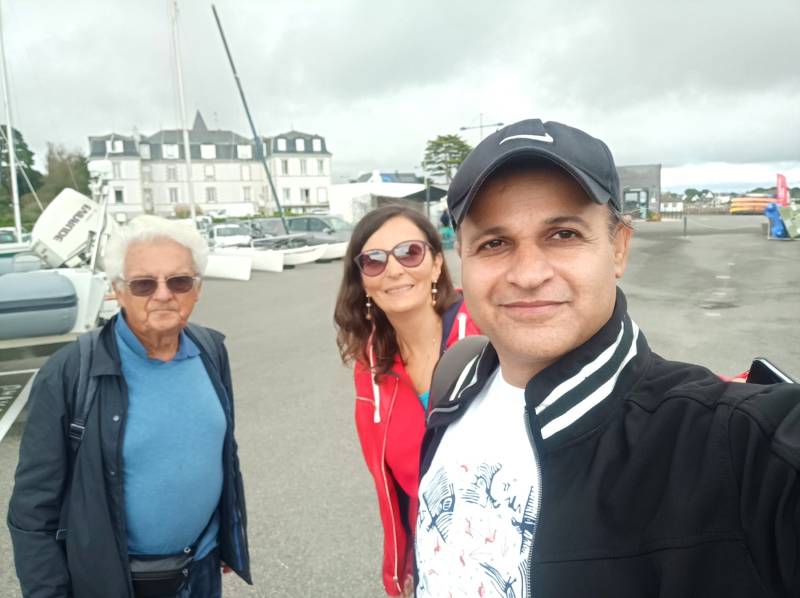
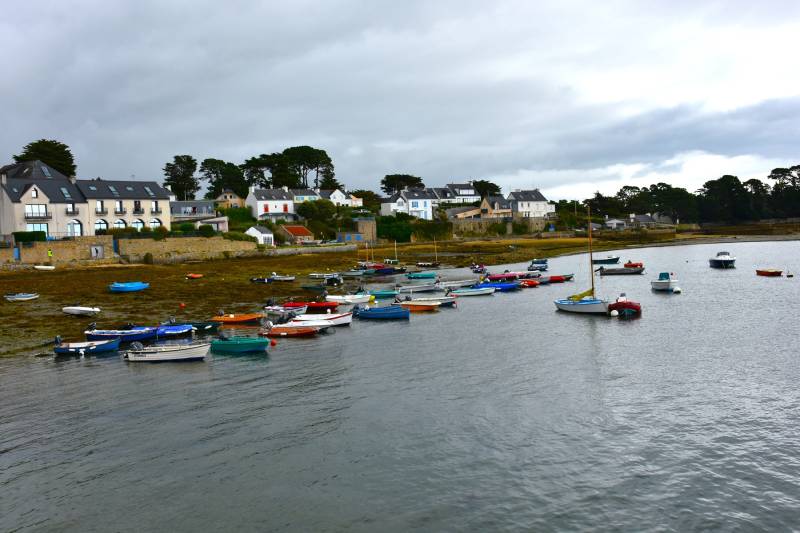
Gavrinis, accessible from the Larmor-Baden port town, offers many popular tourist attractions, including the Gavrinis passage tomb. We bought boat tickets from the port town of Larmor-Baden, also renowned for oyster farming. It is about a 13-minute boat ride from Larmor-Baden to Gavrinis Island. As we sailed, we were greeted by a magnificent stone circle on the small Island of Er Lannic, with a few standing stones visible from a distance, which sometimes remain submerged due to tidal immersion. This stone circle is in front of Gavrinis Island.
The Gavrinis burial mound, or passage tomb, is open to visitors from April to October. During this period, Larmor-Baden attracts many visitors who join guided tours to the site. These tours provide an opportunity to explore the monument while learning about its archaeological significance, architectural features, and remarkable Neolithic art. A visit to Gavrinis is therefore both an educational and an immersive encounter with Neolithic art and architecture, offering valuable insights into the beliefs, artistic traditions, and funerary practices of Neolithic communities in Brittany.
As my Italian colleagues discussed the site's history and archaeological significance, I was deeply impressed by the monument before me. The Gavrinis passage tomb, measuring approximately 50 metres in diameter and generally dated to around 4000 BC, represents an outstanding example of Neolithic funerary architecture in Brittany. During our visit, the tour guide and Italian archaeologists explained how they built the passage and burial chamber, highlighting the considerable technical skill involved. The chamber and passage were constructed using around 50 large stone slabs, while the massive ceiling slab of the burial chamber, weighing approximately 17 tonnes, is particularly remarkable. Standing within the monument, I was particularly struck by the immense labour, technical knowledge, and collective organisation required to quarry, transport, position, and erect such massive stones.
The construction of Gavrinis thus reflects not only the architectural ingenuity of Neolithic communities but also their sophisticated understanding of stoneworking and their capacity to mobilise substantial human resources to create monumental funerary landscapes.
Masterpieces of Stone
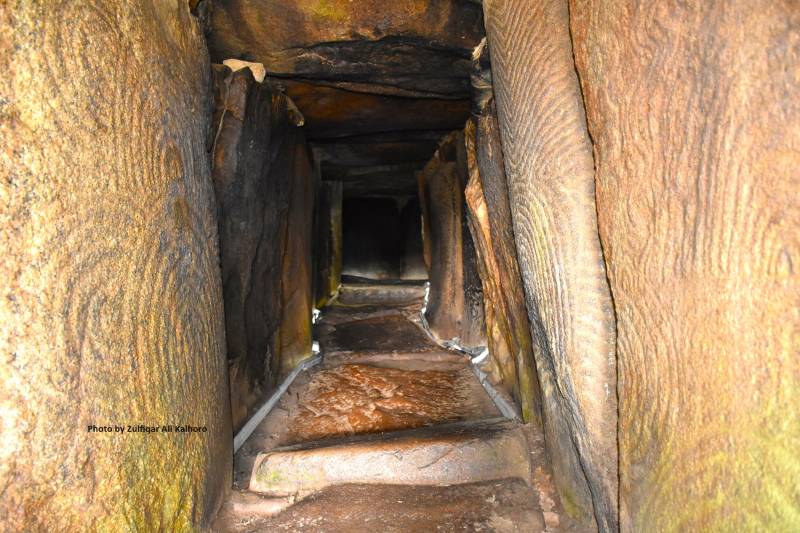
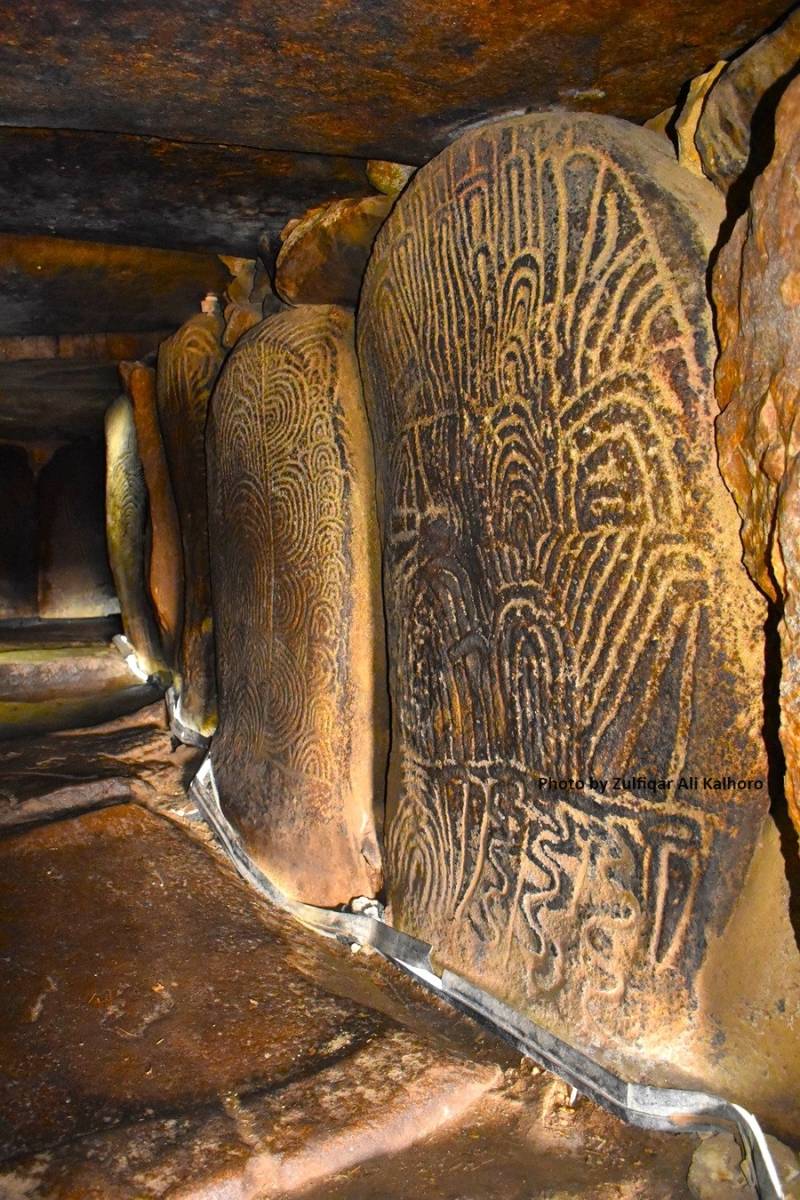
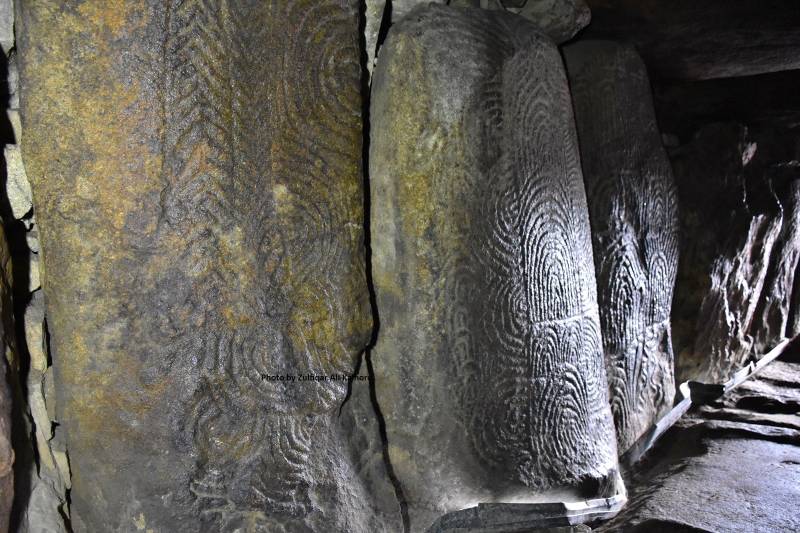
Twenty-nine slabs form the sides of the passage of Gavrinis, of which twenty-three are highly decorated, each slab a masterpiece of megalithic art. The stones depict intriguing designs, including zigzags, concentric circles, herringbones, axes, bows, and arrows, a rare sight in megalithic monuments. This rarity makes Gavrinis a must-visit for any history enthusiast. The entire surface of the upright stones in the passage and chamber of the Gavrinis cairn is decorated, a feature that sets it apart from many other megalithic monuments in France.
This unique monument is renowned for its beautiful geometric designs and unparalleled construction. More than just a stunning sight, the Gavrinis passage tomb holds significant historical value, marking an important period in the evolution of megalithic art. Many scholars have written on Gavrinis, focusing on its construction technique, dating, folklore, megalithic art, and many other aspects.
Alberto Pozzi (2013) argues that Gavrinis is the most well-known and visited sepulchral monument: a long passage-dolmen with a simple chamber covered by a mound 50 metres in diameter, and the only French megalithic structure without traces of amplification or modification. He believes its construction period is unknown, even though excavations in front of its façade have uncovered pottery sherds and tools dating to 3,500 and 3,000 BC. The chamber of Gavrinis is decorated with recurring chipped-out designs of axes, crooks, shield idols, arcs, and zigzag patterns that are either interlacing or presented just once. The site of Gavrinis, built around 4000 BC, represents the peak of Morbihan art and, indeed, all megalithic art in western France.
Mysteries in Stone
Upon entering the long passage of Gavrinis, the visitor is immediately struck by the extraordinary richness of its carved decoration. Many stone slabs are covered with carefully pecked motifs, offering a remarkable glimpse into the artistic and symbolic world of Neolithic communities. Among the most intriguing motifs that I observed were hafted axes, axe blades, diverging crooks, zigzags, buckler-like forms, concentric circles, lozenges, bows and arrows, spirals, and chevrons, along with numerous other geometric and abstract designs. The meaning and function of these motifs remain difficult to determine with certainty. Although scholars have proposed various interpretations, no single explanation has gained universal acceptance. Interpretations often reflect different theoretical and methodological approaches, ranging from symbolic and religious readings to those concerned with social identity, ritual practice, and funerary beliefs.
The scholars have studied the signs from different perspectives. However, the most remarkable book, Megalithic Art of Western Europe by Elizabeth Shee Twohig (1981), is the only work that helps to understand the complex motifs of megalithic monuments to some extent. This book covers megalithic art in three geographic areas: Iberia, France, and Ireland. In this book, the author addresses the problems of interpretation, origins, relationships, techniques, functions, and dating of megalithic art. The book also discusses the megalithic art of Gavrinis in detail. It is a seminal work on megalithic art.
Like many other megaliths of Brittany, Gavrinis is a well-preserved and managed site that attracts thousands of tourists between April and October. Visiting this site is not just a journey into the past but a fascinating insight into Brittany's ancient history, which will surely enlighten the visitor.