

Four years ago, at the climate summit in Egypt, United Nations Secretary-General António Guterres delivered a warning that should have shaken every government awake: “We are on a highway to climate hell with our foot still on the accelerator.” Four years later, the world is still pressing the accelerator. The scene at COP31 in Antalya this week offered another telling picture of the climate crisis and the politics surrounding it. There were speeches, promises and warnings. But for Punjab, there is a more immediate question: what are we doing about the air people breathe every day?
Each winter, the same story is repeated. The air becomes poisonous. Schools close, hospitals fill up, and politicians appear before cameras with a new set of rules under the banner of an “emergency”. Fingers point towards India. For a few days, headlines focus on Diwali fireworks and crop burning across the border. Then the season moves on, the headlines fade, and the smoke remains. There is a need to move out of waiting mode and take an active role in addressing Punjab's smog crisis.
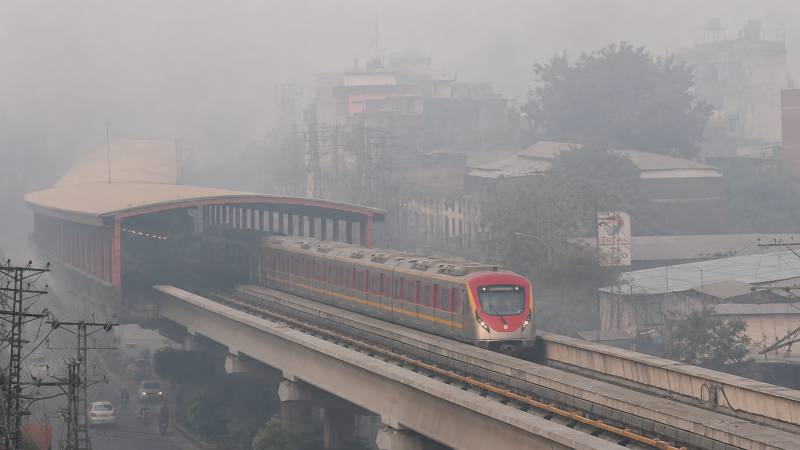
Lahore was once renowned for its gardens, poetry, vibrant nights and the longing for its spring. Winter called people outdoors, not inside behind locked windows. Today, Lahore is a choking city. Morning light turns grey, familiar sights disappear behind haze, and even walking outside can hurt your lungs. But this is not just Lahore's tragedy. The entire province is under a blanket of smog, from Faisalabad to Multan, Gujranwala to Rawalpindi. The real tragedy is that an entire province is becoming accustomed to breathing poison.
Smog hangs over Punjab like a fire vulture, feeding on the residue of our own neglect. Under Chief Minister Maryam Nawaz, Punjab has announced a more proactive anti-smog approach. It includes inspections of smoke-emitting vehicles, closer monitoring of brick kilns, action against crop-residue burning and the use of Safe City cameras, thermal imaging and AI-based systems to identify violations. The government has also launched the “Chamkta Lahore” cleanliness and anti-smog campaign. These steps deserve assessment on evidence, not ceremony.
People can see the effort. Now they need to feel the difference. The government should ask ministers what they have changed, not how many meetings they have attended. Departments should be judged by how many major polluters have stopped violating standards, not how many legal notices they have dispatched. How many polluting vehicles have actually been taken off the roads? How many factories and kilns have been brought into compliance? Has the air become measurably cleaner across Lahore and the rest of Punjab?
Across the border, political leaders have used humour and political exchanges to respond to the smog crisis. There is little to celebrate in that spectacle. The real competition between the two Punjabs should be about cleaner air, fewer crop fires and practical support for farmers. Let the contest be measured in pollution levels, not punchlines. The WHO guideline for PM2.5 is 5 micrograms per cubic metre as an annual average and 15 micrograms as a 24-hour average. Punjab's readings often rise many times above these levels. This is not a minor inconvenience or a seasonal irritation. It is a public health threat that follows people into their homes, workplaces and classrooms.
People do not need more meetings, legal notices or photo opportunities. They need to know how many polluting vehicles have been removed, how many factories have complied, and whether the air they breathe is actually becoming cleaner.
The Air Quality Index in Lahore rose to 590 on November 9. In some areas, readings crossed 1,000. At individual monitoring locations, Allama Iqbal Town recorded an AQI of 1,033, the CERP office 864 and Burki Road 748. These are not abstract numbers on an international ranking. They represent neighbourhoods where people are going about their daily lives while breathing extremely hazardous air. Whenever the fog disperses, however, the finger-pointing begins. Look at Indian Punjab. Look at their fireworks. Blame the winds.
Yes, pollution crosses borders. But using that fact to explain away everything is merely a justification for inaction at home. We are polluting, we are burning, and we are getting stuck in traffic jams under clouds of fumes. NASA satellite data revealed more than 2,700 fire hotspots across Punjab, Pakistan, during the reported monitoring period. The number was 15 per cent higher than the previous year and 51 per cent above the eight-year average from 2018 to 2025. Not all hotspots were crop fires, nor does every detection mean that smoke travelled to Lahore. But the figures challenge the perception that this is entirely someone else's problem.
Our own contribution is too significant to dismiss. Farmers burn their fields because it is quick and inexpensive, and they have to prepare for the next crop within a narrow window. It is easy to sit in an office and tell them not to burn. Offering viable alternatives is more difficult. Farmers need affordable machinery, early access to subsidies and practical support before the burning season begins. Super Seeders and other residue-management equipment must reach them when they need it. Threats alone simply transfer responsibility to the weakest.
But crop burning is not the whole story. Urban pollution is an industry of its own, operating throughout the year. Old cars and buses release exhaust into congested streets. Industries operate without adequate emission controls. Building sites generate dust clouds. Garbage is burned near residential areas, while commercial kitchens and roadside stalls add to the problem. The contribution of each source varies by season and location. Punjab needs reliable figures, fair investigations and clearly identified responsibility. That is the only way to determine what needs to be fixed.
Smog becomes more visible during winter because cold air, low wind speeds and temperature inversion trap pollution close to the ground. But pollution remains a year-round problem. Winter simply makes it harder to ignore. Not all pollution is visible, and the most dangerous is often the pollution we cannot see. PM2.5 particles penetrate deep into the lungs. Long-term exposure is associated with heart disease, strokes, respiratory illnesses and lung cancer. The old, the sick and young children are particularly vulnerable.
Lahore's residents could gain around 5.8 years of life expectancy if particulate pollution were reduced to the World Health Organization's guideline. That is not just an abstract number. It means years of birthdays, family dinners, school graduations and memories. The consequences spread far beyond hospitals. Schools close, examinations are delayed, children are kept indoors, parents lose working hours and healthcare bills increase. Even wildlife, wetlands and Lahore's historic environment suffer from the wider pollution burden.
Punjab has been talking about smog for years. The province introduced its Policy on Controlling Smog in 2017. New technologies and rules for brick kilns were announced. We have heard about zig-zag kiln technology, vehicle testing, tree planting, machinery for crop-residue management, electric transport and industrial inspections. Punjab also introduced the Smog Prevention and Control Rules in 2023. Some of these measures can help. But we must not regard publicity as progress. Smog guns, water tankers and press conferences are no cure for leaking bus exhausts and polluting factories.
The deeper problem is accountability. Pollution rules often affect the unprivileged most, while the powerful walk away. Environmental standards can be strict for a small business but negotiable for the well-connected. Are those who profit from pollution ever made to pay for the damage they cause? The courts have forced officials to act, but judges cannot manage environmental agencies. This is the work of well-managed institutions that are transparent, empowered and determined. Courts can push, but only sustained political will can deliver lasting results. And Lahore cannot be the only focus. The smog crisis is not confined to one city. Pollution comes from factories, kilns, markets and commercial activity throughout Punjab. Cleaning a few main roads while leaving industrial areas unattended is not a solution.
Business also has an important role to play. Restaurants and factories must meet environmental standards. Brick kilns need cleaner technology. Dust control should be compulsory at construction sites. But the rules must be fair. Do not close a small business while allowing a larger company to pollute freely. The law must apply equally, regardless of influence or wealth.
Citizens also have responsibilities. They can avoid burning garbage, maintain their vehicles and use public transport where possible. But citizens cannot enforce environmental laws. That remains the responsibility of the state, which must also make sustainable choices realistic and affordable. Masks can reduce exposure during periods of heavy pollution, but masks are not the answer. Clean air is not a product that should only be available to the affluent.
Punjab is not asking for another November pledge. It needs cleaner fuel, safe and reliable public transport, serious industrial standards, genuine assistance for farmers and accurate air-quality data. Most importantly, it needs governments that can actually take action. It also needs to work with India where necessary. There is a precedent. In 2017, then Punjab chief minister Shehbaz Sharif wrote to his Indian counterpart, Captain Amarinder Singh, proposing a regional arrangement to tackle smog and environmental pollution. He identified vehicle and industrial emissions alongside rice-stubble burning and argued that both Punjabs needed to work together on technology and practical alternatives.
The proposal did not lead to a sustained regional mechanism. Nearly a decade later, the need for one is even harder to ignore. Air pollution does not respect borders. But neither does that excuse either side from controlling its own sources. We should not be distracted by grand international speeches on climate change while ignoring what is happening outside our own doors. The sky belongs to everybody: the farmer, the shift worker, the schoolchild and the family sitting together at dinner. When people cannot breathe freely, they should not have to beg for the right to do so. Departments should publicly report how many inspections they have conducted, what assistance farmers have received, which vehicles have passed emission tests and how many polluting units have been brought into compliance. People cannot know whether anything is improving unless the figures are made public.
Ministers must be responsible when their departments fail. Officials must explain when projects stall. No one's influence should justify breaking the law. A government can build roads, launch projects and make grand promises. But if its people cannot step outside and fill their lungs with clean air, what is the point? The real measure of environmental progress is not the number of meetings, campaigns or press conferences. It is whether people can breathe more easily than they did before. Punjab does not need another season of promises. It needs results.