

War has long been analyzed through competing frameworks of human politics from a necessary instrument of national defense, national sovereignty, and alliance obligations to an ideological duty or a catastrophic breakdown of diplomacy. Beneath the solemn rhetoric of patriotism, honor, and national interest, however, contemporary political economists and academic research projects, such as Brown University’s Costs of War Project, argue that there exists a powerful, self-sustaining economic infrastructure. From this analytical perspective, armed conflict functions not merely as a temporary rupture in international relations, but as a primary driver of global capital accumulation and one of the most lucrative industries in human history. It operates as a complex ecosystem where physical destruction generates commercial demand, suffering becomes a commodity, human vulnerability is exploited across illicit markets, and military expenditure fuels corporate revenue, promising unmatched profit margins for defense contractors, financial institutions, private security firms, and clandestine black markets.
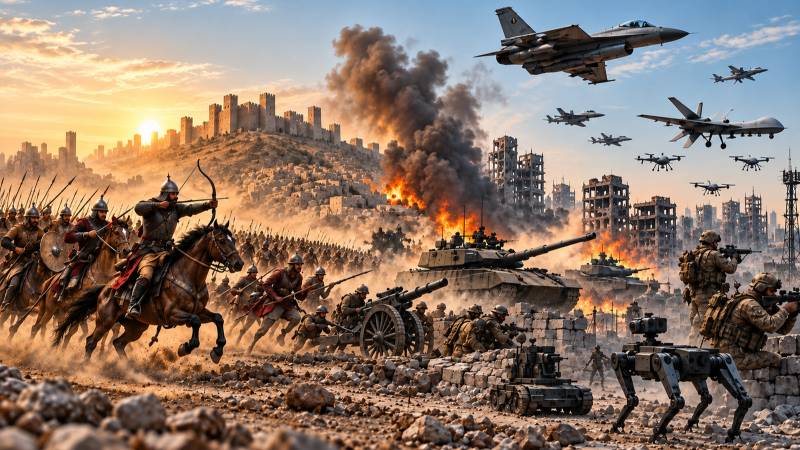
At the core of this economic architecture stands the military-industrial complex, a concept popularized by U.S. President Dwight D. Eisenhower in his 1961 farewell address when he warned against the unwarranted influence of a massive military establishment combined with a large arms industry. In subsequent decades, this dynamic transformed into a global reality, where transnational defense corporations develop advanced missile defense shields, stealth fighter jets, armored vehicles, and autonomous surveillance drones that require billions of dollars in long-term research, development, and procurement programs. While industry representatives and defense analysts contend that these investments are essential for maintaining national security, fulfilling international treaty obligations, and deterring aggression, critical analysts point out that corporate business models inherently rely on constant geopolitical tension to justify perpetual state spending. Recent military escalations involving the United States, Israel, and Iran perfectly illustrate this dynamic: as air defense interceptors, precision-guided munitions, and heavy artillery stockpiles are rapidly consumed, global defense conglomerates see their order books surge to historical highs. The continuous cycle of weapon replenishment guarantees that as long as bombs fall across conflict zones, corporate balance sheets thrive, supported by millions spent routinely by defense contractors lobbying governments, funding security think tanks, and supporting political campaigns to ensure national security policies remain interventionist and heavily reliant on militarized solutions.
Arms manufacturing, however, is merely the first layer of the war economy, as the modern battlefield has increasingly privatized combat and security operations through Private Military and Security Companies (PMSCs). Across the Middle East, North Africa, and Eastern Europe, private contractors routinely execute tasks previously assigned exclusively to state military personnel, including supply chain logistics, base infrastructure management, intelligence processing, and direct combat training. Proponents argue that PMSCs provide operational flexibility and cost efficiency for state forces, but political economists note that privatizing warfare transforms the human cost of conflict directly into corporate revenue and dividend payouts. Every deployed contractor, every logistics vehicle fueled, and every meal served in a conflict zone is billed to governments at inflated rates. Because these private entities are accountable primarily to commercial shareholders rather than electorates, they operate with limited public transparency, creating structural incentives where prolonged warfare directly supports sustained corporate earnings.
The ideological, religious, and nationalistic narratives provide the emotional ignition; capital provides the fuel, the machinery, and the motive for its preservation. As long as the destruction of human life yields higher returns on investment than peace and human development, conflict will remain a permanent requirement of global business.
Beyond direct combat, conflict yields staggering returns through the business of post-conflict reconstruction. The physical devastation of cities, power grids, bridges, and energy facilities during conflicts—such as the systematic destruction observed in Gaza, alongside carpet-bombing and infrastructure collapse across Syria, Iraq, and Yemen—is not viewed by global capital as a mere tragic byproduct, but as a guaranteed future market for redevelopment. Once active bombardment ceases, or even while operations continue, multinational construction, civil engineering, and resource extraction firms move in to rebuild what was systematically destroyed, supported by lucrative government contracts funded through taxpayer funds, international aid packages, and multilateral loans. Analysts point to a supreme structural irony: the same powers and donor bodies that fund or execute military bombardment simultaneously finance the corporate entities contracted to reconstruct the resulting ruins. In this circular economic flow, physical destruction creates a clean slate for infrastructure development, real estate, energy concessions, and market expansion, allowing global capital to profit twice from the exact same crisis.
In the darkest recesses of the war economy lies a subterranean market that profits off the sheer physical vulnerability of human beings through illicit commercial networks, particularly human trafficking and the organ trade. War destabilizes state infrastructure, destroys law enforcement mechanisms, and displaces millions of vulnerable individuals, creating ideal operating environments for transnational criminal syndicates. Reports from the United Nations Office on Drugs and Crime (UNODC) and formal submissions to the UN Security Council confirm that forced displacement across war-torn regions—such as parts of Sudan, Somalia, the Democratic Republic of Congo (DRC), and refugee corridors fleeing Middle Eastern conflicts—increases population vulnerability to predatory trafficking networks. While official UN datasets stress that organ trafficking represents a localized fraction of broader human trafficking networks rather than a universal operational norm across all war zones, documented cases reveal how extreme economic desperation drives starving families and vulnerable refugees to sell organs for basic survival, while organized syndicates exploit conflict chaos and the absence of medical oversight to forcibly harvest organs from the fallen and disappeared, reducing the human body itself to raw material for financial gain.
The financialization of war extends deep into sovereign national economies and capital markets, where entire nations depend structurally on global conflict to sustain domestic markets. Sovereign states with massive military-industrial sectors, led by global powers, rely on international arms exports to balance trade deficits, maintain industrial employment, and stimulate domestic technology sectors, turning global peace into a direct structural threat to employment rates, research grants, and manufacturing output. Advanced arms sales serve as leverage to forge diplomatic alliances, secure access to vital foreign natural resources, and maintain sphere-of-influence dominance over developing nations in Africa and the Middle East, while locking purchasing countries into multi-decade dependencies for maintenance, software licenses, replacement parts, and ammunition. Concurrently, financial institutions, investment banks, and private equity firms hold substantial stakes in major defense enterprises, tying pensions, mutual funds, and university endowments to defense sector performance, ensuring that capital markets explicitly price in the financial benefits of escalating geopolitical violence.
Furthermore, military interventions historically align with securing strategic energy corridors, vast oil reserves, gold mines, cobalt deposits, and rare earth elements necessary for advanced industries. The destabilization and resource exploitation of African nations like the DRC and Libya reveal how armed conflict is leveraged under the guise of humanitarian intervention, anti-terrorism, or democratic promotion to grant multinational mining and energy conglomerates unregulated access to primary commodities, cementing the structural dominance of global capital over resource-rich but economically marginalized territories. This financial logic is similarly reinforced by the global news media ecosystem, where war coverage generates unprecedented viewer engagement, driving ratings, subscriptions, and advertising revenues.
Sensationalized coverage of conflicts in Gaza, Iran, and the wider Middle East, combined with embedded reporting and constant commentary by former military officials who frequently serve on the boards of defense contractors creates a self-referential loop that normalizes militarism and manufactures public consent for high military budgets without significant democratic pushback. Ultimately, viewing war through the lens of human tragedy alone obscures its primary structural drivers. The ideological, religious, and nationalistic narratives provide the emotional ignition; capital provides the fuel, the machinery, and the motive for its preservation. The destruction of human life yields higher returns on investment than peace and human development, conflict will remain not a temporary failure of civilization, but a permanent requirement of global business.