

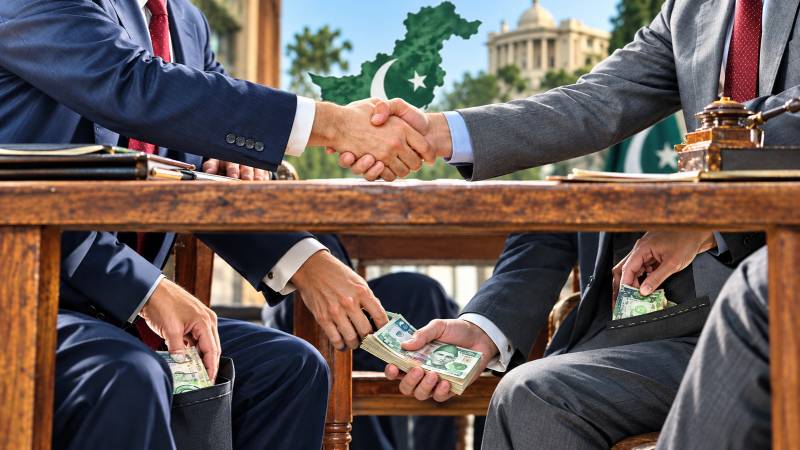
Although mafias had their origins in Italy, the mindset shaping mafias permeated in different parts of the world. According to Collins dictionary, mafia means, “criminal organization that makes money illegally, especially by threatening people and dealing in drugs.” Mafia also refer to an “organized group of people who you disapprove of because they use unfair or illegal means in order to get what they want.” According to Cambridge dictionary mafia means, “a close group of people who are involved in similar activities and who help and protect each other, sometimes to the disadvantage of others.”
Moving from specific to a general definition of mafia it refers to a group of people who use illegal methods and fraud to accomplish their objectives. From a selective definition of mafias, one can understand that the erosion of ethics and values in the past several decades tend to generate the role of mafias everywhere. At the international level, one can figure out mafias in illegal occupation of land as is found in Palestine; energy mafia, food mafia, drug mafia and weapon mafia.
Karachi is world’s mega city with a population of 30 million and contributes 60% revenue of Pakistan but is notorious because according to The Economist Intelligence Unit, it is termed as world’s 4th unlivable city. Karachi is also known as a city where mafias rule the metropolis in the form of water mafia, land mafia, drug mafia, illegal construction mafia and criminal mafia. Coming to Pakistan which has a population of 250 million and is the world’s 5th largest country in terms of demography and the only nuclear state in the Muslim world, mafias are known for committing election fraud, sugar mafia, wheat mafia, drug mafia, oil mafia and mafias in political parties. State institutions are also not saved from mafias in bureaucracy, judiciary and security agencies. As a result of permeation of mafias in state and societal institutions, Pakistan is economically and political fragile with serious governance issues, absence of rule of law and lack of accountability.
Erosion of ethics and values in Pakistani society provided enormous space to mafias for their emergence in the last five decades. When the distinction between right and wrong; black and white and good and bad is gone, mafias involved in corruption and nepotism gain strength. When petroleum prices and costs of essential items like electricity, gas, food and transport are not controlled it means mafias in connivance with state authorities are engaged in illegal making of money and thus making the lives of people miserable.
When petroleum prices and costs of essential items like electricity, gas, food and transport are not controlled, it means mafias in connivance with state authorities are engaged in illegal making of money and thus making the lives of people miserable.
Ironically, majority of people agree that it is because of mafias that there is economic and political crisis, bad governance, absence of rule of law and lack of accountability, but people lack the strength and capability to eradicate mafias. Does it mean that instead of reducing the power of mafias, people have joined their rank and file? In such an eventuality, the present and future of Pakistan has a question mark because if civil society and people are unable to play an effective role for the eradication of mafias, it means chaos and disorder in society.
Till late 1960s and early 1970s, Pakistan was relatively mafia free because rule of law mattered and those involved in corruption and nepotism were taken to task. But, things began to negatively transform in Pakistan since early 1970s when political interference in governance became a state policy. Mafias began to emerge when the government of Z. A. Bhutto and his successors compromised on principles and by diminishing merit. Mafias cannot flourish in a society which is based on merit, rule of law and accountability. When the line drawn between right and wrong is blurred and vanishes and those involved in violating law are able to get away, the outcome is criminalization of politics, society and state. Unfortunately, since early 1970s till today, no cogent effort was made to eradicate the role of mafias which led to the erosion of merit and rule of law. In the pursuit of power, the power of mafias is used as a means to justify their end.
Relentless power of mafias needs to be examined form thee angles. First, criminalization of society has given an impetus to mafias. When crimes and illegal things are accepted in society, it means mafias consider it legitimate to usurp things and cause harm to the interests of people. Otherwise, land, water, electricity, drug and education mafias wouldn’t have got space.
The surge of mafias in Karachi and Pakistan has to do with power possessed by such elements to engage in things in connivance with state authorities. When power of ethics and morality is replaced with the power of mafias the result is erosion of society and state. Unlike the past when mafias involved in crimes and other illegal things were considered as a taboo in society, unfortunately today they enjoy respect and power. Second, when there is dearth of proper education and training at the grassroots’ level, one can expect the emergence of mafias at large. When society is silent by agreeing to accept disputed elections held in February 2024; the passage of 26th and 27th constitutional amendments; taming of judiciary and media and the emergence of emergency in KPK, it means nexus between mafias and state authorities is a reality. When civil society is fragile and those who were critical of prices during the government of former Prime Minister Imran Khan are silent today in condemning and challenging the surge of prices in petroleum, electricity, gas, food and public transport it means that they have become part of mafias.
Finally, is there any hope to get rid of mafias who are responsible for ruining the lives of people by depriving them of legitimate political rights, a better standard of living, democracy and political pluralism? As things stand today, suffocation and exploitation by those wielding power tends to marginalize any hope to get rid of mafias. Critics argue that it is not in the DNA of Punjab, which happens to be Pakistan’s most populous province, to resist and struggle for democracy, political pluralism and rule of law. Punjab has no history of defiance against exploitation, political subjugation and oppression. It means, there is marginal hope in Pakistan for eradicating mafias who have their stronghold in all the provinces of Pakistan but get patronage from elites and establishment representing particularly central Punjab.
As mentioned earlier, without the restoration of ethics, values, training and education one cannot expect mitigation of mafias. Unless the new generation of Pakistan is properly educated and trained against corruption and nepotism; adherence to rule of law and accountability, one cannot expect mafias to be controlled and eventually marginalized. When mafias become part of culture and majority of people do not challenge their existence and operations, Pakistan would remain a corrupt state with no accountability and rule of law. Will the IMF, World Bank and other lending financial institutions give a thought about how mafias control the economy, politics and governance of Pakistan or they themselves represent mafias support corrupt and inefficient practices of the borrower. The power of mafias in Pakistan will certainly dwindle if the international lenders have a zero tolerance for corruption and nepotism.