

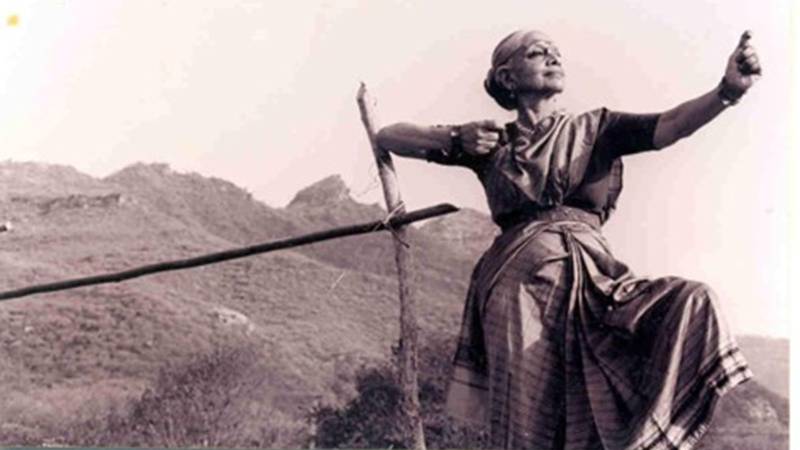
How do you begin to write about a beloved Guru, a ruhani ma/mother in spirit, as a true teacher is called in our lands, who taught over two thousand students in her life, single-handedly trailblazed a new indigenous Pakistani Bharata Natyam, and shaped nearly three decades of mine?
I ask myself what would Indu ji (as I referred to her) do? So, I begin with a story she often shared about Nataraj, Lord of the Dance, who stopped his duties mourning the loss of his wife. Eventually, wise elders together convinced him to return to his work, as the whole world had stopped. Even the gods cannot have a day off, and have to return to duties. And so, Indu continued what she would call her jihad of teaching dance in Pakistan after her beloved husband Aboo Bakr Osman (Major General AO Mitha)’s death in December 1999.
These were evening dance classes for grownups in the sanctuary provided by her daughter Yameema Mitha’s unique bilingual Montessori by day—Mazmun-e-Shauq (or A Subject of Passion). It is here that began my over two decades long schooling in what I call Mera Mazmun-e-Shauq (The subject of my Passion), in the year 2000. Today, I too, like Indu ji, must allow the light to enter in this wound (Rumi) of mourning her, my Ruhani Ma, my soul guide, my daughter’s “Indu Dadoe” (paternal grandmother), and get back to my assigned work. So, in memory of my guru for the rest of the piece I will do just that, turn to her memory for counsel and share her light and passions.
In loving memory of Indu ji, this feature focuses exclusively on her trailblazing innovations and labor to indigenise Bharata Natyam, to make it meaningful for her mostly Muslim and Christian Pakistani students. She used her early Kathak classes as her teaching methodology for beginner students, while Lahore classes with Zohra Sehgal and Kameshwar gave her creative vocabulary to set movement ideas and themes that called her personally through her Udhay Shankar style dance dramas.
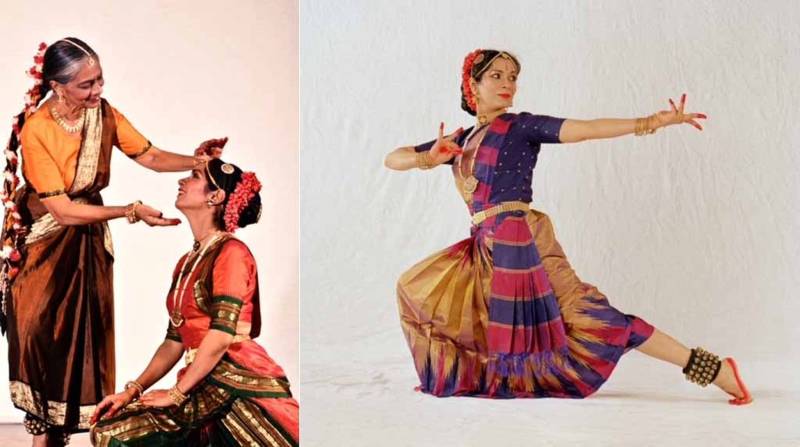
Indu, a prolific writer herself, edited her late husband’s book posthumously, “Unlikely Beginnings: A Soldier’s Life” (2003), and regularly reviewed theatre, music, and dance performances with scholarly and unique insight and rigor. Appalled by most journalists who introduced her as a “Kathak maestro” (personal correspondence), she invested in the intellectual education of her dance students, assigning review writing and after-class discussions.
Legacy of Beauty and Knowledge
Indu ji’s forte is Bharata Natyam. She meticulously worked to indigenise it in Pakistan, and this for me is her primary trailblazing contribution. Not many in Pakistan realise her trailblazing work, myself included, till I left for studies abroad and learned Bharata Natyam from teachers from other countries (Japan, India). This erasure is primarily due to Bharata Natyam being wrongly associated with “Bharat,” getting entangled in nation-state politics, the “Long Partition” (Zamindar), the decades-long process of dividing the land, and its continuing aftermath on social and cultural institutions in Pakistan, India, and Bangladesh today. In short, we have lost a generation of teachers of this dance.
An important point for me is the spirit in which young Indu chose Bharata Natyam as her preferred form despite her initial childhood Kathak lessons, and then teenage Udhay Shankar training arranged by her loving mother, as Indu grew up in the campus grounds of Government College (GC) Lahore. Indu, only seventeen at Partition, had to migrate to Delhi with her family. The nationalist spirit was at its peak and thus South Indian dances first travelled to North India, and enamored Indu. She started classes at the Sangeet Natak Academy, Delhi with Vijay Raghava Rao, but after witnessing the level of professionalism that she aspired to in Rukmini Devi’s visiting troupe, decided to travel to Madras to learn further Kalakshetra style from Lalita Shastri. So, it was in the spirit of getting to know other parts of India, as she said even South and North India hardly knew each other; thus the seed of “Inclusivity” was planted from day one, which would bloom later in her repertoire.
| Rukmini Devi’s Bharata Natyam Revival | Indu Mitha’s Indigenising Bharata Natyam for Pakistan |
|---|---|
1. Expansion of the Female Dancer's Role
| 1. Multidisciplinary Leadership & Production
|
| 2. Aesthetic Adjustments Low-key approach to Sringara (erotic sentiment): Selected context of “inward essence” instead of “overt eroticism” (Srinivasan 1985, 1875). Followed the Pandanallur tradition at Kalakshetra. | 2. Preservation of Technique Indu retained the Pandanallur tradition: austere, geometrically precise shapes, and vigorous techniques. |
| 3. Textualisation and “Sanskritisation” Increased textualisation and “Sanskritisation” of Kalakshetra: Brought Sanskrit literature, aesthetic theory, and ancient dance dramas into the Bharata Natyam repertoire for the first time (Coorlawala, O'Shea 2007). | 3. Urdu Integration and Universal Themes
|
| 4. Class Distinction Use of expensive saris and jewelry as indispensable markers of respectability (Coorlawala 2005, 184). | 4. Crossing Class Divides These markers were relevant for the majority of her female students, but Indu crossed class divides through her patronage of minoritsed male dancers from Islamabad’s least privileged class. |
| 5. New Choreographic Ventures Devi was the first modern Bharata Natyam choreographer; choreographed new items within the formal Bharata Natyam structure.
| 5. Technical Innovations
|
| 6. Agency and Domesticated Female Characters Devi’s female characters operate within the patriarchal norms of society, never challenging them. | 6. Challenging Social Norms When Tehreema came of choreographing age, Indu co-choreographed strong female characters for the next generation, challenging social norms at multiple levels (eg, Ayree Maan / O Mother Mine). |
She inherited an incredible legacy of resistance and change from both her maternal and paternal lineage. Indu’s maternal great-grandfather was involved in the Brahmo Samaj movement, urged the abolishment of sati, advocated women’s education, and converted from Brahmin to Christian. Indu's love for music, dance, and appreciation for beauty was nurtured from her mother’s side of the family.
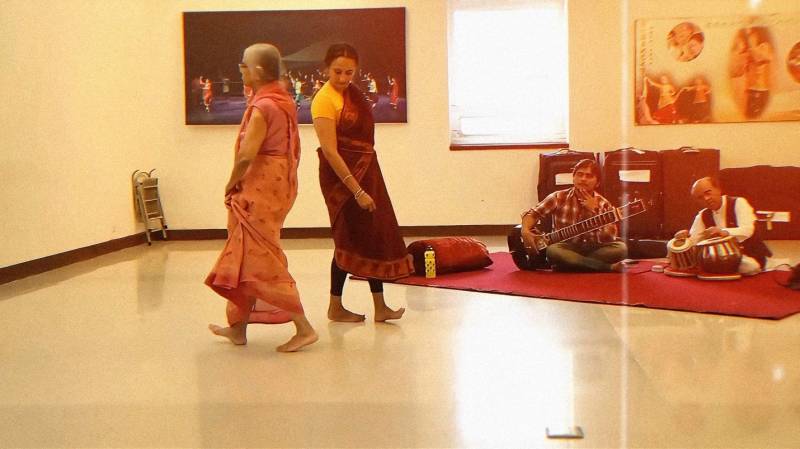
Photo Credit: M Alpi Fahroji
Indu’s paternal grandfather, Sushil Kumar Rudra, was the first Indian in Colonial British history to be Principal of the prestigious St Stephen’s College. He was the brains behind sending Charles Freer Andrews to convince Gandhi to return to India and lead the nationalist movement. While Gandhi was alive, it is this home that he always stayed in when in Delhi.
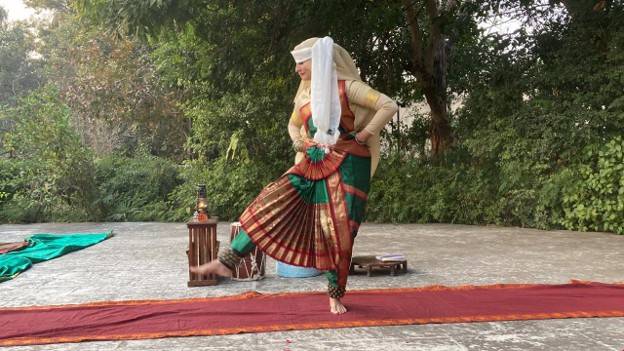
Photo Credits: Wilmar Salim
Indu, too, pursued philosophy at university for her bachelor's and also her master’s, receiving the first position and first division in her graduate studies, a rare achievement in those days. This combination of a rigorous intellect, and passion for aesthetics, dance, and music, was the ideal incubator for Indu’s unique interpretation of the Bharata Natyam repertoire.
Weaving Beauty and Wisdom through Music and Creative Inclusivity
Indu’s Bharata Natyam attained a unique northern flavor, for she transmuted the lack of availability of South Indian musicians and instruments in Pakistan with the demands and knowledge base of Pakistani musicians trained in the beautiful music khayal. She worked very hard while staying within the Bharata Natyam structure to coax her musicians, unfamiliar with it, to cross their familiar boundaries of Northern classical music.
In summation, the demands of her Muslim context and chiefly Urdu-speaking audience, and Indu’s strong command of the Urdu language, aided the delightful nurturing of Urdu translation for Bharata Natyam along with North Indian music. It was a soul-touching amalgamation of our sitar, veena, pakhawaj, flute, and sarod among others, with stories of our people and land in our mother tongue Urdu, but with the powerful vocabulary unique to this form. From the 1950s onwards, Indu gradually with her usual grace and beauty indigenised the traditional Bharata Natyam repertoire for the land of her love, Pakistan. Next, she found that low expectations and limited dance literacy from her audience meant more freedom to do as she pleases, unlike across the border. Appreciation of Kathak cakrs (circles) and fast-speed taals led to more korveys (steps stringed to rhythm) in some of her classical items.
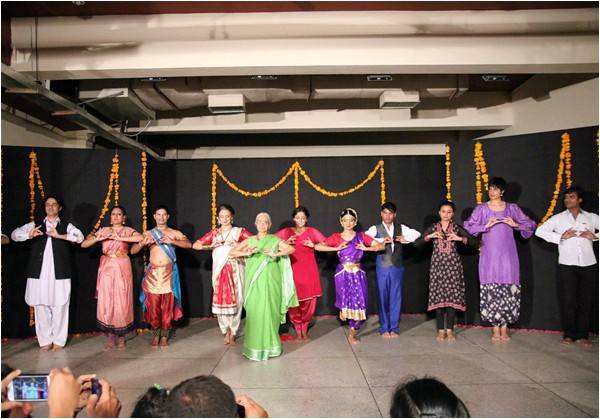
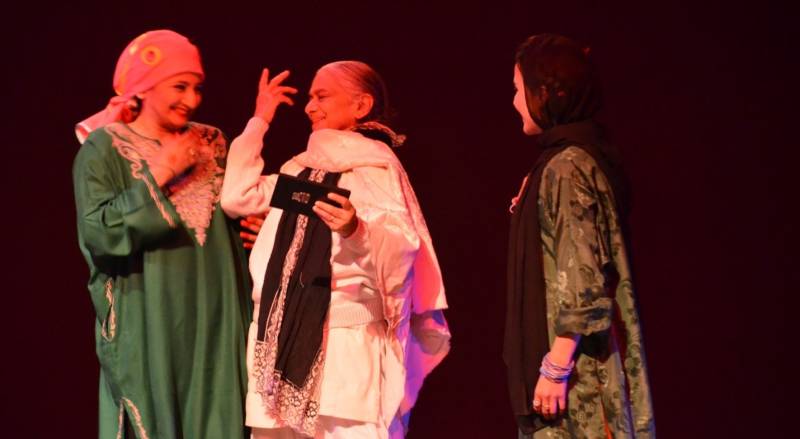
From the 1980s onwards, as Indu choreographed with and for Tehreema, together they started to change the representation of women in the traditional pieces that Indu had learned from Kalakshetra. Indeed, Indu’s legacy is thriving in her hands, as Indu would say fondly “mujh saey doe hath agaey” (she is two steps ahead of me), imbibing all that she taught and growing beyond in performance, theory, and intellect (Indu Dawn Images, 2021, Aslam Tehreema).
Indu was pleased that with the author’s move to Indonesia, her work crossed another border. Inspired by Indonesia’s celebration of pluralism and Indic roots, Indu choreographed Qaseeda-i-ilm-o-Jamal “An Ode to Wisdom and Beauty”, which premiered at her retirement show (2017). In 2023, when I first wrote about this piece, Indu, 94 years old then, meticulously worked on this manuscript, aided by loving eldest daughter Yameema Mitha ji. It led me in gentle and beautiful ways to the dried-up rivers of my land—interfaith harmony, and Indu’s choreographing inclusivity.
But it is only after she is gone that my eyes open to what our generation just lost—a precious wisdom carrier of all the “four-fold wisdom” (Thomas Berry, “The Great Work”) necessary to guide us to the future: wisdom of the land, of women, of classical traditions, and of science. Indeed, our Indu ji knitted these together seamlessly in her being and her work.
Indu was ilm,
Indu was Jamal,
Indu Mitha, our luminary of light.