

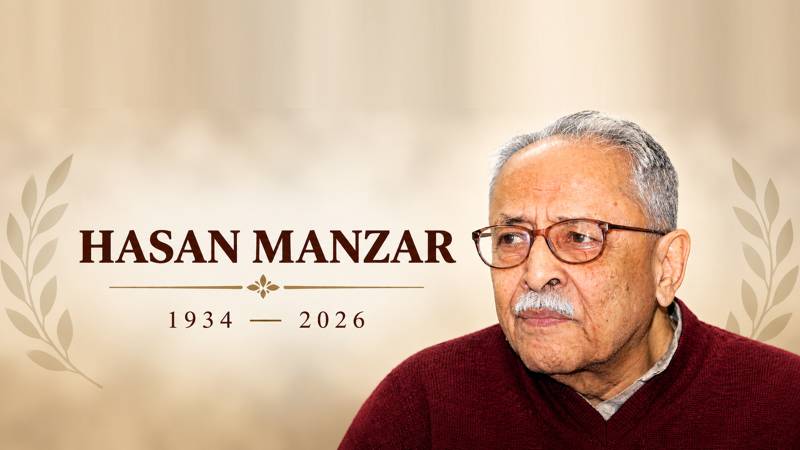
Hasan Manzar, who passed away in Karachi last month on the 27th of September at 92, was born on the 4th of March 1934 in Hapur, a village of Uttar Pradesh. His real name was Syed Manzar Hussain, and his pen name was Hasan Manzar. His father, Syed Mazhar Hussain, had earned his BSc from Aligarh Muslim University, while his paternal grandfather held a high post in the Forestry Department and was also given the title of Khan Bahadur by the British government. After 1947, his family settled in Lahore.
Manzar completed his education up to Matriculation from the Iqbal High School in Garhi Shahu, Lahore, and earned his MBBS from the King Edward Medical College in the same city. He then received various diplomas in Psychological Medicine from Edinburgh and Glasgow. After his arrival in Karachi in 1958, his first job was at the Central Excise and Customs Hospital in Mauripur, Karachi. He married his paternal cousin in 1962. His wife, Dr Tahira, was also a medical doctor. Hasan Manzar performed commendable services in his field both nationally and internationally. He remained engaged in various positions in Saudi Arabia, Nigeria, Scotland, and Malaysia.
His first short story, Dehqan (Peasant), was published in 1948 in the weekly Istiqlal. He also presented his short stories in sittings of the Progressive Writers Association Lahore at the beginning of his creative journey. At one time, he was also affiliated with the Majlis-e-Musannifeen in Hyderabad. After a prolonged stay in Hyderabad, he lived out his final years in Karachi.
A Distinct Literary Voice
It is not easy to write lines of condolence. How can one write a traditional line on someone’s death?
Not only is a person’s life different from another's, but even their death is. The sorrow of his death, the mourning, his absence, and the loss are all distinct. This is the difficulty I have faced in relation to Hasan Manzar in the last couple of weeks since his demise. Hasan Manzar was distinct from his contemporaries, predecessors, and followers.
All distinguished writers are very much distinct. But the distinction of a true writer sets them apart even from the distinction of another writer. His literary themes, style, manner of living life, and his struggle to carve a place in literature—or his indifference to it—are distinct.
Hasan Manzar was distinct in most things. Apart from his time abroad, he lived in Lahore, Karachi, and Hyderabad, but he would rarely be seen in literary sittings and ceremonies. He was not indifferent to rewards and praises, but he was certainly indifferent to any greed for them.
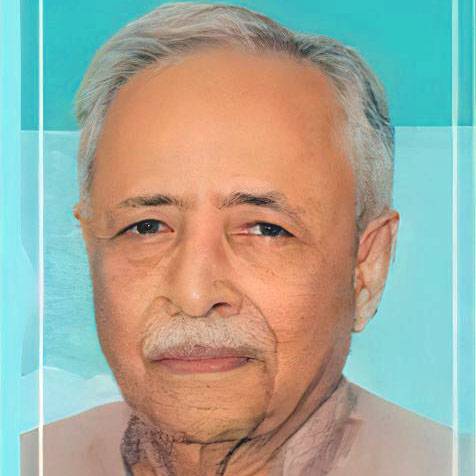
When he did receive honours, he accepted them with silence and grace, considering them to be tradition. When he did not receive any, he did not complain. When somebody objected to his writings, he never harboured any ill will in his heart. Silence, solitude, and a sincere humility were a part of his personality.
His literary themes, style, manner of living life, and his struggle to carve a place in literature—or his indifference to it—are distinct
His family migrated when he was thirteen years old. He, too, never forgot all that he had left behind in his Moradabad home—for example, the medals, cups, and books given by his teacher Bhagat Ram Sharma, as well as his stationery. He also never forgot Premchand, Hasrat Mohani, and Tagore.
He never forgot Tagore’s return of his knighthood following the Jallianwala Bagh incident, nor his objection to Gandhi for incorrectly educating the youth. But he did not make his memories the permanent and central theme of his literature. He began writing in Lahore not with memories, but by writing progressive short stories. He had a heartfelt attachment to Premchand (whose last but unfinished novel Mangal Sutar and his wife’s book Premchand Ghar Mein he translated into Urdu) and Maxim Gorky.
Alternative Histories and Major Works
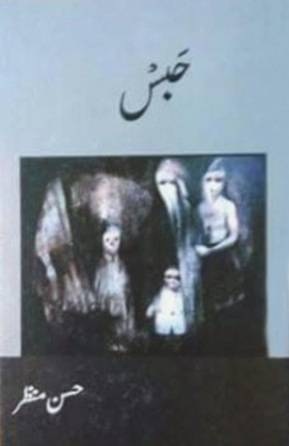
The influence of power and the helplessness of the dispossessed, one or the other, remained the central topics of his fiction. He wrote the dirge of common people, common homes, and the land. Its pinnacle is his novel Habs (Suffocation). Its central character is Israel’s eleventh Prime Minister Ariel Sharon, who was comatose for eight years. The novel is the account of events moving in his mind.
In the novel, Judaism, Zionism, pogroms, the Holocaust, intifada, the Nakba, the Torah, the Talmud, kosher practices, the Wailing Wall, Moses, Theodor Herzl, America, Palestine, Balfour, and Britain are narrated in their respective places one by one. A special aspect is that some of his novels are set abroad. In addition to Habs, Al-Asifa (Desert Wind) is set entirely outside the country, and Dhani Bux Ke Bete (Dhani Bux’s Sons) to a great extent.
One of his important novels is Ae Falak-e-Na-Insaaf (O Unjust Heaven)—a title taken from his beloved poet Ghalib’s poetry—whose background is the struggle between Dara Shikoh and Aurangzeb Alamgir, in which the latter emerges victorious. In the novel, the prospect of Dara Shikoh becoming king is presented, and an attempt is made to view what the direction of history would be in this situation. This is an experiment in presenting an alternative history through fiction. Vaba (Epidemic) is also an important novel, and Sadr-e-Mamlakat Ka Khudrau Phool (The Wild Flower of the State President) is a noteworthy drama. He also wrote for children.
Aesthetics, Faith, and Language
Despite his progressive inclination, he was a deeply religious person. He considered religion not to be the entirety of human life, but a part of it, meaning he saw religion working within animals as well.
The book he read the most was the Quran. He told Gulzar Javed that every time he read it, the Quran removed his depression. However, despite his religiosity, he also believed in deep religious and cultural tolerance. That is why he also read the Bhagavad Gita, the Ramayana, the Mahabharata, and the Bible with interest.
He termed satyam, shivam, sundaram—meaning truth, purposefulness, and aesthetics—as his creative manifesto. Despite his Muslim identity, he had a heartfelt attachment to Indian culture and its philosophical and aesthetic manifestations. He was also interested in world literature, albeit reading classical literature more frequently.
Among poets, Ghalib was his favourite. At home and abroad, he always carried the Divan-e-Ghalib. When he would sometimes email me, he would talk about Ghalib.
He remained committed to writing correct language, just as he was to his religiosity and general human sympathy; correct language meaning the specific yet permanent use of language by native speakers and in authoritative texts.
Deep attachment to correct language is a risk. Writing correct language is not difficult; however, employing correct language at a creative level is. He used to write words like 'novel' and 'form' using English alphabets in Urdu, rather than their Roman Urdu equivalents. Hasan Manzar was successful in this to a very great extent.
Like his short stories and novels, his book of memories of his stay in Africa, Guzre Din (Bygone Days), is a model of excellent creative prose.
The Late Publisher
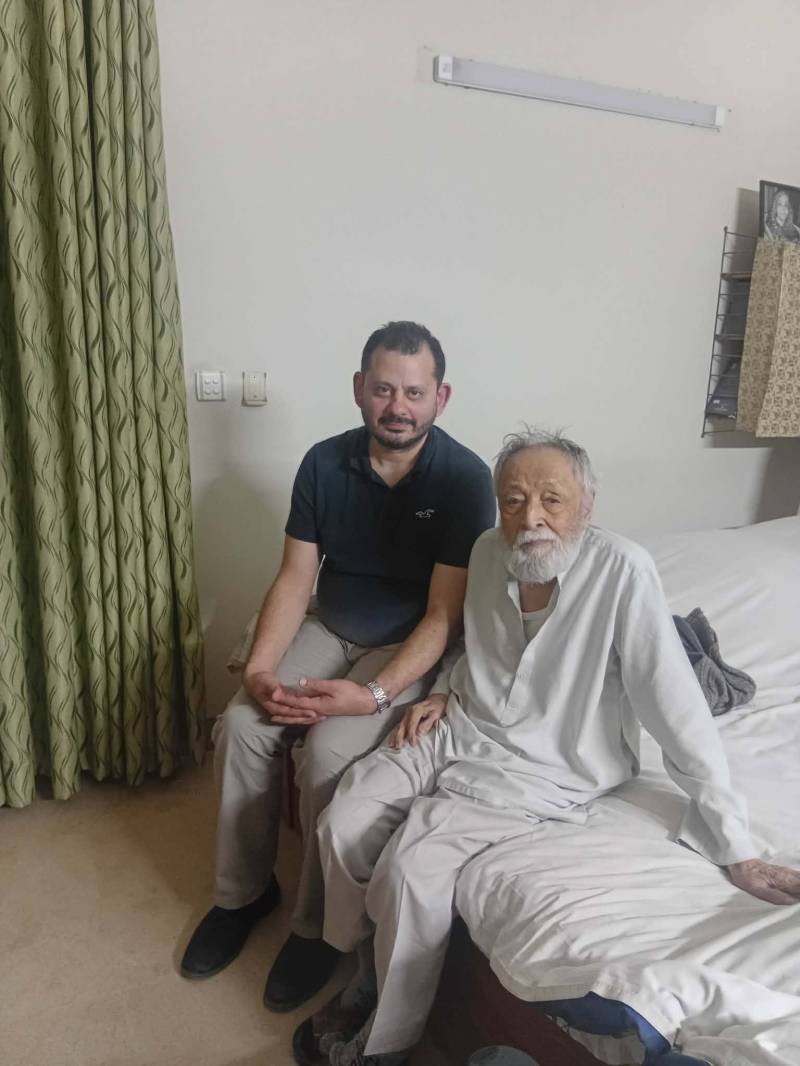
As much as he wrote, he did not immediately have it published. He started writing at the age of eight but published his first book in 1981. In terms of publishing fiction at a mature age, he was like Naiyer Masud, Asad Mohammad Khan, and José Saramago.
All his novels were published in the 21st century. The Pakistan Academy of Letters not only gave him the Kamal-e-Fan award but also published the English translation of his novel Habs. He was undoubtedly read and praised. He was also written about a great deal.
He spent a by-and-large prosperous, creatively full, and content life of ninety-two years.
In Ghalib’s words:
“Kuchh to de ae falak-e-na-insaaf Aah-o-faryaad ki rukhsat hi sahi”
(Grant me something o unjust heaven If only permission for sighs and lamentation)
Note: All translations from the Urdu are by the writer.