

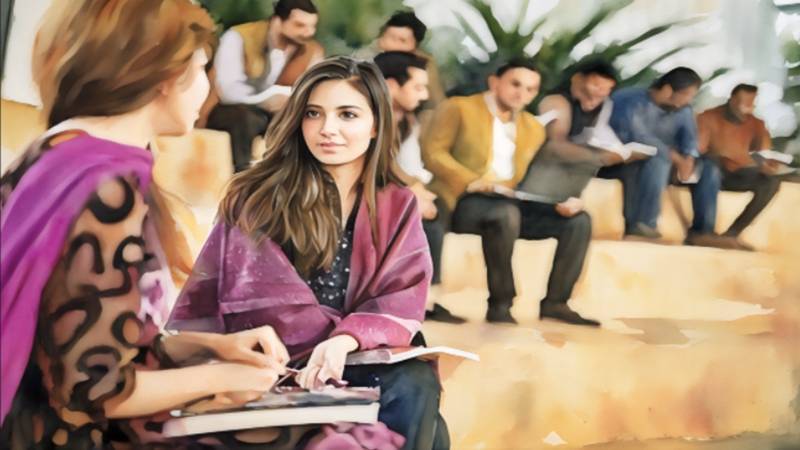
Pakistan’s educational system is a bit like a patchwork quilt—colorful, uneven, and stitched together with both care and struggle. It’s a system that reflects the country itself: full of potential but weighed down by challenges. With over 220 million people, the task of educating everyone is no small feat, and yet, there’s a sense of hope bubbling beneath the surface. Let’s dive into what makes this system tick, where it stumbles, and how it’s trying to rise above its limitations.
Picture this: a little girl named Ayesha in a small village, clutching her first notebook, eager to learn. She’s one of the lucky ones—she made it to school. But for millions of kids like her, especially in rural areas, the journey ends before it even begins. Primary education, the foundation of it all, is where kids learn the basics—reading, writing, and math. Enrollment has improved over the years, but dropout rates are still sky-high. Why? Poverty, lack of schools, and sometimes, just the sheer distance to the nearest classroom. It’s heartbreaking, really, when you think about all those dreams that never get a chance to take flight.
As kids move up to middle school, the challenges only grow. Imagine a boy named Ali, walking miles every day to reach the nearest middle school. For many, the journey is just too much, and they drop out. And let’s not forget the girls—cultural norms and societal pressures often keep them at home, even when they’re desperate to learn. It’s frustrating, isn’t it? How something as basic as education can be so out of reach for so many.
By the time students reach secondary school, the pressure is on. This is where they prepare for their Secondary School Certificate (SSC) exams, a make-or-break moment that feels like the academic equivalent of a tightrope walk. For those who make it through, higher secondary education offers a chance to specialise in science, arts, or commerce. But here’s the kicker: not everyone gets that far. Financial constraints, lack of schools, and societal expectations often cut dreams short.
Vocational training is another area ripe for growth. It’s practical, it’s relevant, and it’s exactly what the job market needs
And then there’s higher education. Universities and colleges are supposed to be the pinnacle of learning, but the reality is a mixed bag. Some institutions like Quaid-e-Azam University (Islamabad), Lahore University of Management Sciences (LUMS), and the National University of Sciences and Technology (NUST), are top-tier, offering world-class education. Others, however, struggle with outdated curricula and limited resources. Even institutions like Iqra National University (Peshawar) are striving to carve out a niche in this competitive landscape are top-tier, offering world-class education, while others struggle with outdated curricula and limited resources. It’s like buying a lottery ticket—you might hit the jackpot, or you might end up with nothing. Vocational and technical education, on the other hand, is slowly gaining traction. It’s practical, hands-on, and exactly what the country needs to tackle unemployment. But let’s be honest—it doesn’t get the attention it deserves.
Now, let’s talk about the elephant in the room: the challenges. Access to education is a huge issue. Millions of kids, especially girls, are out of school. Poverty, cultural norms, and lack of infrastructure are the usual suspects. And even when kids do get to school, the quality of education is often subpar. Overcrowded classrooms, untrained teachers, and rote learning are the norm. It’s like serving a meal without any flavor—it fills the stomach but doesn’t nourish the soul.
Funding is another big problem. Pakistan spends less on education than most countries, and it shows. Schools are underfunded, teachers are underpaid, and resources are scarce. It’s a vicious cycle: without investment, the system can’t improve, and without improvement, the country can’t progress. And don’t even get me started on policy instability. Every new government brings new plans, but without consistent implementation, it’s like building a house on shifting sand.
But here’s the good news: there’s progress. Initiatives like Article 25-A of the Constitution, which guarantees free and compulsory education for kids aged 5 to 16, are game-changers. The National Education Policy (NEP) 2021 aims to modernise the curriculum and boost enrollment. Public-private partnerships are filling gaps, and digital learning, though uneven, is opening doors for many. And let’s not forget programs like the Benazir Income Support Program (BISP), which are helping girls stay in school. It’s not perfect, but it’s a start.
So, where do we go from here? For starters, Pakistan needs to invest more in education. It’s not rocket science—better funding means better schools, better teachers, and better outcomes. Teacher training is another area that needs attention. Let’s face it: you can’t expect great results if the people leading the classrooms aren’t equipped to do their jobs. And then there’s the issue of gender equality. Scholarships, safe transportation, and awareness campaigns can go a long way in keeping girls in school.
Vocational training is another area ripe for growth. It’s practical, it’s relevant, and it’s exactly what the job market needs. And let’s not forget technology. The pandemic showed us how powerful digital tools can be, but access is still a major hurdle. Expanding online learning could be a game-changer, especially in remote areas.
At the end of the day, Pakistan’s educational system is a work in progress. It’s messy, it’s complicated, but it’s also full of potential. With the right focus, investment, and collaboration, it can transform lives and shape the future of the country. Education isn’t just about building schools—it’s about building dreams. And honestly, isn’t that what it’s all about?