

The transformative impact of technology is a continuous theme in history. One clear example of this is how digital technology has revolutionised the tourism sector. Traditionally, understanding a historical site or museum highly depended on a human guide, their knowledge, and their ability to convey it. Guided tours have been the most popular way of personalising a museum experience, and there is no perfect replacement for a genuine human experience. I started my career as a Museum Educator, and half of that job was giving guided tours.
Having been trained in history academically and public speaking through extracurriculars, it was a task I executed multiple times and saw the impact it left on people. I believe a museum guide’s role is that of a performative storyteller, except that you can’t weave new stories but retell the same. But it is how you tell them every time that matters. I have seen how the narrator’s expressions, stresses and pauses, tone, and a little bit of harmless drama mesmerise the listener,o matter how old they are. Because deep down, we all love stories, as they reignite that first sacred light that glowed in our imagination when we were children.
Despite its appeal, human-guided tours have a few limitations which are ignorable for some but not for all. I have seen many shy, introverted, or socially anxious people who, despite a guide’s sincere offer, would not interact. Even though they would want to benefit from the guide’s knowledge, they choose to prioritise their comfort and experience it on their own without intrusion. Moreover, such tours sometimes make you compromise on your freedom of movement, as most of the time they require you to follow the guide’s pace. On the other hand, museums also have a certain capacity to provide human-guided tours, and it’s not always possible to accommodate all of the incoming visitors.
Having worked at a museum for over seven years, I have observed that there are generally two kinds of visitors who come to a museum in Pakistan. The first kind are those that are out for leisure and curiosity pulls them inside, and the second kind are those that have a genuine desire for learning and exploration. Both kinds are important, and once they enter the building, it becomes the museum’s responsibility to engage both according to their expectations. While immersive experiences and interactive curation are useful tools for all visitors, a personalised experience makes the visit memorable for a museum-goer. Narrating a story theatrically, sharing the unheard anecdotes, and connecting it with the larger journey the visitor is on makes it a different experience altogether.
All of it was developed without any new costs, but completely through a smart use of existing skills and resources
A museum must be an inclusive space for everyone, and people should be able to experience it the way they want to. Immersing them in the story while also giving them complete control of their tour is what makes the idea stick. So, for such visitors, what should be the alternative? Either the museum display itself could be made communicative – enabling interaction and self-exploration – or there should be embedded tools that act as the magical carpet. Talking of communicative tools, there is a globally recognised and effective museum accessory, called an audio tour.
I first experienced an audio tour at Topkapi Palace, Istanbul, in 2023. Although it was not perfectly curated, as it lacked user-friendliness and the element of taking you on an uninterrupted journey, the technology did offer liberty to the user, which was helpful. My second experience of an audio tour was at Alcatraz Island in San Francisco; once a notorious federal penitentiary, but now a popular tourist excursion. It is here that I saw the massive potential of an audio tour.
A self-led tour with the same level of immersiveness and intriguing storytelling – it was a gift for a visitor like me. The tour was curated as an audio film, containing a good balance of master narrations and background scores. However, looking at it critically, this experience also had some limitations, such as it required you to carry a separate device and headset, which I think was a little inconvenient. I took a lot from that tour, but mainly an inspiration to have this experience at our museum in Pakistan, curated according to the moods and expectations of both local and international visitors.
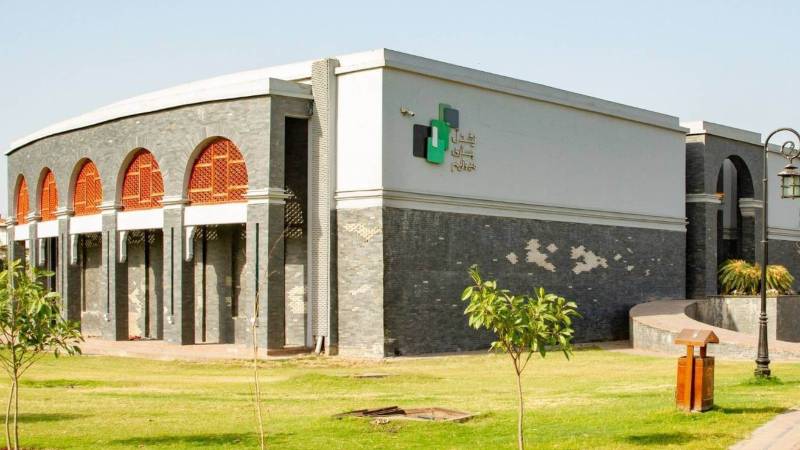
We started working towards an audio tour feature for the National History Museum Lahore in the summer of 2024. There was no precedent or budget for this innovation, which is not uncommon for a museum in Pakistan. So we relied on simple technology and genuine effort. To make the feature inclusive, we decided to make the tours trilingual as a start, with the flexibility of adding more languages in future. Urdu, English, and Punjabi tours were curated. The whole process involved multiple meticulous steps, such as drafting a script from a visitor’s point of view, searching and selecting excellent narrators, producing immersive audio files, and developing a user-friendly digital portal to help visitors navigate their journey inside the museum. What I find incredible is that all of it was developed without any new costs, but completely through a smart use of existing skills and resources.
On 14th August 2025, the audio tours were made live at the National History Museum, introduced as a visitor-friendly feature enabling people to use their own mobile phone devices for an immersive experience. It is a first-of-its-kind feature that brings a Pakistani museum on par with international standards by making the visitors’ experience inclusive, personalised, and liberating.