

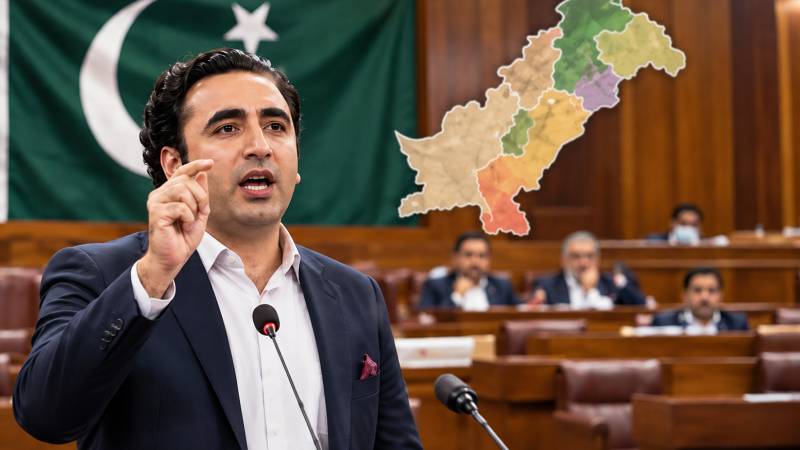
Pakistan is once again debating the creation of new provinces or smaller administrative units. The discussion gained momentum in mid-2026 when Interior Minister Mohsin Naqvi called for a “reset” of the country’s administrative structure. He argued that the existing four-province system can no longer manage a population of over 250 million and deliver basic services effectively. Planning Minister Ahsan Iqbal floated the idea of 12 to 15 provinces or empowering 160 districts. Parliamentary Affairs Minister Tariq Fazal Chaudhry indicated that the National Assembly and Senate would debate the proposals.
Speaking at the National Policy Dialogue in Lahore on 5 September 2026, Naqvi stated: “New administrative units will have to be created. No one can stop it. However, such a major decision cannot be imposed by an individual or a single political party and should instead be made in accordance with the wishes of the people. If the people want new administrative units, they should be created.” He further emphasised: “Whether I remain in this job or not, I will not back down from my stance irrespective of the consequences.”
The legal path is tightly constrained. Article 239 of the Constitution requires a two-thirds majority in both the National Assembly and the Senate for any constitutional amendment. If the change alters the limits of a province, Article 239(4) adds a further requirement: the affected provincial assembly must also pass the bill by a two-thirds majority of its total membership before it can be presented to the President for assent. President Asif Ali Zardari’s signature would be required. A referendum under Article 48(6) is theoretically possible if a joint sitting of Parliament first approves it, but constitutional experts note that a referendum alone cannot create new provinces; it can only gauge public opinion. Actual boundary changes still need the full amendment process.
On 3 September 2026 the Sindh Assembly unanimously passed a resolution rejecting any proposal to divide the province, alter its territorial limits, or place any part under separate or federal administration. The resolution, moved by PPP leader Nisar Ahmed Khuhro, explicitly invoked Article 239(4) and declared that “Sindh is one and shall remain one.” Sindh Chief Minister Murad Ali Shah was categorical: “The decision about the future of Sindh cannot be made by a few businessmen in Lahore. Only the members of the Sindh Assembly have the authority to decide the province’s future… As long as even one of us is alive, our province will not be divided.” He also warned that any attempt to alter provincial boundaries without the consent of the province concerned would be unconstitutional.
PPP Chairman Bilawal Bhutto Zardari has repeatedly said the issue belongs in Parliament. He urged Naqvi to debate the matter on the floor of the National Assembly rather than at business forums and questioned whether creating more provinces would solve underlying governance failures. On the other side, MQM-P has actively campaigned for new administrative units. Federal Minister and MQM-P leader Syed Mustafa Kamal argued that the 18th Amendment had effectively created “four new countries” rather than empowering the provinces, and that smaller units were needed to bring government closer to citizens. He maintained: “Those who say that new provinces will lead to bloodshed are completely wrong.
For the Pakistan Peoples Party, the controversy presents a political opportunity that goes beyond constitutional defence. Taking a firm, public stand against the division of Sindh allows the party to distance itself from that perception and reclaim the mantle of provincial autonomy and democratic federalism.
PML-N, as the leading federal coalition partner, has shown interest in administrative restructuring but remains cautious because it needs PPP’s numbers for any two-thirds majority. PTI, currently outside government, could in theory bargain if the process moves forward, though its immediate focus has been elsewhere. The practical result is a stalemate. Without Sindh Assembly consent, any attempt to carve new units from Sindh faces a constitutional wall. A referendum might generate political momentum, yet it cannot bypass Article 239(4). Strengthening the judicial system and local governments is frequently offered as an alternative path to better service delivery without redrawing provincial maps.
For the Pakistan Peoples Party, the controversy presents a political opportunity that goes beyond constitutional defence. As a coalition partner at the centre, PPP has often been criticised for being too close to the establishment. Taking a firm, public stand against the division of Sindh allows the party to distance itself from that perception and reclaim the mantle of provincial autonomy and democratic federalism. The issue resonates strongly in Sindh, where identity politics and historical memory of the province’s boundaries remain powerful. Because MQM-P is the main organised voice supporting new units, PPP can frame itself as the principal defender of Sindh’s integrity against both external pressure and a local rival.
The same issue, however, carries even greater potential for the party in Punjab. PPP already controls the Sindh government and enjoys a large majority in the provincial assembly. This gives it the organisational capacity for mass mobilisation on an issue that unites much of its traditional base. Successful mobilisation in Sindh can serve as a visible demonstration of organisational strength and political conviction. That demonstration can then be carried into Punjab, where the party has struggled to regain relevance for more than a decade. Unlike parties that are deeply locked into the existing federal power structure, PPP has relatively fewer immediate stakes that prevent it from speaking the language of provincial rights and administrative fairness. In parts of Punjab that feel neglected by the current power centres, a consistent message of genuine federalism and resistance to arbitrary restructuring can find an audience. The agenda therefore offers a relatively low-cost platform for the party to begin rebuilding its political standing in Punjab rather than remaining confined to its southern stronghold.
For Bilawal Bhutto Zardari and Asifa Bhutto Zardari, the issue provides a chance to project leadership beyond parliamentary speeches and international stages. Defending Sindh’s constitutional position in public forums, addressing rallies, and engaging youth on questions of federalism and identity can help rebrand the party as an active force rather than a junior partner in a hybrid arrangement. If this message is carried consistently into Punjab through organised outreach, it can also help strip away the “pro-establishment” label that has stuck to PPP as well as the thought that Punjab belongs to PMLN only and replace it with a narrative of principled resistance and democratic mobilisation. A party that is seen defending one province’s rights has a better chance of being taken seriously when it later speaks about the rights and grievances of people in another.
The debate over new provinces is therefore more than a technical discussion about administrative efficiency. It exposes deep constitutional safeguards, regional sensitivities and competing party interests. For PPP it simultaneously tests the party’s ability to protect its provincial stronghold in Sindh and offers a rare chance to rebuild political capital in Punjab by standing on principle. Whether that opportunity is seized will depend on how consistently the party converts its parliamentary majority and public rhetoric into sustained, organised political action across both provinces.