

Connection” is a curious feeling. Your bond with a city, a country, a place—or with kin and comrades—is most visible when you are far from them. What once felt ordinary turns into layered memory: moments you revisit sometimes with a quiet smile, sometimes with eyes that mist.
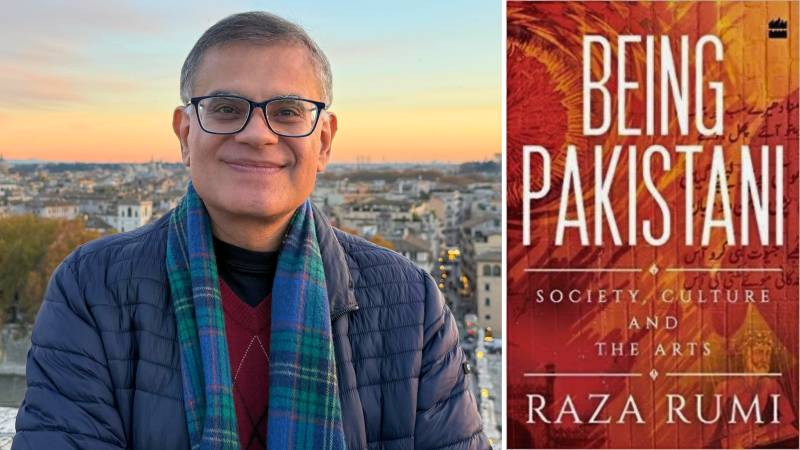
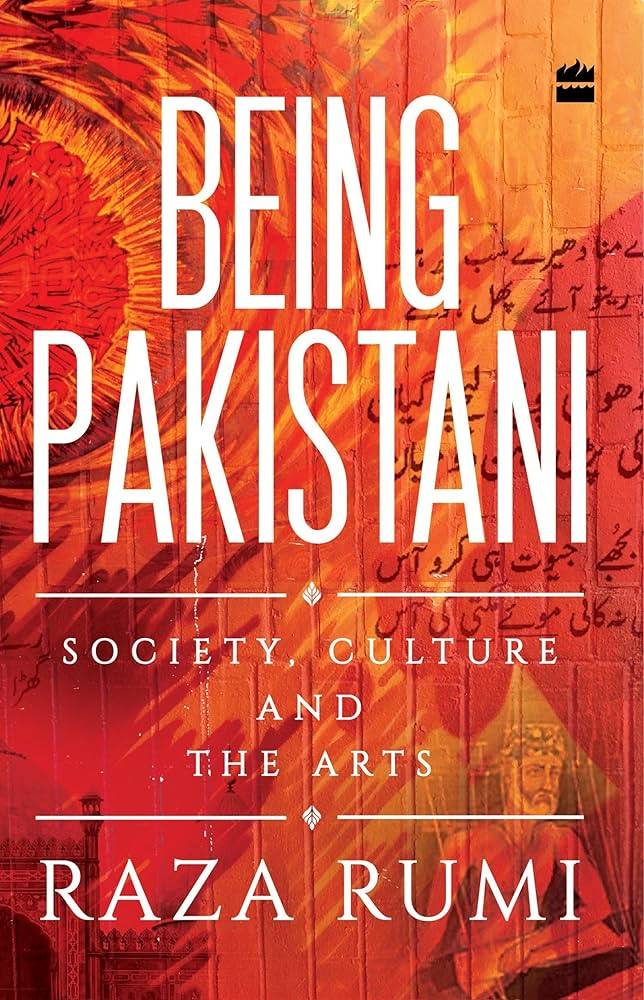
Raza Ahmad Rumi’s book Being Pakistani: Society, Culture And The Arts gives a detailed account of the author’s impressions of his country, fellow Pakistanis, and what it means to go away from one’s vatan (homeland).
Rumi is a former Pakistani civil servant, academic, policy analyst, editor, journalist and author. His other books include Delhi by Heart and The Fractious Path: Pakistan’s Democratic Transition, among others. The book in question is based largely on the author’s previously published articles and is divided into four sections: devotion, literature, arts, and personal essays. The devotion part is devoted to unveiling miscellaneous belief systems pervading the Indian subcontinent in general and Pakistan in particular. He dilates upon the trinity of Sufi scholars – Kabir, Bulleh, and Lalon – who trod this land of ours and left a lasting impact, with particular and extended comments on Kabir. Bulleh Shah presents his adages in a language and through concepts easily comprehended by the masses. His words enter the hearts of even those who have not read the written word their entire lives. I reproduce below the heart-warming couplets of Bulleh Shah:
“If God was found by bathing and cleansing
He would have been found by frogs and fish
If God was found by wandering in the jungle
Stray animals would have found him
O Bulleh, the Lord can only be found
By loving hearts-true and pure.”
But the same cannot be said about the Sufi mystic Kabir. Some scholars believe that he was born into a lower-class Muslim family and went on to become an influential figure in the Sufi tradition, so much so that some of his verses are included in the Sikh scripture, the Guru Granth Sahib. His sui generis potpourri of Islam and Hinduism left many scholars of both faiths bewildered. His enigmatic persona and teachings made it nigh impossible for many to grasp his true identity. Rumi explores different aspects of his works and strives to demystify his personality.
“Writing about Lahore is a sensation that lies beyond the folklore Jinne Lahore ni wekheya o janmea nai,” writes Raza Rumi
Lalon Shah, who was inspired by the Bengali strands of mysticism, gave great importance to purity of soul and humanism. Rumi mentions that Rabindranath Tagore was so impressed by Lalon that he compiled and published many of his songs. Throughout his life, Lalon strongly decried distinctions made entirely on the basis of caste, creed and gender.
Rumi also writes at length about the prevalence of Hindi soap operas in Pakistani households and women’s obsession with binge-watching saas and bahu characters.
In the literature section, Rumi reflects upon the works of major South Asian Urdu writers and their impact on society as a whole. He discusses Qurratulain Hyder’s oeuvre and eulogises the finesse with which she wrote, owing to which she gained immense popularity on both sides of the border. He then sheds light on the true-to-life portrayal of women characters by Saadat Hassan Manto. Manto revealed beauty and goodness in characters otherwise considered vile and untouchable by society.
In another chapter, Rumi gives a detailed account of the life of Intizar Hussain Sahib and his literary contributions. He remembers his towering personality and the impact it had on his own life with unparalleled reverence. He writes: “I have been away from Lahore for more than twenty months. It is difficult to imagine a place without Intizar Sahib.” He further mentions, “It would be a cliché to say that an era has ended with the passing away of such a colossal figure.” It bears mentioning that readers will also come across the intellectual and literary legacy of Fahmida Riaz. Rumi recounts the many trials and tribulations she faced during the course of her life. Still, he recalls, “She has imbibed the electricity of life like nobody I know and drunk the poison of existence to the fullest.”
Within the pages dedicated to the arts, Rumi explores different forms of creative and visual expression and celebrates the maestros who enriched our cultural landscape with their artistic fragrance. Some big names that adorn this section include Mehdi Hassan Sahib, Alamgir, Runa Laila, and Asim Butt.
The last section carries the author’s personal essays. It was expected that Rumi would write about the majestic city of Lahore, and so he did. He paints his feelings and attachment to his birthplace in the essay “Lahorewana: A Lahori Rambling”. He writes, “There was a Lahore that I grew up in, and then there is the The Lahore that I live in now. Recovering from an exile status for two decades, I find myself today turning into something of a clichéd grump, hanging desperately on to the past. Yet I resist that. Writing about Lahore is a sensation that lies beyond the folklore Jinne Lahore ni wekheya o janmea nai (The one who has not seen Lahore has never lived).”
Rumi’s migration (hijrat) from Pakistan undoubtedly made him more Pakistani than he already was. His connection with his vatan grew deeper, and he compiled this gripping book with a masterly hand, beautifully capturing his feelings towards his country and its people who earned name and fame for their homeland across the globe. He left Pakistan, but perhaps Pakistan never left him or his heart. This sentiment is quite evident throughout the book.