

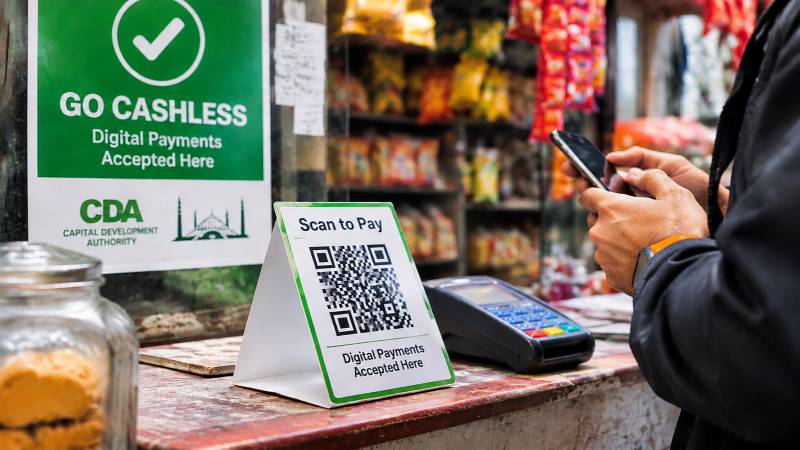
The Interior Ministry has shut down mobile data in the capital during security emergencies. It is now overseeing a plan to make Islamabad “fully cashless”. That raises an obvious question: what happens at the pharmacy, petrol station or government counter when the signal disappears?
There is a good case for expanding digital payments. Raast offers cheap, instant transfers across banks and wallets. Electronic records can curb small leakages, make civic payments less cumbersome and give small businesses a financial history. Few people will miss repeated visits to public offices, handwritten receipts or the petty middlemen who thrive around cash counters.
Take the merchant count. In November 2025, the CDA reported that more than 39,000 vendors and shopkeepers had joined the system. The figure now being cited is 26,000. Perhaps the earlier number included duplicate registrations or businesses that never became active. Perhaps the two counts cover different categories. Either way, the public has not been given an explanation.
There is also the independent review commissioned to examine the initiative’s targets, data and inclusiveness. An official statement said the final report and recommendations would be presented in November 2026. No final report was publicly available on November 14. It may exist inside government, but a report that cannot be examined cannot reassure merchants and citizens being asked to comply.
Then there is the question of keeping the system running. A National Assembly committee has called internet service poor and noted that power cuts can shut down mobile towers. The government says an offline-payment solution is under development. It has yet to show that the system can withstand congestion, a power failure or a deliberate network suspension.
Cash still has a job. It works without electricity, mobile data, a charged phone or an intermediary’s approval. Its value is much like that of a fire extinguisher: most visible on the day the normal system fails.
The capital, moreover, is not the uniformly connected metropolis imagined in official presentations. The 2023 census recorded 2.36 million residents, 53 percent of them in officially rural areas. A phone somewhere in a household does not mean that every woman, older person or low-income worker controls a smartphone, an account and a reliable data package.
Nor does a digital trail automatically become tax revenue. A QR transfer may be routed through a personal account and is not necessarily tied to an invoice. In Uruguay, rebates produced a 50 percent rise in card transactions but no improvement in tax compliance. Pakistan will still need workable digital invoicing, simpler registration and consistent enforcement.
Other heavily digitised economies have resisted the temptation to treat cash as an obsolete nuisance. The European Central Bank says digital money should complement cash and is building offline capability for outages. Islamabad can pursue the same resilience without slowing digital adoption.
Islamabad should become a city where digital payment is reliable and convenient enough that people choose it. Until then, cash remains the backup people can hold in their hands. Printing and placing QR codes is easy. Building confidence in the system behind them will take longer.