

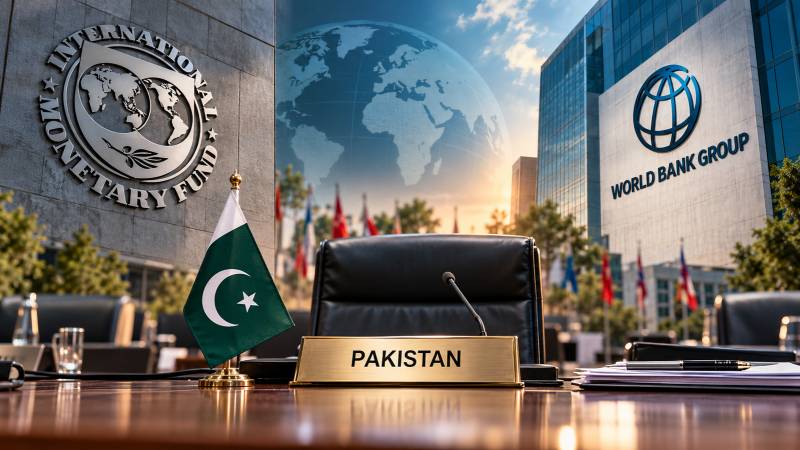
Pakistan’s selection to chair the Boards of Governors of the International Monetary Fund (IMF) and the World Bank Group in 2027, for the first time since 1953, is a significant diplomatic development. Formally announced at the institutions’ annual meetings in Bangkok on 16 October 2026, the appointment of Federal Minister for Economic Affairs Ahad Khan Cheema places Pakistan in a prominent position within the international financial system. Its importance, however, must be judged by what Pakistan does with the opportunity, not by the symbolism of the appointment itself.
The country has spent decades negotiating with international lenders from a position shaped by recurring balance-of-payments crises, constrained fiscal resources and dependence on external financing. Chairing the governing bodies of the two institutions offers an opportunity to contribute to discussions on development finance, international economic cooperation and the representation of developing countries. It does not give Pakistan control over lending decisions, additional voting rights or authority to dictate the terms of its own IMF programme. That distinction is fundamental. The appointment will become an economic asset only if Pakistan combines diplomatic engagement with domestic institutional reform.
The IMF’s Board of Governors is its highest decision-making body, but most operational responsibilities are delegated to the Executive Board, which oversees the Fund’s day-to-day business. The World Bank Group also operates through established governing and executive structures. Neither institution is controlled by its rotating chair. At the IMF, voting power reflects members’ quotas and other applicable voting arrangements, not the nationality of the chairperson. Pakistan should therefore resist exaggerated expectations that the chairmanship will automatically produce cheaper loans, larger allocations or favourable treatment under existing financing arrangements.
Its genuine value lies elsewhere: access to senior policymakers, opportunities to facilitate consensus, a platform to advance development priorities and greater visibility for Pakistan’s economic proposals. The country can use this position to promote more predictable development financing, better coordination among multilateral lenders and stronger mobilisation of private capital. These are legitimate objectives. But international credibility depends on whether the country advocating them demonstrates the discipline to apply comparable standards at home.
Pakistan’s economic circumstances make this distinction particularly important. On 8 October 2026, the IMF and Pakistani authorities reached a staff-level agreement covering the fourth review of the $7 billion Extended Fund Facility and the third review of the $1.4 billion Resilience and Sustainability Facility. The agreement could unlock approximately $1.2 billion, subject to approval by the IMF Executive Board. The agreement represents continued engagement with the Fund; it does not establish that Pakistan’s underlying economic weaknesses have been resolved.
The appointment will become an economic asset only if Pakistan combines diplomatic engagement with domestic institutional reform. International credibility depends on whether the country advocating development priorities demonstrates the discipline to apply comparable standards at home.
The country still needs to strengthen domestic revenue mobilisation, improve energy-sector performance, expand productive investment and develop a more competitive export base. It must also manage exposure to volatile energy prices, geopolitical disruptions and external financing conditions. These vulnerabilities can reappear even after reserves improve and inflation moderates. The World Bank’s Country Partnership Framework for Pakistan for fiscal years 2026-2035 provides a useful long-term reference. Its six priority outcomes include reducing child stunting and learning poverty, strengthening climate resilience and food security, improving energy sustainability, creating greater fiscal space and increasing productive private investment. Pakistan should use its international platform to support these priorities while treating their implementation as a domestic obligation, not a responsibility to be outsourced to international lenders.
First, improve the quality of development finance. Pakistan should advocate financing structures that reflect project economics, implementation capacity and repayment risks. Water infrastructure, electricity transmission, urban transport and climate adaptation require long planning horizons. Their financing must be supported by credible feasibility studies, transparent procurement and realistic assessments of economic returns. The objective is not to seek financing regardless of cost. It is to secure appropriate financing for sound investments and avoid accumulating liabilities against projects that cannot deliver their promised benefits.
Second, mobilise investment that produces foreign exchange. Greater international visibility may help Pakistan attract serious investors, but visibility alone will not overcome regulatory uncertainty, expensive energy, weak contract enforcement or inconsistent tax policy. The government should prepare a professionally assessed pipeline of export-oriented manufacturing, mineral processing, agricultural value addition, logistics and digital services. Every project should disclose its financing requirements, expected employment, foreign-exchange contribution, infrastructure needs and principal risks. The Special Investment Facilitation Council and relevant ministries should work within transparent, competitive rules rather than rely on headline investment announcements. Commitments, financial close, actual capital inflows and completed productive investments must be reported separately. Only then can Pakistan distinguish genuine economic gains from publicity.
Third, build coalitions for practical multilateral reform. Pakistan shares concerns with many developing countries over borrowing costs, climate vulnerability and inadequate development investment. It can help advance discussions on risk-sharing instruments, more effective coordination among development institutions and stronger support for commercially viable private investment. Its credibility will depend on evidence, negotiation and coalition-building, not declarations that the chairmanship has transformed Pakistan’s international standing.
The priority is a dedicated, technically competent coordination unit under the Ministry of Economic Affairs, working with the Finance Division, State Bank of Pakistan, Planning Commission and relevant provincial authorities. It should maintain a 2027 engagement plan, identify realistic negotiating objectives and publish periodic assessments of outcomes. Pakistan needs stronger project preparation. A project-readiness facility should ensure that proposals have completed feasibility studies, environmental and social assessments, procurement planning and independent economic appraisal before being presented to financiers. Pakistan’s own Ministry of Economic Affairs has already highlighted project preparedness and digital monitoring as priorities in implementing the World Bank’s country framework.
Tax reform must become more equitable and enforceable. The government should broaden the tax base, improve digital compliance, review unjustified exemptions and coordinate with provinces on effective taxation of agricultural income. Repeatedly increasing the burden on compliant taxpayers while leaving substantial economic activity outside effective taxation undermines both revenue and public trust. Energy reform must address the causes of high costs and financial losses. Distribution inefficiencies, transmission constraints, poor bill recovery and circular debt cannot be solved through fresh borrowing alone. Regulatory predictability, transparent procurement, better governance of state-owned enterprises and targeted protection for vulnerable households are essential to improving competitiveness.
Public accountability must be measurable. Quarterly reporting should track project execution, tax collection, export performance, private investment realised and development outcomes. Independent evaluation should establish whether expenditure has improved services and productivity rather than merely absorbed allocated funds. Pakistan’s federal government cannot deliver sustained economic transformation without provincial ownership. Education, health, agriculture, water management and many essential public services require coordinated action across levels of government.
Provincial development plans should align with national priorities while reflecting local economic conditions. Sindh can strengthen port-linked logistics and agricultural processing; Punjab can improve agricultural productivity and industrial exports; Khyber Pakhtunkhwa can develop competitive enterprises and energy-related opportunities; and Balochistan can pursue responsible mineral processing and water-efficient economic development. These are opportunities, not guaranteed returns. Each requires sound project selection, credible institutions, environmental safeguards and appropriate participation by local communities.
The same principle applies to human development. Reducing malnutrition, improving foundational education and expanding women's participation in productive employment are economic necessities. Poor health and inadequate learning constrain workforce productivity, household earnings and the capacity of firms to compete. Development financing must therefore be judged by the lasting improvements it produces in people's lives. Pakistan’s chairmanship will coincide with a period in which its own economic choices remain as consequential as developments in international finance. The country cannot negotiate its way out of structural weaknesses that it refuses to address domestically.
The government should use 2027 to strengthen partnerships, advance evidence-based proposals and demonstrate a more disciplined approach to public investment. It should also preserve a clear separation between its diplomatic responsibilities and the pursuit of preferential treatment for itself. The ultimate test is not whether Pakistan occupies a prominent chair. It is whether the country emerges with stronger development partnerships, better-prepared projects, more productive private investment and institutions capable of sustaining reform beyond a single year. Pakistan has earned an opportunity for greater international engagement. Turning that opportunity into durable economic progress will require something more difficult than diplomatic recognition: competent execution, predictable policy and accountability for results.