

For over two decades, I have documented Pothohar's lesser-known cultural heritage, visiting villages and towns to study historic havelis, temples, shrines, mosques, and other monuments. During these visits, I have come across many outstanding buildings that are little known beyond their local communities.
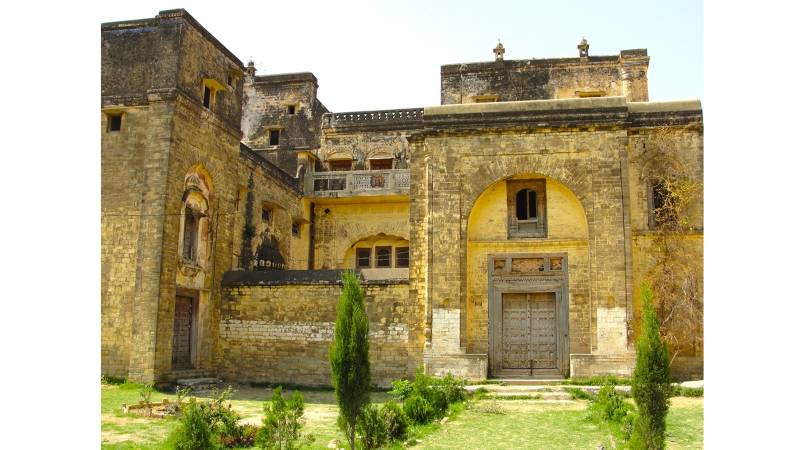
Among the historic havelis that have particularly fascinated me is Baba Khem Singh Bedi's haveli in Kallar Syedan, Rawalpindi District, locally known as Maari or Babey da Mahal. Its magnificent woodcarvings, richly painted walls, and distinctive architectural features make it one of the most impressive historic buildings in Pothohar. What interests me most about this haveli is its beautiful paintings depicting Sikh gurus, Hindu deities, nobles, and scenes from religious and social life in pre-partition Punjab.
I have visited and studied several historic havelis across Pothohar, including those at Kauntrila, Gulyana, Dora Budhal, Narali, Sukho, Karnali, Daultala, Gujar Khan, Pindigheb, Nara, Thatta, Makhad, Maira Sharif, Chawli, Ranjha, Neela, Saghri, Domel, Domeli, Padhri, Jhelum, Wah, Rawalpindi, Talagang, Tamman, Multan Kurd, Shah Muhammad Wali, Jabbi Shah Dilawar, Kot Fateh Khan, Hazro, Mogla, and Jaisal, as well as many other villages and towns. However, Baba Khem Singh Bedi’s haveli stands apart from many of these historic buildings for its exceptional ornamentation and distinctive architectural features.
The Life and Influence of Baba Khem Singh Bedi
Baba Khem Singh Bedi, a revered Sikh spiritual guide, notable social reformer, and prominent landowner, left an indelible mark on pre-partition Punjab. His haveli in Kallar Syedan stands as a testament to his profound political and religious influence in colonial Punjab. It was likely constructed in the third quarter of the nineteenth century.
According to The Punjab Chiefs by W L Conran and H D Craik (1993), Baba Khem Singh Bedi was the son of Atar Singh (d 1839). He had six sons: Gurbakhsh Singh, Hara Singh, Autar Singh, Ujagar Singh, Kartar Singh, and Hardit Singh. Baba Khem Singh Bedi was also a founder of the Singh Sabha movement. He was appointed as a magistrate of Montgomery (Sahiwal) in 1877 and as an honorary munif in 1878. Baba Khem Singh Bedi died in 1905, and his eldest son, Baba Gurbakhsh, succeeded him as the spiritual leader of Sikhs of Pothohar.
Opening into a small courtyard, a masterfully carved wooden balcony marks the historic assembly hall where Baba Khem Singh Bedi once held his court
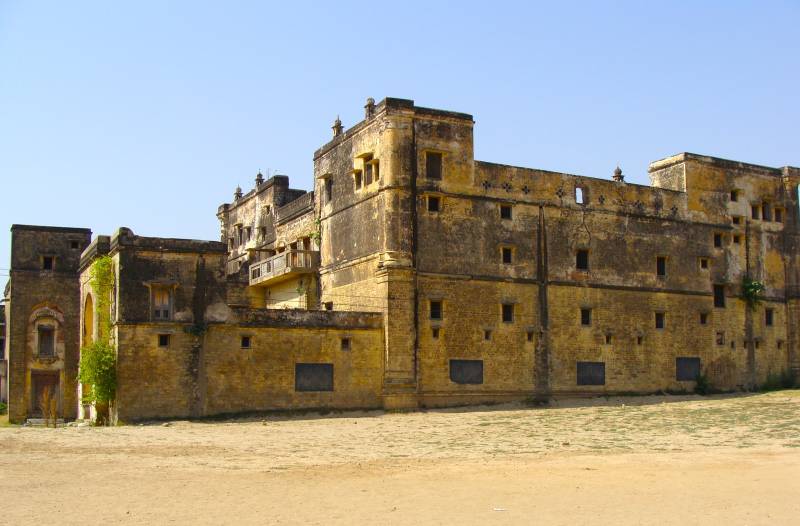
The Baba Khem Singh Bedi haveli in Kallar Syedan town is a political symbol of the power he held during the British Raj in Punjab. The haveli, a majestic four-storey structure with many rooms on each storey, three basements, a courtyard, and corridors, stands as a living testament to the skill and craftsmanship of colonial Punjab's artisans. It is constructed of locally sourced stone, dressed and used by the local masons.
The Art of Woodcraft: Jharokhas and Doorways
The haveli's hallmark lies in its exceptional woodwork and paintings. The intricately crafted wooden jharokhas, doors, and ceilings all evoke a deep admiration for the mastery of Pothohari artisans. The two main entrance doors, ornately carved, are a sight to behold. The haveli also features some exquisitely crafted windows above its doorways. The southern doorway, flanked by sitting platforms, opens into a small courtyard.
On the left side of this courtyard is a jharokha in the haveli's assembly hall, where Baba Khem Singh Bedi used to hold court. This jharokha is particularly noteworthy for its intricate woodcarving. Jharokhas—a common feature in many famous pre-partition havelis in Rawalpindi, Chakwal, Jhelum, and Attock, and even some temples—are best exemplified in Hari Mandir in Hazro. Atam Singh and Jeevan Singh's havelis were also known for their impressive jharokhas in Gujar Khan's Daultala town. However, Atam Singh Gujral's haveli was demolished a couple of years ago, and Bakhshi Ram Singh's haveli, built in 1886 in Gujar Khan's Kauntrilla, also features beautiful jharokhas that are now crumbling.
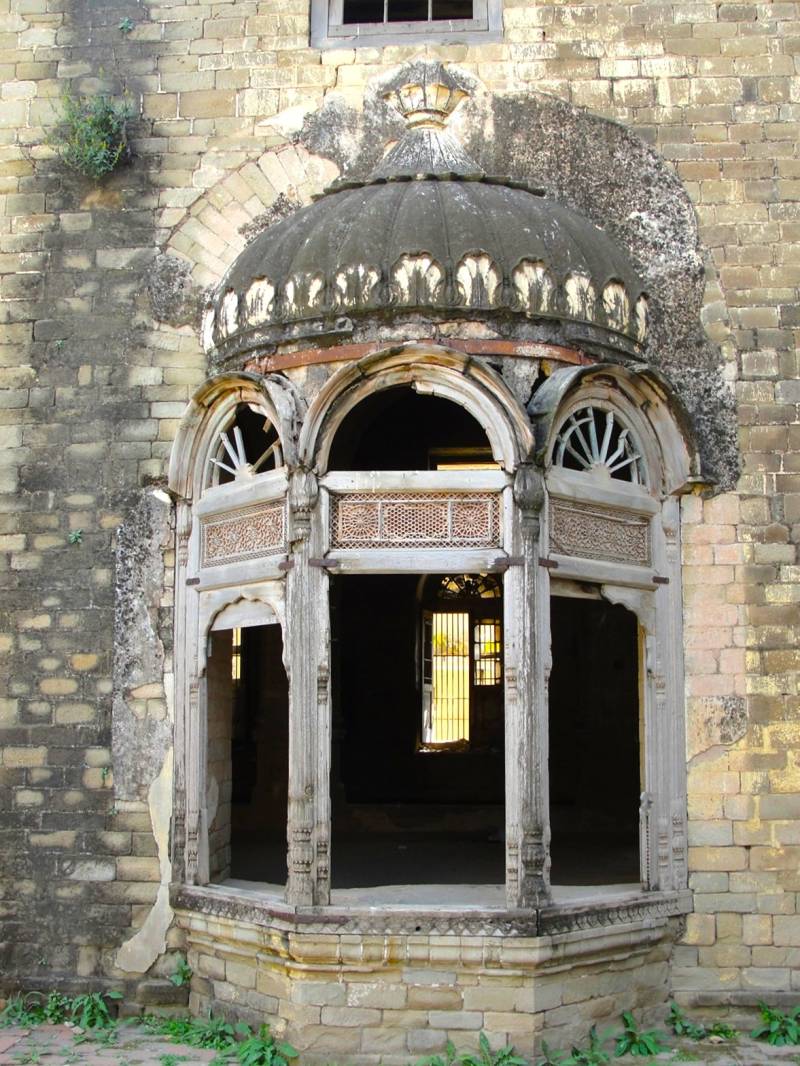
The small courtyard also has a beautifully carved door with three windows above. This doorway opens to the haveli's main courtyard, whose walls feature depictions of Sikh nobles and Hindu deities, most notably women in various postures.
The Painted Themes of Pothohar
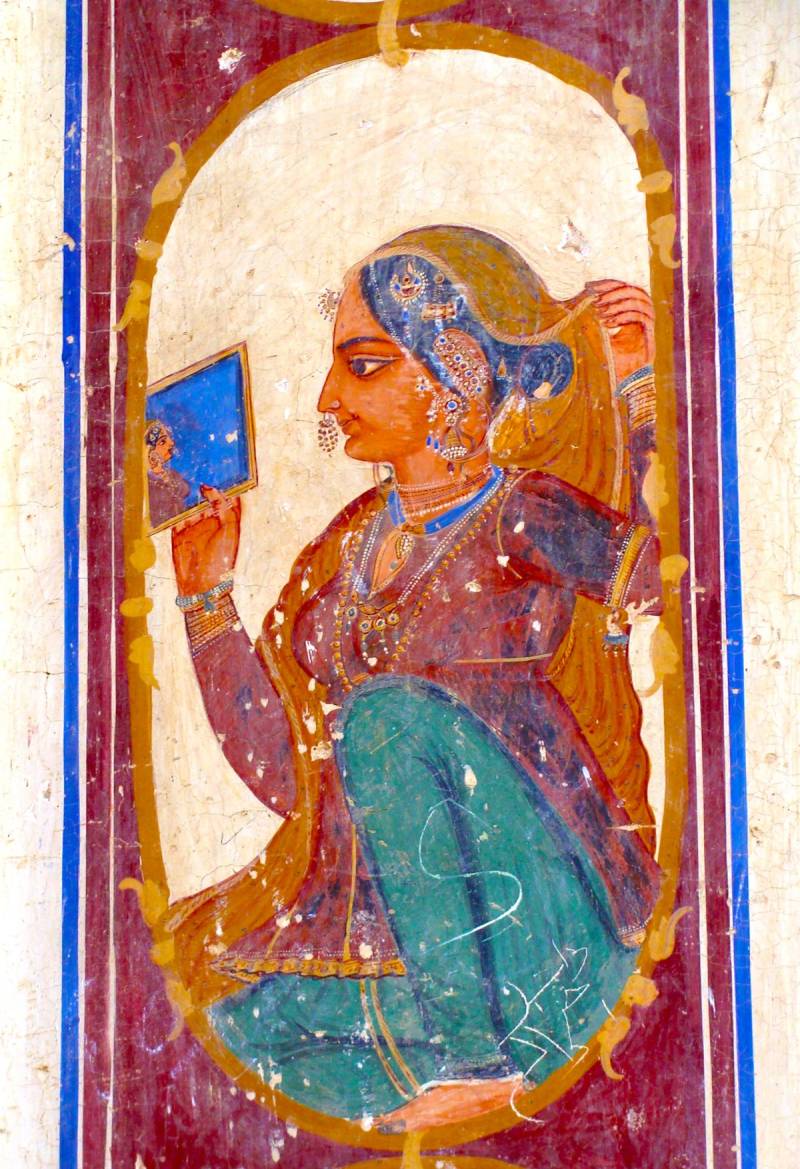
One of the most impressive themes is Nayika, the romantic heroine, and her friends. Paintings from the Pothohar region depict Nayikas adorning themselves, with some looking at their reflections in mirrors and showcasing their elaborate decorations. One painting that stands out is Madanika Darpana, in which a heroine admires herself in the mirror.
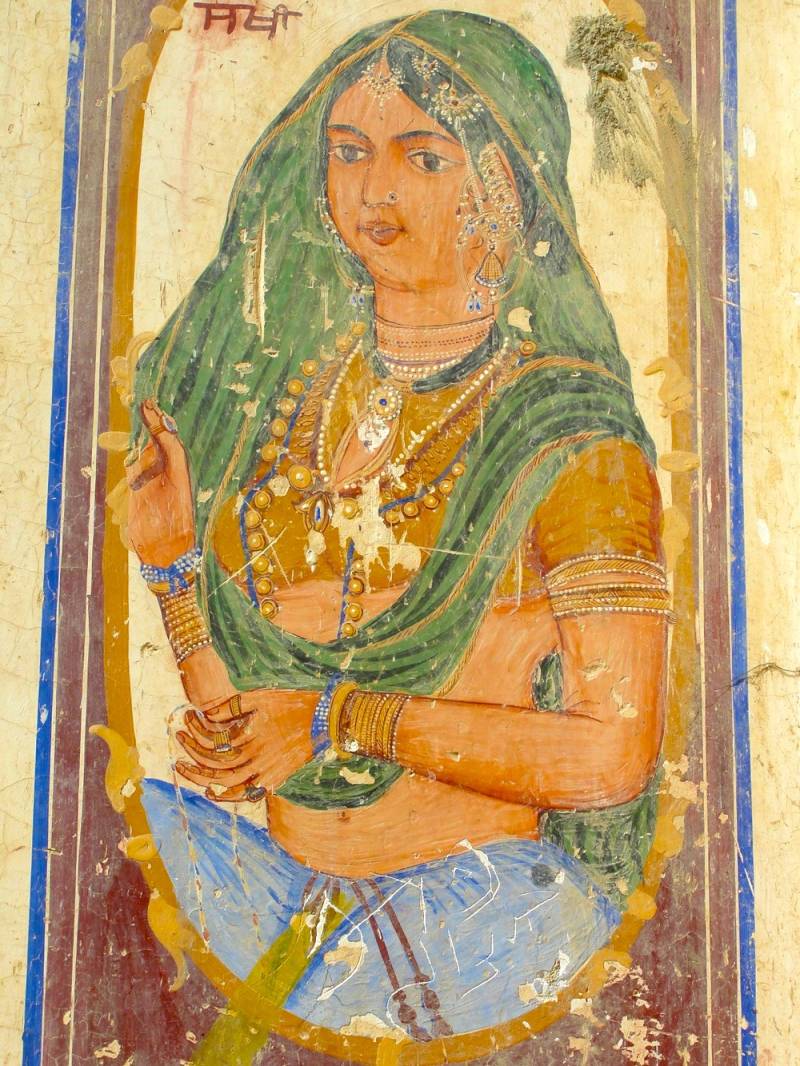
While these paintings are unique to Pothohar, others depict Sakhis, or Gopis—the cowherd girls who tried to win Krishna's heart. Some depictions show the Gopis dancing with Krishna in a few Pothohar temples. The Kalan Das temple in Rawalpindi's Kohati bazaar features a painting of "Shasaman Sakhi," with an inscription in Gurmukhi above it that reads "Shaaman Sakhi," meaning Shyam's romantic interest. Krishna is called Shyam because of his dark complexion.
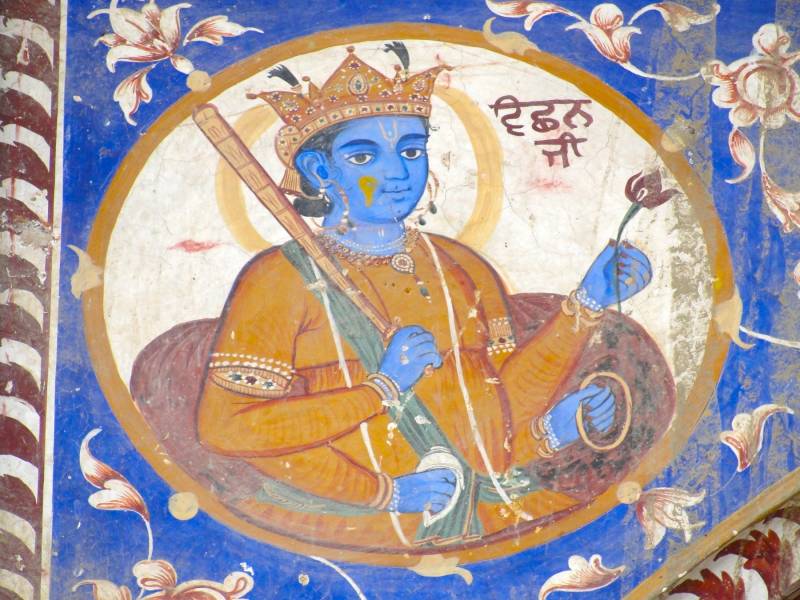
Apart from representations of women in various postures, one also notices paintings of Hindu deities with Gurmukhi inscriptions. Lord Vishnu is depicted holding the conch, chakra or discus, club, and lotus flower in his four hands. Lord Shiva and his son Ganpati are also shown on the courtyard wall. One also sees depictions of Ram with his consort, devotee Hanuman, and brothers Bharat, Lakshman, and Shatrughan. Brahma is also depicted on a wall.
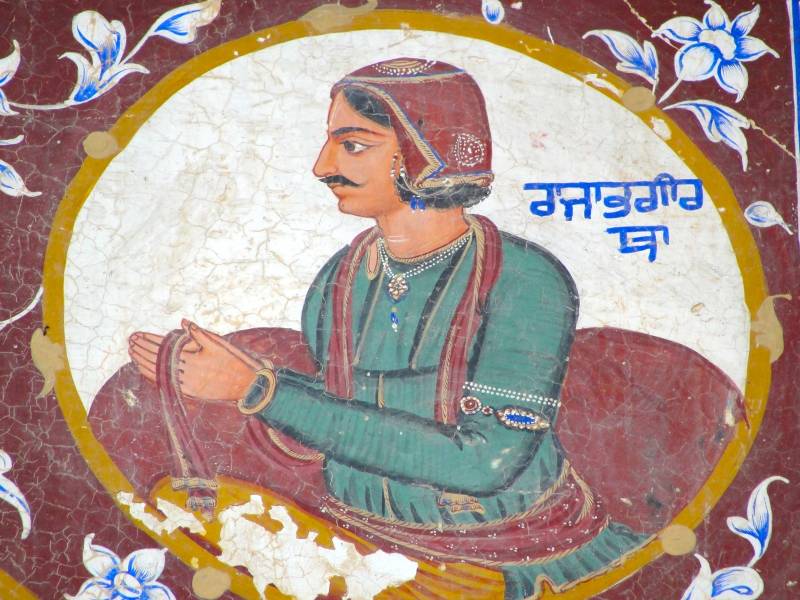
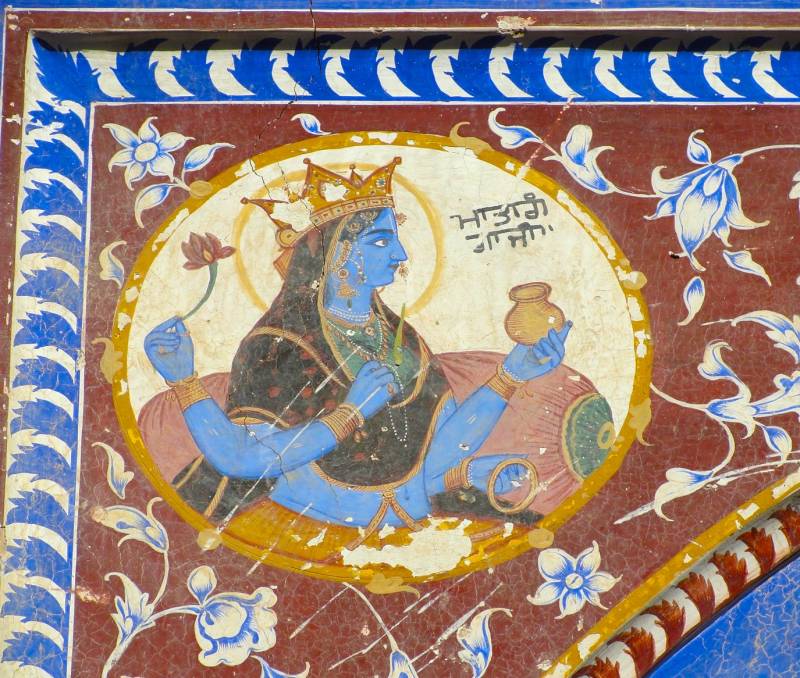
Ashtabhuja Mata is a mother with eight hands, each holding a different object. The Gurmukhi inscription also supports this image. The painting also depicts other Hindu deities, including Shiva, Bhairon, Ganga Mata, and Saraswati Mata. The painting also depicts images of Naths. Images of Sikh soldiers, Hindu kings (notably Raja Bhagirath), sages, Sidhs, Naths, and Pandavas (chiefly Arjan) reflect the syncretic tradition prevalent in pre-partition Punjab.
Vandalism and Fading Heritage
After the 1947 Partition, Baba Khem Singh Bedi’s haveli housed the Government Boys High School, Kallar Syedan, for decades. During this period, schoolboys vandalised several painted figures and inscribed their names on some of the panels in the khawabgah, or retiring room. This room is decorated with paintings depicting the ten Sikh gurus. The first panel portrays Guru Nanak with his companion, Bhai Bala, while the second depicts Guru Angad. The third and fourth panels represent Guru Amar Das and Guru Ram Das, respectively. The fifth, sixth, and seventh panels depict Guru Arjan, Guru Hargobind, and Guru Har Rai, while the remaining three portray Guru Har Krishan, Guru Tegh Bahadur, and Guru Gobind Singh.
Several other rooms in the haveli are also decorated with magnificent paintings. One depicts the Golden Temple of Amritsar, reflecting the Pothohari painters' skill in portraying religious subjects on haveli walls.
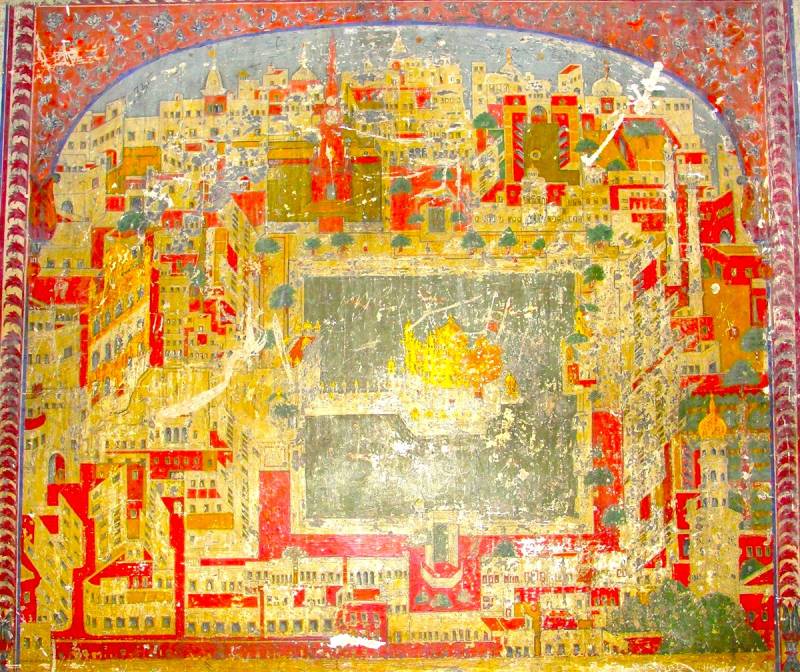
I have not seen such imagery in any other haveli in Pothohar. Another room contains a painting depicting the veneration of Baba Atal, Guru Hargobind's son.
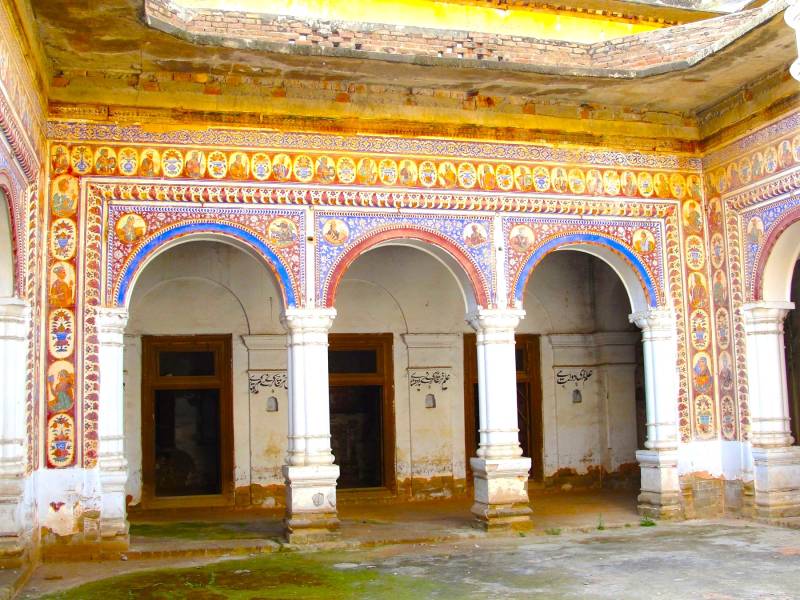
Hotey Shah's grave lies on the premises of the haveli. A broken plaque with an Urdu inscription reads Hotey Shah Mardan. A Gurmukhi inscription on the grave slab says Ram Singh donated it in 1914.
Baba Khem Singh Bedi's haveli is an important part of Pothohar's architectural and artistic heritage. Its paintings and woodcarvings offer a fascinating glimpse into the religious beliefs, artistic traditions, and craftsmanship of pre-partition Punjab. Unfortunately, many of these paintings are fading, while the intricately carved wooden doors and windows are gradually deteriorating. If immediate attention is not given to their preservation, some of these valuable works of art may disappear. The haveli deserves proper conservation and should be converted into a museum where visitors can learn about Pothohar's artistic and cultural heritage.