

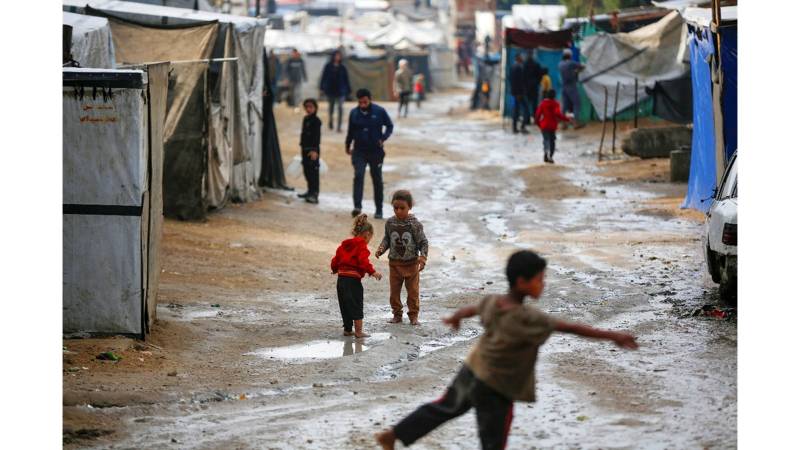
There is something deeply disturbing about the way the world now speaks about humanitarian crises. Sudan is a catastrophe, but it increasingly competes for attention with the next crisis. Gaza remains an unfolding humanitarian disaster. Yemen has endured more than a decade of conflict. Afghanistan has experienced decades of war, displacement, and deprivation. The Democratic Republic of Congo has endured generations of conflict.
For millions of children, displacement, insecurity, and humanitarian assistance are not temporary experiences. Their childhoods are stolen.
The greatest danger is therefore not simply that these crises continue. It is that we become accustomed to them. That is the moment when a humanitarian crisis becomes the “new normal.” Once suffering becomes normal, urgency fades, political attention moves elsewhere, and donors struggle to sustain funding. People trapped in protracted crises become increasingly invisible. They become a neglected crisis.
The humanitarian sector does not lack ideas. Localisation, anticipatory action, cash assistance, resilience, flexible financing, accountability to affected populations, and the humanitarian-development-peace nexus have been debated for years. Yet progress remains limited. An analysis (ODI, 2026) found that less than 10 per cent of international humanitarian funding reached local and national actors in 2024, far below the 25 per cent ambition established by the Grand Bargain.
The problem, therefore, is not simply a shortage of ideas. It is a failure to change the incentives and architecture of the system.
Humanitarian organisations have become highly effective at delivering assistance. But delivering assistance is not the same as changing the trajectory of a crisis.
We can count meals delivered, people sheltered, and children reached with temporary education. What happens when the same community remains hungry a year later, children remain in temporary learning spaces for five years, or families remain displaced for a decade?
At some point, we must ask a harder question: Are we reducing humanitarian need—or merely managing it?
Sudan illustrates the consequences of allowing an emergency to become permanent.
As the conflict entered its fourth year, UNICEF estimated that 33.7 million people—including 17.3 million children—required humanitarian assistance. More than 9.1 million people were internally displaced. At least eight million school-aged children were out of school, while nearly half of Sudan's schools were no longer functioning as classrooms.
The humanitarian sector does not need another revolution in terminology – instead, it needs one in incentives, accountability, financing and political courage
These are not simply humanitarian statistics. They represent futures being lost!
A child can survive a war and still lose her future because she lost years of education. Education must therefore be treated not as another competing sector within a humanitarian appeal, but as part of the infrastructure of recovery.
The same warning can be seen in Afghanistan. UNICEF reported in August 2026 that more than 2.6 million girls have been denied secondary education since 2021.
Five years can become ten. Ten can become twenty. Eventually, the world stops asking when the emergency will end and simply learns to live with it.
Humanitarian action cannot substitute for political action
There is another uncomfortable truth: humanitarian organisations cannot resolve the conflicts that create humanitarian crises.
They can save lives, protect civilians, and provide food, water, shelter, healthcare, and education. But they cannot negotiate peace in Sudan, resolve Yemen's political crisis, or end armed conflict elsewhere.
The ICRC has made precisely this point: humanitarian action cannot substitute for political solutions, and only sustained political commitment can prevent and end armed conflict. Humanitarian action must, therefore, remain independent and principled while being accompanied by greater diplomatic engagement, conflict prevention, accountability, and pressure for respect for international humanitarian law.
Aid can alleviate the consequences of war. It cannot end the conditions that produce it.
From managing crises to changing trajectories
We need a different definition of humanitarian success. Humanitarian operations should increasingly be judged not only by what they deliver, but by whether vulnerability is declining. That means measuring whether:
- fewer people depend on humanitarian assistance;
- children return to sustained education;
- households become more resilient to future shocks;
- local institutions assume greater responsibility; and
- humanitarian needs decline over time.
This also means rethinking the role of international NGOs. The ultimate success of an international humanitarian organisation should not be the size of its programme. It should be what it leaves behind: stronger local institutions, functioning services, and communities better able to withstand future crises.
That requires funding to change as well. Donors should finance not only the management of humanitarian need, but its reduction—through restoring education and health systems, strengthening local organisations, rebuilding livelihoods, and supporting social protection.
Make forgetting impossible
Every major protracted crisis should have a publicly reported Humanitarian Normalisation Index, tracking duration, displacement, unmet needs, children out of school, food insecurity, destruction of essential services, humanitarian financing, and political engagement. The question should be brutally simple: Is the international response reducing the crisis—or merely sustaining people within it? If the answer remains the latter year after year, the response architecture must change. Not another strategy. Not another evaluation. A different system.
The humanitarian sector does not need another revolution in terminology. It needs a revolution in incentives, accountability, financing, and political courage. The ultimate test is whether we can build a humanitarian system whose success is measured not by how efficiently it manages suffering, but by how effectively it prevents suffering from becoming permanent. No child's lost future should become the acceptable price of a neglected crisis. Not in Sudan. Not in Gaza. Not in Yemen. Not in Afghanistan. Not anywhere.
The new normal cannot be permanent suffering. If our humanitarian architecture cannot prevent that, perhaps it is the architecture itself that must change.