

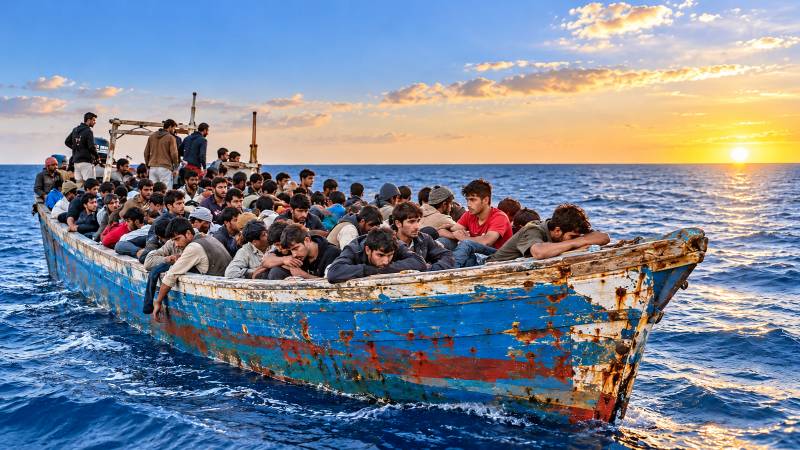
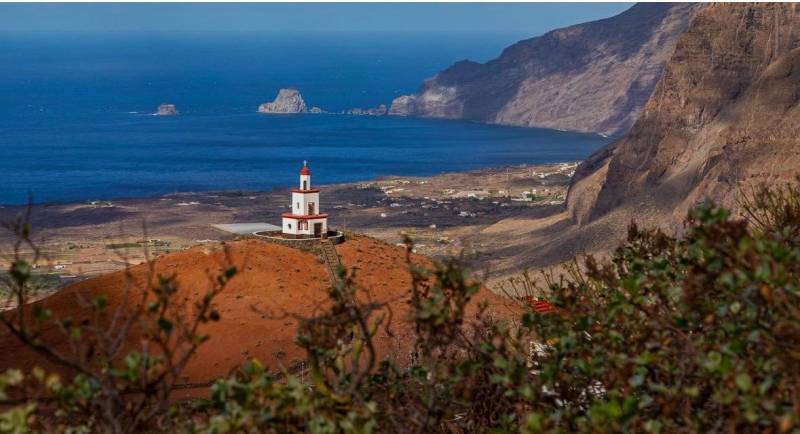
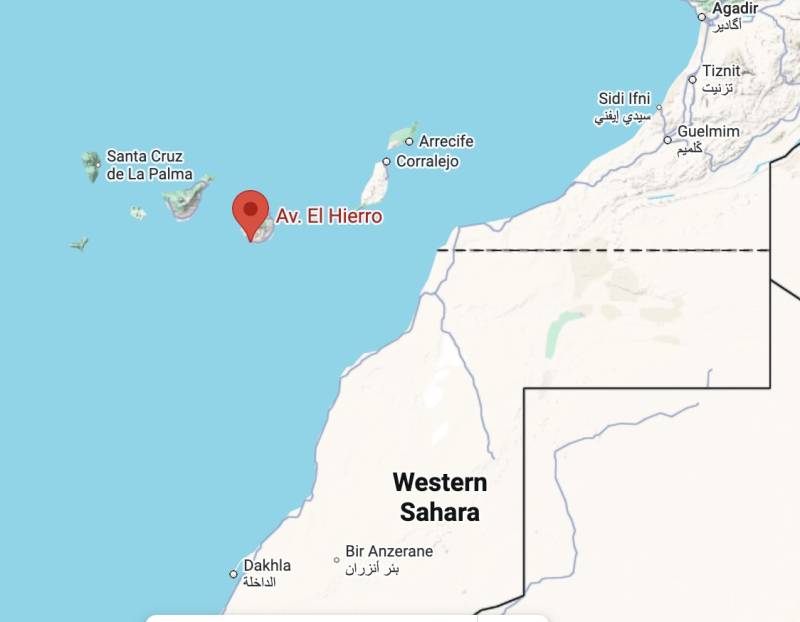
In the town of Phalia in district Mandi Bahauddin, Punjab, lives twenty three year old Ali Hassan, a survivor of the now infamous ‘Morocco boat’ incident in January of 2025. The story told by Ali Hassan is straight out of a horror movie; the agony of being stuck in the middle of the ocean aboard a broken down wooden boat, the constant pain from multiple injuries, the crippling hunger and thirst and the stink of dead bodies lying around him. It is incomprehensible as to how this young man survived at all. This story is real and unfiltered. Like many irregular migrants, Ali took the route currently preferred by smugglers for his intended journey to Spain; flying from Pakistan to Egypt via Dubai and landing in Mauritania on a valid visa arranged by his agent. In Mauritania, he was met by an African agent and transported to a safehouse in Nouakchott port, where he waited with many other men present there for his turn to sail across the Atlantic Ocean to El Hierro, Gran Canaria, Spain.
Ali Hassan recounted that after waiting in the safehouse for weeks with twenty other men, they were finally told by the agents to get ready to leave shortly. As night fell, a few agents arrived in two pickup trucks at the safehouse. The men were forced into the trucks and driven in the dead of night to the coast. The trucks came to a stop after a long drive and the men were taken out. Ali Hassan felt a sinking feeling looking at the boat visible in the shallow water in the moonlight but there was no time for any second thoughts. The men were pushed and hurriedly crammed into the rickety wooden vessel unceremoniously.
As soon as all the men got in, the boat, termed as ‘game’ by the smugglers, was pushed off in the dark, with around 85 migrants from different safehouses and 10 African smugglers on board. The majority of the men on board were Pakistani. Ali Hassan described the conditions as stifling, with men literally stuffed into the boat; they had no food or any personal belongings. They were told that the journey to El Hierro would take three days and that they must stay put. On the fourth day, with the promised shore nowhere to be seen, the vessel's engine seized and broke down completely, leaving the boat adrift in the Atlantic Ocean. The men aboard were already in a poor state and their condition started worsening rapidly with each passing hour.
On the fifth day, one of the Pakistani men belonging to Kunjah, Gujrat, weak from hunger and exhaustion suddenly collapsed and died. A commotion ensued on the boat, as the men freaked out to witness his sudden death but to their horror, two of the smugglers grabbed the dead body by its legs in order to throw it into the sea. Seeing this, some of the men sprang up and shouted that they will not let the dead body be cast away so ruthlessly. The boat started to sway and the smugglers, realizing the danger, got furious; grabbing iron rods and pipes they started beating up the protesting men, leaving many of them severely injured. As the men fell down and retreated, the smugglers threw the dead body overboard. Ali Hassan also got hit on his nose and was badly injured.
For the next ten harrowing days, the boat remained trapped in a grim limbo; one by one, the injured and starving men succumbed to death. Most of the bodies were thrown into the dark waters of the Atlantic Ocean by the smugglers. More than forty Pakistani men died on the boat. Ali Hassan saw two of his cousins, who were severely injured, succumb to death as he watched helplessly. On the fourteenth day of their ordeal, some men on the boat saw a ship in the distance. As they realized the slim chance of a rescue, someone weakly raised an arm, another tried to stand in the hope that he could be seen. One of the smugglers put a rope around a young boy and made him jump into the ocean to thrash his arms around so that he could be seen. As it turned out, it was a Moroccan merchant navy ship in the distance, and one of the seamen on the lookout spotted the boat.
Ali Hassan’s harrowing survival story exposes the brutal reality of human smuggling from Pakistan to Europe, where desperate migrants are crammed into unseaworthy boats, abandoned in the Atlantic Ocean without food or water, and left to die as criminal networks operate with impunity across West Africa.
That ship changed its course to come closer to the stranded boat and made the rescue. Ali Hassan, lying curled up in a corner, barely breathing, was one of the few remaining survivors. He was transported to Morocco, where he was admitted to a hospital for treatment before being sent back to Pakistan after a month. Out of the 85 men en route to El Hierro, only 22 were rescued. More than fifty men died, many of them killed by the African smugglers. The details of the ordeal are too harrowing to recount in their entirety, but the fact is that the human smugglers and their agents are not only undeterred by any number of deaths of migrants at sea, but they are actually killing them with impunity.
According to Ali Hassan, there were several smugglers and their agents in Mauritania, who were fully aware of the fact that the said vessel had failed to reach El Hierro as expected, yet they did not notify any authorities and remained completely indifferent to the fate of the boat. Horrifying as the story is, this is not an isolated incident, and human smugglers have turned the seas into killing fields. This situation calls for urgent intervention by the UN, the European Commission, and international organizations working against human trafficking and human smuggling. Serious international pressure must be put on Western African transit countries to take immediate and effective action against the brutal smuggling networks and bring the criminals to justice.
The governments of Mauritania, Senegal, and other northern and western African countries must be held accountable for letting the smugglers operate on such a massive scale with impunity. Many of the Pakistani smugglers who were involved remain at large, including the famous Red Book smuggler Faadi Gujjar, who is living a life of luxury in Mauritania. The government of Pakistan must use all means at its disposal to save Pakistani men from becoming the next victims of these criminals. At present, there are more than seven thousand Pakistani men held in ‘safehouses’ in Mauritania alone, as confirmed by FIA officials.
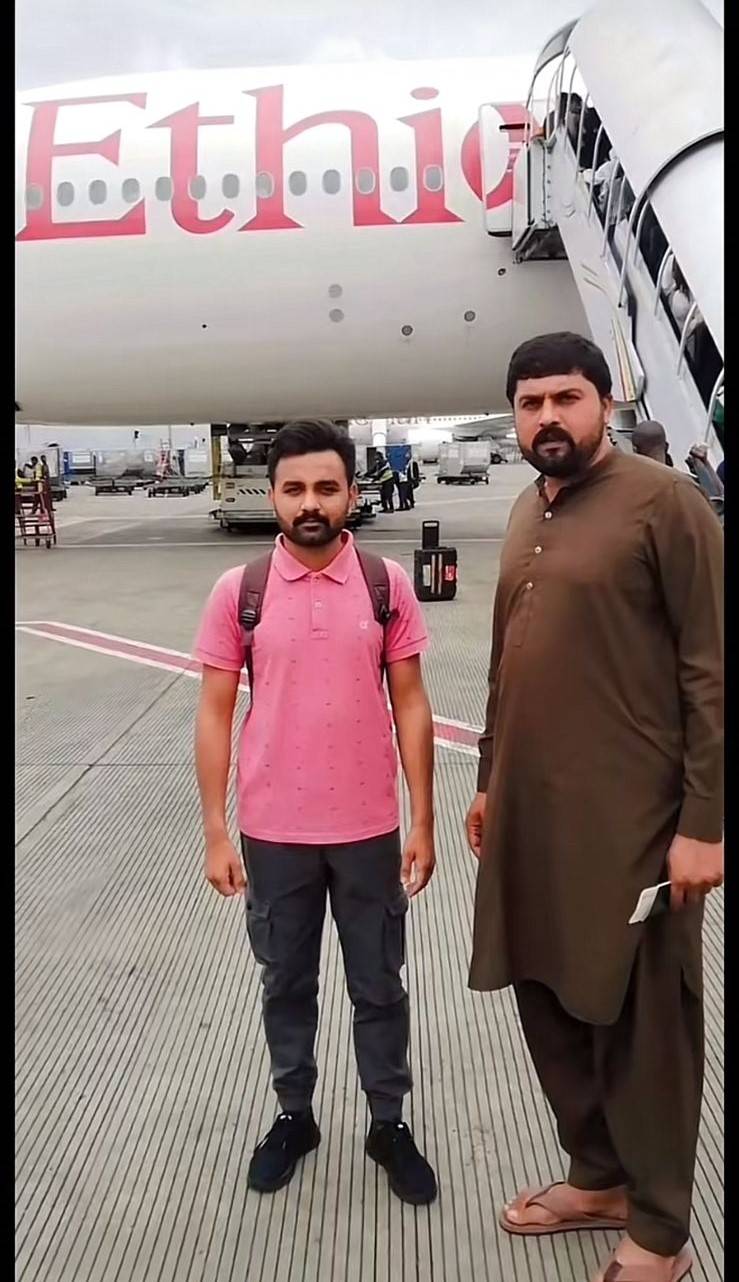
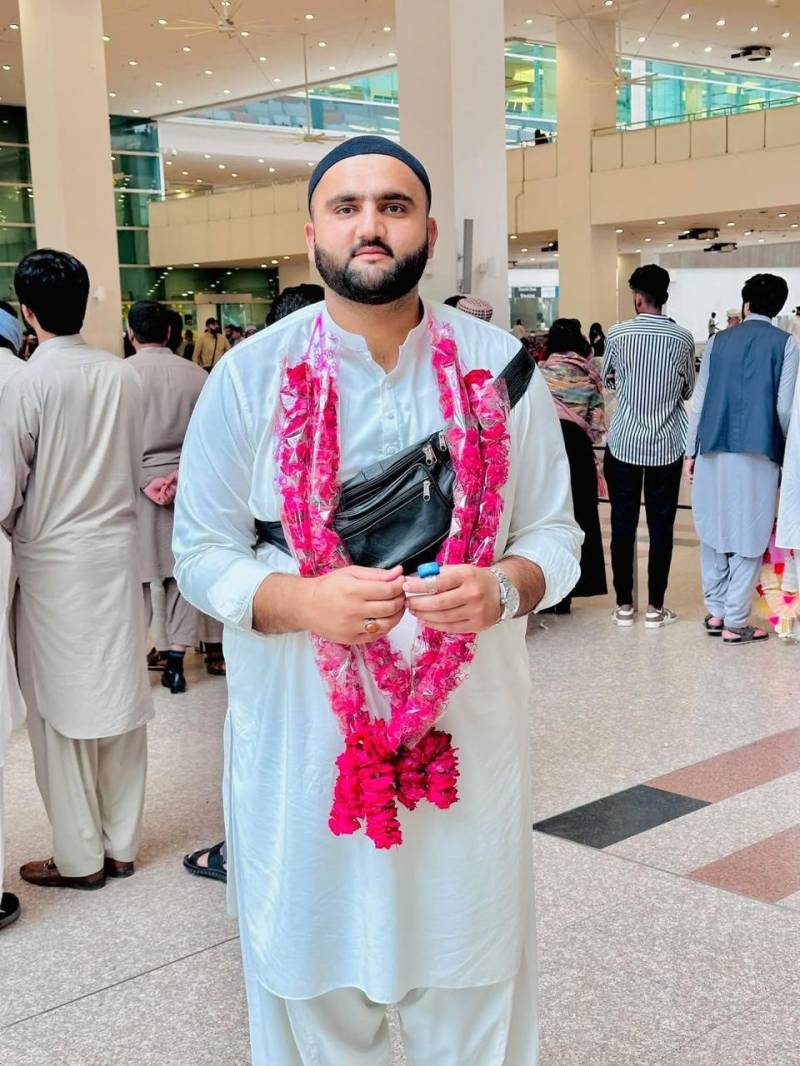
Atif Shehzad and Sufyan Ali, who paid 3.5 million rupees ($12,500) to agents to facilitate their journey. As Pakistanis die in fresh Mediterranean tragedy, a question lingers: Why? | Migration | Al Jazeera
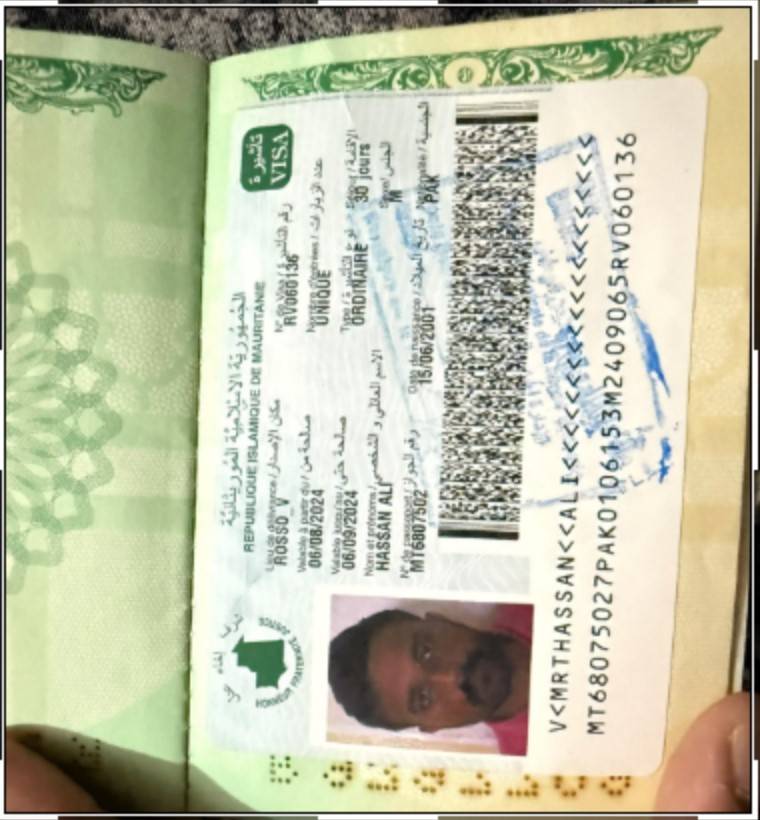
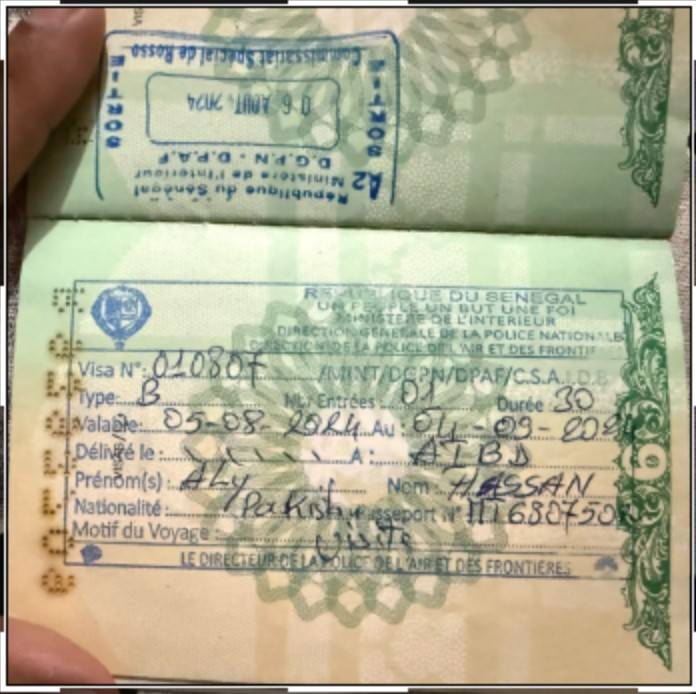
Ali Hassan’s visa and entry stamp
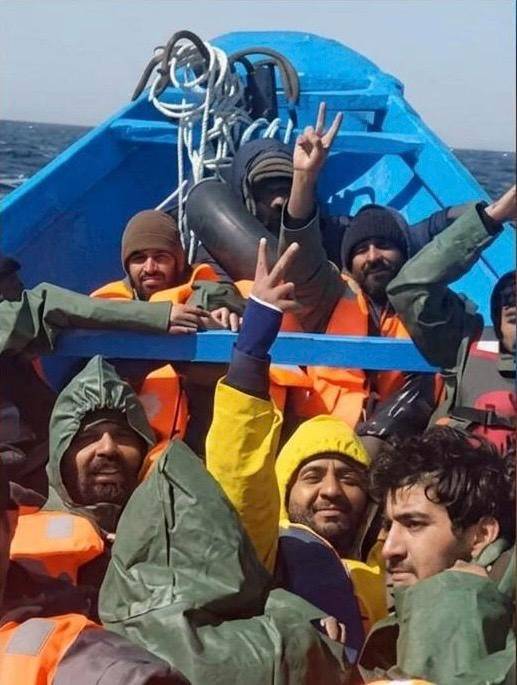
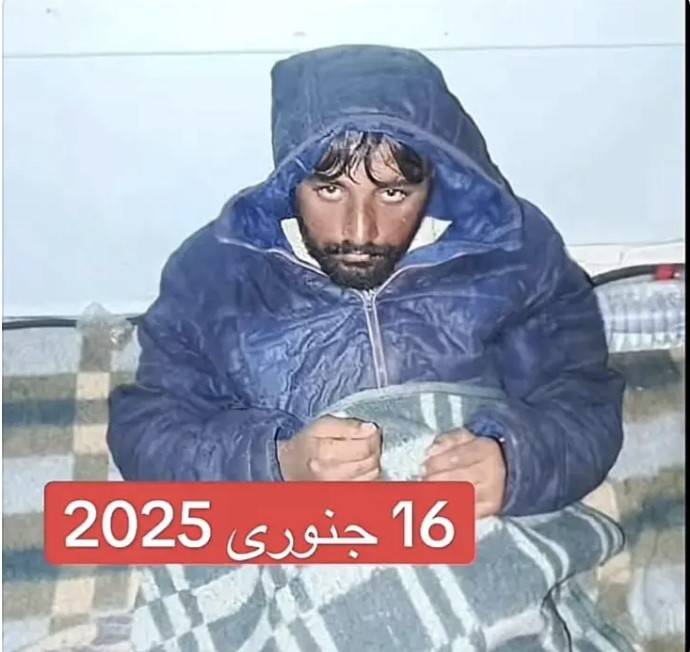

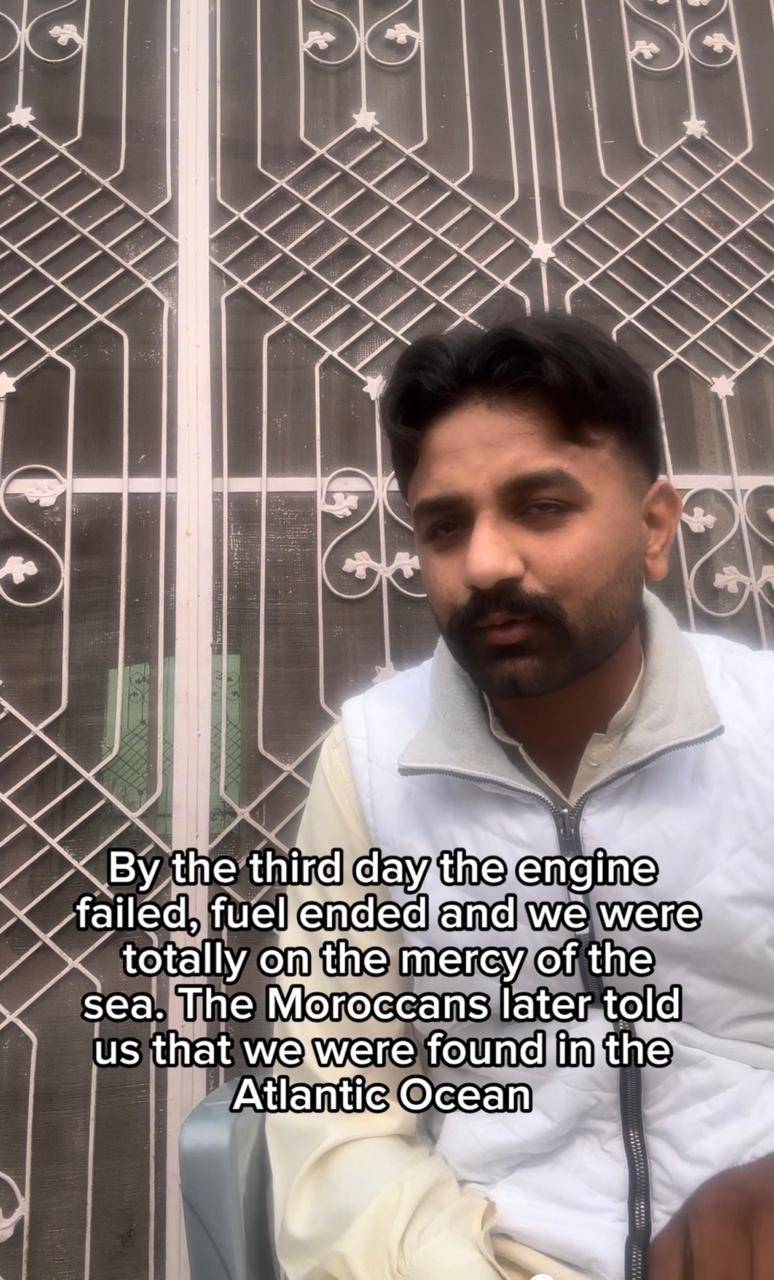
Ali Hassan recounted his story at his home in Phalia, Mandi Bahauddin in February 2026. This photo is from the video documentation of his harrowing account.