

The Swat River, with its emerald-green waters, snow-draped forests, and rich cultural heritage, has long been the lifeline of northern Khyber Pakhtunkhwa. For centuries, the river has nourished farming communities, sustained local economies, and inspired the imaginations of poets and travellers alike. Today, however, this river stands at a crossroads. Large-scale hydropower projects threaten to alter its course and silence its flow. Four major schemes, the Madyan Hydropower Project (207 megawatt), Asrit–Kedam (229), Kalam–Asrit (239), and Gabral–Kalam (88), are being advanced with the support of the Pakhtunkhwa Energy Development Organisation and financed by the World Bank.
Promoted as a clean and sustainable solution to Pakistan’s energy shortage, these projects are celebrated in official discourse as symbols of progress, clean energy and modernity. Yet for the Torwali, Gujjar, and Gawri communities whose lives are intertwined with the river in their ancestral land, hydropower represents a story of dispossession, ecological devastation, and exclusion.
To understand this contradiction, one must look beyond the technical details of energy generation and examine the political forces at play. Political ecology, an interdisciplinary approach that emerged in the 1970s and 1980s, provides a useful lens. It challenged earlier explanations of environmental problems that ignored politics and power. Instead of viewing issues like soil erosion, land degradation or ecological damage as simply the outcome of natural processes or poor local management, political ecology argued that these problems are deeply rooted in unequal social, political, and economic structures.
It highlights how development projects often privilege elites while marginalising local communities, how they are presented in the language of progress to silence alternatives, and how marginalised peoples resist by proposing models of development grounded in justice and local knowledge.
Seen through this framework, the hydropower projects in Swat are not neutral engineering exercises but highly political interventions. They reshape power relations, determine who gains and who loses, and redefine the meanings of development in a fragile mountain ecology.
Political ecology reminds us that development not only transforms economies and landscapes; it reshapes cultures and the ways people understand themselves
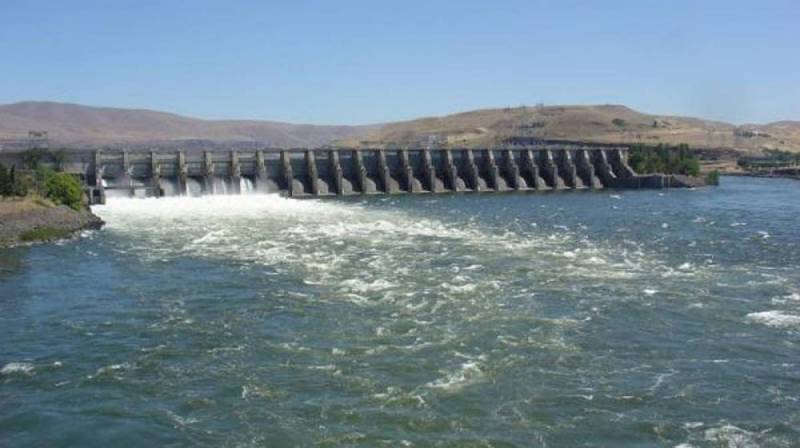
The model chosen for Swat is known as the cascade system. In this approach, the river is diverted into a chain of tunnels and reservoirs, leaving large stretches of the riverbed dry. The Madyan project alone would divert the river into a tunnel that runs for 12 kilometres. The Asrit–Kedam and Kalam–Asrit projects each require tunnels of 11 kilometres. Taken together, nearly 40 kilometres of the Swat River between Madyan, Bahrain and Kalam would be swallowed underground, unseen and unheard, transforming the character of the valley forever. This is not a minor alteration but a fundamental re-engineering of the river itself.
While these projects are justified in the name of energy security, even Pakistan’s own Indicative Generation Capacity Expansion Plan for 2025–2035 has rejected some of them, including Madyan and Gabral–Kalam, as economically unfeasible. Their persistence, despite official exclusion, reveals that they are sustained not by technical necessity but by political and economic interests.
The question of decision-making lies at the heart of the controversy. The projects have been conceived and approved by state institutions and international financiers without the free, prior, and informed consent of the local communities. The Torwali, who have repeatedly expressed concern about the ecological and cultural costs, were never formally included in consultations. This exclusion reflects longstanding patterns of power in which elites and distant authorities define the meaning of development while silencing those who live with its consequences.
The distribution of benefits and harms further illustrates the politics of hydropower. Electricity generated from these schemes will feed distant urban and industrial centres, far removed from the valleys of Swat. The costs, however, will be borne locally. Rivers diverted into tunnels will collapse fish populations and wipe out aquatic biodiversity. Springs and smaller streams that depend on river pressure will dry up, threatening drinking water supplies. Agriculture, already under pressure in mountain terrain, will suffer from reduced irrigation. Tourism, which thrives on the beauty of flowing rivers and lush valleys, will decline when the riverbed is left barren. In short, the people who have historically protected and depended on the river will pay the heaviest price for a development whose benefits flow elsewhere.
The cultural impact is equally severe. For the Torwali, Gawri, and Gujjar communities, the Swat River is more than a physical resource. It is a cultural anchor, embedded in oral traditions, songs, and collective memory. To silence the river is to sever a living bond with heritage and identity. Political ecology reminds us that development not only transforms economies and landscapes; it reshapes cultures and the ways people understand themselves.
The future of the Swat River is not a technical matter of energy production but a profoundly political question. It asks us whose voices count, whose lives matter, and whose visions of development will shape the future
This is not the first time the people of Swat have been pushed to the margins of development narratives. Historically, indigenous groups like the Torwali and Gawri have been invisible in state policies, despite meeting international definitions of indigenous peoples. They are rarely acknowledged at the national level, and their voices carry little weight in decisions about the use of their lands and waters. Hydropower projects extend this legacy of neglect, perpetuating a cycle in which development is imposed rather than negotiated.
In response, resistance has emerged. In 2024, local communities came together to form the Draya-e Swat Bachao Tehreek, i.e. Save the Swat River Movement. This initiative challenges state and donor-driven narratives by foregrounding local knowledge and cultural heritage. It does not reject development outright but calls for alternatives that are community-centred, ecologically sustainable, and culturally respectful. Solar and wind energy, for instance, are increasingly favoured by local people as viable and less destructive solutions suited to the mountain ecology.
Hydropower advocates often describe dams as symbols of development and clean energy. Yet in practice, these projects represent what scholars term green grabbing, the appropriation of natural resources in the name of environmentalism. Under the guise of sustainability, rivers, forests, and lands are commodified, and the very communities that have safeguarded them for centuries are sidelined.
The struggle over the Swat River, then, is not merely about engineering or economics. It is a struggle for justice. For the Torwali and their neighbours, it is an existential fight to preserve not only their livelihoods but their cultural identity and sense of belonging. Their resistance is not anti-development; it is a demand for fairness. It is a call for a form of development that strengthens rather than erases ecological systems and cultural memory.
What happens in Swat reflects a larger global pattern. From Latin America to South Asia, communities are resisting projects that enclose their rivers, forests, and lands in the name of green progress. These struggles remind us that sustainability cannot be achieved by technical fixes alone. It requires confronting power, inequality, and the rights of marginalised peoples.
The future of the Swat River is not a technical matter of energy production but a profoundly political question. It asks us whose voices count, whose lives matter, and whose visions of development will shape the future. If the river is silenced, an entire way of life may disappear with it. But if the voices of its people are respected, another path is possible, one where development and dignity flow together, like a river that sustains both land and life.