

New York: The United Nations has expressed hope that the ceasefire between Pakistan and Afghanistan will be upheld and followed by diplomatic engagement to resolve underlying disputes, after days of deadly border hostilities triggered alarm across the region.
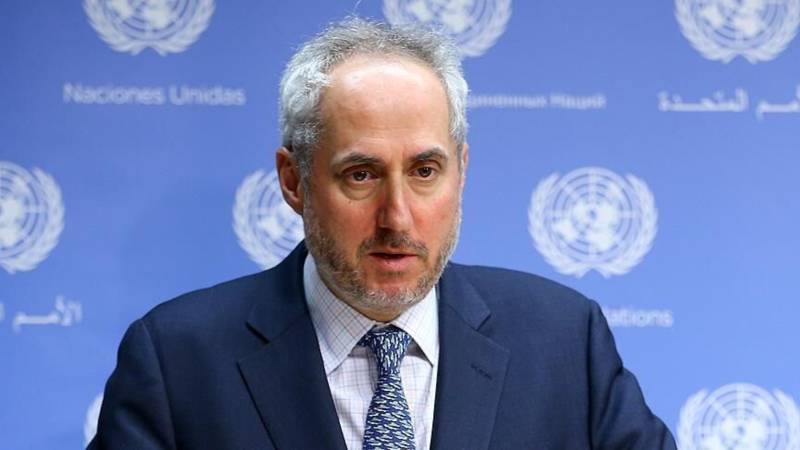
“Well, the Afghanistan and Pakistan, we hope that the ceasefire will hold and that all of the outstanding issues will be dealt diplomatically,” Stephane Dujarric, Spokesperson for the UN Secretary-General, said during monday’s press briefing at UN Headquarters.
His remarks mark the UN’s most recent engagement on the matter following intensified clashes along the border that left civilians dead, damaged homes, and forced residents to flee frontline villages.
The tensions escalated last week, when Taliban authorities claimed responsibility for what they described as “retaliatory” strikes against Pakistani positions. Pakistan responded with military fire across several border districts, including Chaman, Kurram, and parts of North Waziristan.
Local media in both countries reported casualties, although official figures have not been released. Residents in border towns described fear, school closures, and damage to civilian infrastructure. Humanitarian observers warned that any further escalation could displace thousands and disrupt critical aid operations near the frontier.
Before the announcement of the ceasefire, the UN had already raised concerns about the trajectory of events. Farhan Haq, Deputy Spokesperson for the Secretary-General, had stressed the need for restraint and protection of civilians, emphasizing that “cross-border violence threatens regional stability and endangers innocent lives.”
The UN Assistance Mission in Afghanistan (UNAMA) has also been tracking developments and engaging quietly with stakeholders, while urging both governments to avoid actions that could reignite confrontation.
The ceasefire follows high-level talks held in Doha between Pakistan and Afghanistan’s Taliban authorities, mediated primarily by Qatar with diplomatic support from Turkey. These engagements were part of Qatar’s growing role as a regional intermediary. The discussions focused on easing cross-border tensions, addressing security concerns, and setting up mechanisms to prevent further escalation.
The ceasefire agreement was signed by Pakistan’s Defence Minister Khawaja Muhammad Asif and Afghanistan’s Defence Minister Mullah Muhammad Yaqoob during meetings in Doha on 19 October.
Key issues in those discussions included counterterrorism, cross-border security, humanitarian coordination, and protection of civilians. Pakistan has repeatedly raised concerns about the Tehreek-e-Taliban Pakistan (TTP), alleging that militants operate from Afghan territory and have carried out attacks inside Pakistan since the Taliban’s return to power in August 2021.
Kabul has rejected those accusations and accused Pakistan of violating Afghan airspace and sovereignty. The Doha talks did not produce concrete resolutions on these points, but they provided a diplomatic channel that the UN believes could be reactivated now that a ceasefire is in place.