

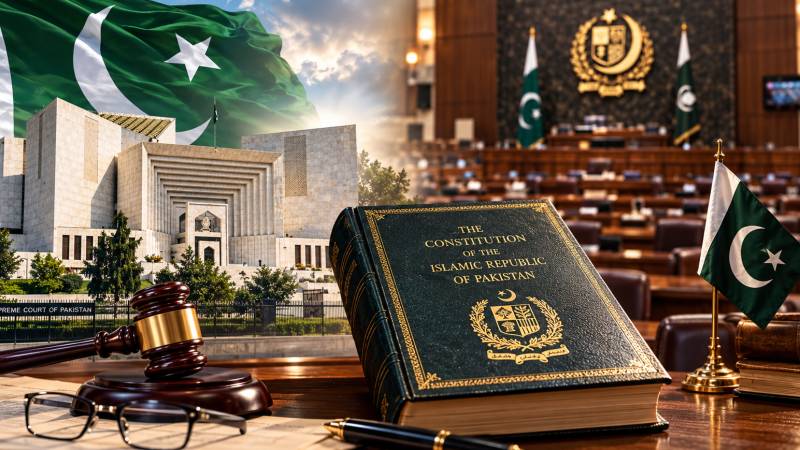
Debates surrounding the 28th Constitutional Amendment have raised several fundamental questions on Pakistan’s political and constitutional horizon. On the surface, the discussion revolves around the creation of new provinces, administrative reforms, and the restructuring of the system of governance. Yet its potential implications are far broader. Reports concerning an increase in federal authority over mineral resources, a review of the federal share in the National Finance Commission (NFC), the distribution of water, and changes in the provincial status of key coastal cities such as Karachi and Gwadar have transformed this debate into a fresh contest over powers between the federation and the provinces. If even some of these proposals become part of a formal constitutional package, the matter will no longer remain one of mere administrative improvement; it will also bring into question the federal balance established after the 18th Amendment.
The first question that must be understood is whether the federal government led by the Pakistan Muslim League-N can secure the required two-thirds majority in both houses of Parliament for a constitutional amendment without the support of the Pakistan People’s Party. The total membership of the National Assembly is 336, so 224 votes are needed for a two-thirds majority. The ruling coalition’s combined strength stands at approximately 235 members. After separating the People’s Party’s 74 members, the government is left with roughly 161 votes and would need a further 63 votes to reach the required threshold. In the Senate as well, additional support would be necessary to achieve the required majority without the People’s Party’s backing.
To fill this numerical gap, possibilities under discussion include securing the support of opposition members, bringing independent members on board, or capitalising on internal differences within a party. Talk of the formation of a forward bloc in the PTI or of obtaining support in exchange for political relief in Imran Khan’s cases is also circulating. The real question is whether simply gathering the required votes will be sufficient for such a fundamental constitutional change, or whether the government will also have to build broader consensus to provide political justification for these changes. Parliament has the authority to amend the Constitution, but the far-reaching consequences of exercising that authority will also depend on how the balance of rights and powers of the federation’s units is handled.
In the background of this debate, the 18th Constitutional Amendment holds fundamental importance. Passed in 2010, it played a significant role in transferring powers to the provinces and strengthening provincial autonomy within the federal structure. Thereafter, the responsibilities and powers of provincial governments became prominent in health, education, social welfare and numerous other sectors. Over time, however, questions also continued to arise concerning federal government expenditures, debt servicing, defence requirements, provincial financial shares, and the devolution of powers to local governments. Discussion of federal financial difficulties and the need for better governance is legitimate in its own place, yet while seeking a solution it will be necessary to ensure that the constitutional foundation of provincial autonomy itself is not being altered in the name of reforms.
A May 2026 report in the daily Dawn mentioned the possibility of reviewing minerals, the provinces’ share in the NFC, and certain arrangements of the 18th Amendment. The same report noted that the full details of the proposed changes had not been formally placed before political allies. Another report in August 2026 referred to various possibilities regarding the creation of new provinces or administrative units and the proposal to bring Karachi and Gwadar under federal administrative control. These reports illustrate the political significance of the debate. It is incumbent upon the government to clarify which changes are actually under consideration, what their legal scope will be, and what outcomes may result from them.
The most sensitive aspect of this entire matter is authority over natural, mineral and financial resources. Mineral projects such as Reko Diq and Saindak in Balochistan, hydropower and mineral reserves in Khyber Pakhtunkhwa, and the gas and coal resources of Sindh are closely linked to the economies, employment and sense of political deprivation of these provinces. Disagreements over the income derived from these resources, the share of local populations, environmental impacts and the distribution of developmental benefits have already been affecting federal relations. If the proposed changes result in an expansion of federal authority over the ownership, management or distribution of income from resources, then constitutional grounding, provincial representation and clarity regarding the interests of local populations will be essential.
Here, Article 172(3) of the Constitution holds special importance. Under it, the ownership of mineral oil and natural gas located in any province is recognised as joint and equal between the federation and the relevant province. Therefore, in any discussion of authority over resources it will be necessary to keep clear the distinction between ownership, administrative control, distribution of income, or the role of the provinces in decision-making related to these resources. If there is any proposal to alter the existing constitutional guarantees, its actual wording and legal effects must be brought forward. Simply stating that minerals are being placed under federal control does not present a complete legal picture until it is clear which minerals, which powers and which procedures are under discussion.
It is also necessary to view this debate in the context of the ports of Karachi and Gwadar. Karachi is Pakistan’s largest commercial centre, and its ports play a fundamental role in the country’s imports and exports. The Gwadar port and the projects linked to it are tied to Balochistan’s geographical and economic importance. If the proposal to separate these cities from provincial administration and place them under direct federal control is genuinely under consideration, the question will arise as to its purpose: better urban management, effective oversight of national projects, or a reduction in the authority and resources of the provincial governments?
If a plan for formation of new provinces emerges not on basis of a clear administrative need, local consultation and political consensus, but with impression of reducing political strength of a particular province or party, then opposition to it will not remain mere political resistance; it may become a question of federal trust.
Political critics express this concern in the metaphor that the establishment wishes to acquire direct control over the country’s important economic “cash counters.” The meaning of this interpretation is that if the centre of decisions concerning ports, mineral reserves, water and financial resources shifts from the provinces to the federation, then authority over key sources of power and income may also become more concentrated. The real issue is that if the role of provincial governments in the management of such resources is restricted, how will the representation of the relevant populations, their share in the income, and the authority of elected provincial institutions be safeguarded?
The idea of separating Karachi from Sindh and Gwadar from Balochistan will therefore not be a mere change of administrative boundaries. The ports of both cities are important for the national economy, yet their economic significance does not extinguish their provincial, historical and social connection. There is no necessity to set national interest and provincial rights against each other; the real need is to fashion an arrangement in which the requirements of national trade and strategic projects are also met, and the rights of local populations, provincial representation and a fair share in income are also guaranteed. If any new arrangement of federal control is under consideration, its reasons, scope of authority, financial consequences and system of accountability must be made clear.
The NFC Award further complicates this debate. Discussion of the federal government’s financial pressures, debt servicing and the costs of national responsibilities is necessary. The question of how federal and provincial resources can be used more effectively is also legitimate. But if a proposal emerges to reduce the overall share of the provinces in order to increase the federal share, it will have to be examined under Article 160 of the Constitution. According to Article 160(3A), the overall share of the provinces in any new NFC Award cannot be reduced below the share fixed in the previous Award. Thus, any change in this guarantee or review of its scope will not be merely a financial decision; it will also have constitutional and political effects.
There is another aspect to the federal financial difficulties. If the desired improvement in education, health, municipal facilities and local development is not materialising despite the transfer of greater resources to the provinces, the solution may also be sought in financial transparency, performance evaluation, effective local governments and the transfer of resources to the lowest level, rather than in taking powers back from the provincial governments. The purpose of provincial autonomy is not merely to give greater authority to provincial capitals but also to provide citizens with a real opportunity for decision-making in their own affairs. If provincial governments themselves do not empower local bodies, this weakens an important part of the fundamental concept of the 18th Amendment. Therefore, in the debate on reforms, empowering local governments and providing them with direct financial resources must be given a central place.
The distribution of water is also a matter that cannot be separated from the discussion of mineral resources, ports and financial powers. For various provinces, including Sindh and Balochistan, water is a fundamental resource for agriculture, employment, the environment and urban life. Disagreements concerning the distribution of the Indus River’s water, the shares of the provinces, water reservoirs and the availability of water have already been sensitive political issues. If any proposed constitutional change includes a proposal to alter the distribution of water or the powers of institutions related to it, its actual wording, effects on the existing legal system and the consent of the relevant provinces must be made clear. Decisions about a fundamental resource such as water should be based on transparent data, constitutional procedure and inter-provincial trust.
The question of the formation of new provinces and federal territories must also be viewed in this broader context. The argument for administrative convenience, the delivery of services to the public at their doorstep, the fair distribution of resources and improved local representation is important in its own place. Pakistan’s growing population and the administrative problems of the large provinces demand serious discussion of the structure of governance. Yet the formation of new provinces is not merely a change in the administrative map. It is also connected with language, identity, historical affiliation, political representation, financial resources and the balance of power in the federation.
If a plan for the formation of new provinces emerges not on the basis of a clear administrative need, local consultation and political consensus, but with the impression of reducing the political strength of a particular province or party, then opposition to it will not remain mere political resistance; it may become a question of federal trust. The political and historical aspects of the debate on new provinces in Punjab, Sindh and Khyber Pakhtunkhwa are not the same. In Sindh the question of the province’s unity and historical identity holds particular sensitivity, while in Punjab the debate on new provinces is linked with questions of administrative, linguistic and regional representation. In Khyber Pakhtunkhwa there are various complexities, including the merger of the former tribal areas and the political representation of Hazara and Pashtun regions. In Balochistan it will not be easy to make any administrative solution acceptable while ignoring geographical expanse, local identity, mineral resources and the pre-existing sense of deprivation.
The importance of this debate increases further in the context of Khyber Pakhtunkhwa and Balochistan. In various areas of both provinces, terrorism, militancy, law-and-order issues and a crisis of trust with the state have already created a complex situation. In the merged districts of Khyber Pakhtunkhwa, questions concerning security, developmental resources and political representation are important. In Balochistan as well, mineral resources, the inclusion of the local population, allegations of enforced disappearances, political representation and disagreements over state policies have been under discussion for a long time. In such an environment, if any constitutional change is viewed as limiting provincial autonomy or reducing local authority over resources, there is a risk that existing grievances will increase.
Concepts of deprivation and political disempowerment can provide space for narratives that widen the distance between the state and citizens. Therefore, the answer to security problems must also be sought in political inclusion, the protection of constitutional rights, the fair distribution of resources and the restoration of the local population’s trust, rather than solely in the use of force or administrative changes. Placing anti-state violence and peaceful political disagreement in the same category can make problems more complex rather than solving them.
The matter of Azad Jammu and Kashmir also has its own distinct constitutional and political status. It would not be correct to treat it as identical to the situation in Khyber Pakhtunkhwa or Balochistan. Nevertheless, discussions concerning political restlessness there, representation, economic demands and relations with the federation make clear how important consultation and trust are for the acceptability of governmental decisions in sensitive regions. If the impression arises regarding any new constitutional proposal that decisions about the future of the relevant populations are being taken without listening to their voice, its political effects may be far broader than any single proposal.
In this entire scenario, the question of Sindh demands particular attention. In Sindh, the unity of the province, language and culture, historical identity and the provincial autonomy obtained under the 18th Amendment are interconnected subjects. In June 2026, leaders of the People’s Party and constitutional experts openly expressed reservations over the possibility of placing Karachi under federal control, the provincial share in the NFC and concerns related to the 18th Amendment. In September 2026 the Sindh Assembly also passed a resolution opposing the division of the province on the matter of new provinces. These events make clear that the geographical unity of Sindh is not merely an administrative debate but an important political and constitutional issue.
If any proposed change in Sindh is understood as an attempt to weaken the province’s unity or to limit authority over its resources, resistance may emerge from various political parties including the People’s Party, nationalist circles, and urban and rural populations. The possibilities of public protest, political tension and conflict with the federal government exist. Sindh plays a fundamental role in Pakistan’s economy; Karachi’s ports, industrial and commercial activity and financial institutions are deeply connected with the national economy. Therefore, the effects of any policy that damages political trust in Sindh cannot be guaranteed to remain confined within provincial boundaries.
Constitutionally, Article 239(4) holds fundamental importance in the debate on new provinces. According to this clause, if any constitutional amendment has the effect of altering the boundaries of a province, the amending bill must, in addition to the required majority in both houses of Parliament, also be passed by at least a two-thirds majority of the total membership of the relevant provincial assembly. The boundaries of any province cannot be altered while disregarding this condition. It is also necessary to clarify, however, that the condition in Article 239(4) relates to a change in provincial boundaries; not every amendment concerning provincial autonomy, financial powers or natural resources falls within the scope of this clause merely for that reason. Determination of this will rest on the actual wording and legal effects of the proposed amendment.
This constitutional requirement turns the debate on the formation of new provinces into a practical question: can the required two-thirds majority in the National Assembly and the Senate, together with the two-thirds support of the relevant provincial assembly, also be obtained in favour of the proposed plan? If a proposal to separate Karachi from Sindh or Gwadar from Balochistan comes forward, it cannot be decided merely by the political will of the federal government or Parliament; it will have to fulfil the requirements of constitutional procedure and the approval of the relevant provincial assembly. Therefore the government must first clarify what its plan is, what its legal foundation is, and how it will obtain the consent of the elected representatives and the public of the relevant provinces.
Ultimately, the debates on the 28th Amendment cannot be limited merely to the question of where the government will obtain the required votes. The real question is what the purpose of the proposed constitutional changes is, how they will affect the existing balance of powers between the federation and the provinces, and whether the trust of the relevant units is being secured for them. If the purpose is administrative reforms, better governance and the fair distribution of resources, then empowered local governments, a transparent financial system, trustworthy distribution of resources among the provinces and parliamentary consultation are important paths to achieving these objectives. But if proposals for the formation of new provinces, expansion of federal territories, greater central authority over mineral resources, change in the NFC and alteration of the administrative status of Karachi and Gwadar become part of a single package, it will be incumbent upon the government to place the complete draft of that package before the public, explain its economic and constitutional effects, and involve the relevant provinces in meaningful consultation.
Pakistan’s federation has been formed from units that possess different languages, cultures, historical experiences and political interests. To keep it stable, political trust is necessary along with constitutional authority. A two-thirds majority can open the path for parliamentary approval of an amendment, but it does not by itself create national consensus for that amendment. Sustainable reforms will be those in which the voice of the provinces is heard, the rights of local populations are protected, the distribution of resources is transparent and fair, and disagreement is resolved through consultation rather than suppressed. The measure of the federation’s strength is not merely the powers of the centre but also whether its units feel secure and empowered regarding their rights, identity and resources.