

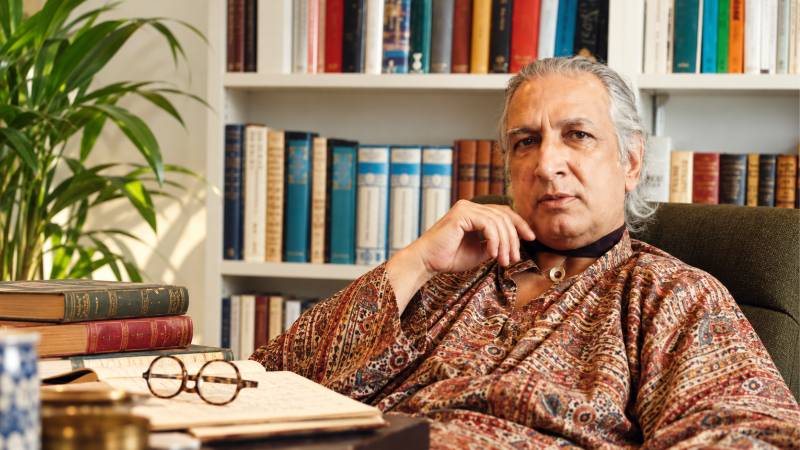
There are men who leave their hometown and others whose hometown never quite leaves them. Masud Khan and I belong to the latter. Long after he had exchanged the sunlit plains of Punjab for the cultured drawing rooms of London and Paris, something of his hometown remained in his bearing. In England he became a celebrated psychoanalyst, a confidant of remarkable minds, a collector of fine art, a connoisseur of literature and beautiful women, and a personality that illuminated entire gatherings. Yet beneath the cultivated European gentleman, he was a son of Lyallpur, proud of his ancestry, partial to its customs, and possessed of a curious mixture of tenderness and imperiousness.
Thirty years ago, when I wrote about Masud Khan, I promised to write again once his personal papers emerged from enforced silence. I confess that others, including Linda Hopkins, have beaten me to it. Yet certain threads of his life remain elusive. His niece, who stayed with him during his declining health, could not be traced in Pakistan. My conversation with the son of his former manager yielded little insight. I have not spoken with Maleeha Lodhi, the journalist, who is his distant relative. What remains, therefore, are a few impressions, which I will set down in the paragraphs that follow.
Masud Khan’s childhood had unfolded among the horses, servants, fields and elaborate domestic hierarchies. He learned to ride and play polo, absorbed the aristocratic manners of his father and developed a fascination with literature. His master's dissertation on James Joyce's Ulysses, was apparently sent to T. S. Eliot for assessment, only to be lost. Accepted to study at Balliol College, Oxford, he travelled to Britain in 1946, aged twenty-two.
His education took an unexpected turn when he met John Bowlby for analysis; he believed Masud wished to train as a psychoanalyst. Thus began one of the most remarkable careers in the history of Psychoanalysis. When Khan came under the influence of Donald Winnicott, he became his analyst, mentor, intellectual collaborator and perhaps a substitute father. Khan was supervised by most distinguished figures in the profession, including Anna Freud and Melanie Klein. He qualified as a psychoanalyst at twenty-six. By 1959, he had become a training analyst - an exceptional distinction in a conservative institution.
His relationship with Winnicott deserves a chapter of its own. The reserved English paediatrician and the flamboyant Punjabi aristocrat appeared temperamentally unsuited to each other, yet their collaboration became extraordinarily fruitful. Khan assisted in preparing Winnicott's writings and helped bring his finest ideas to professional audience. Their friendship was complex but intellectually exhilarating. In an interview in the 1980s, Khan suggested that they respected one another more than they liked one another.
Meanwhile, Masud Khan was becoming an institution unto himself. Being a prince, a gold nameplate on his London door proclaimed His Royal Highness. He dressed beautifully, patronised fashionable tailors, collected paintings and rare books, and entertained with extravagance. His Knightsbridge apartment was filled with art, literature and objects that suggested impeccable taste rather than mere wealth. He favoured berets and occasionally a karakuli cap. He adored company, conversation, art and intellectual combat. His friendships extended into French artistic and intellectual society, notably to Georges Braque. Those who knew him recognised a man of considerable sensitivity and genuine affection behind the grand outlook.
His romantic life was scarcely less eventful than his professional ascent. In 1952, he married Jane Shore, a dancer associated with the emerging Royal Ballet. Beautiful, independent and gifted, Jane might have provided an emotional anchor. However, Khan's infidelity and demanding temperament took their toll, and they divorced in 1956. By that time, Masud had already fallen for another dancer; a woman whose beauty and celebrity would carry him still further into London's high society.
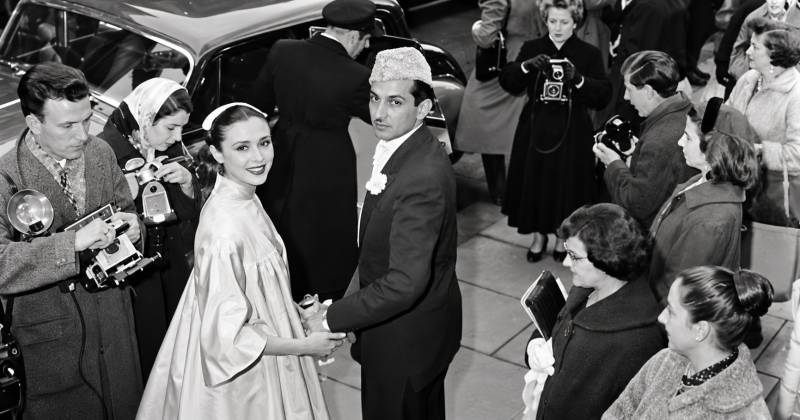
Svetlana Beriosova was one of the Royal Ballet's stars, celebrated for the elegance and quality of her dancing. Born into Russian ballet traditions, she possessed a presence that seemed almost designed for the romantic imagination. Khan married her in January 1959. The pairing was irresistible to London's elite: the exotic, intellectually brilliant psychoanalyst and the ethereal ballerina; both handsome, famous and accustomed to admiration.
Their Knightsbridge home became a meeting place for remarkable personalities. Among their social circle were Michael Redgrave, Julie Andrews, Peter O'Toole, Rudolph Nureyev, Julie Christie, Mike Nichols and other luminaries of the theatre and cinema. Princess Margaret, too, appeared in their social milieu. There were dinners, theatre premieres, ballet performances, expensive wines, conversations stretching into the early hours and the unpredictable spectacle of Khan himself. He was a brilliant conversationalist, capable of sudden insights that delighted one guest and mortified another. He would sometimes offer instant assessments of the personalities around him, igniting his critics in the process.
He wrote of hidden selves, cumulative injuries and the yearning to be understood, while his own identity remained a restless construction of memory, ambition, fantasy and longing.
Mike Nichols recalled a dinner at which Khan loudly informed a dignitary that his romantic advances towards another guest were hopeless because of her sexual orientation. On another occasion, he deliberately knocked a champagne bottle from a restaurant table, only to persuade a celebrity that he was responsible for replacing it. These episodes were pure Masud Khan: theatrical, mischievous, manipulative and astonishingly self-assured. There was also the magnificent tale of his promise to send the American psychiatrist, Karl Menninger, four Arabian stallions. The horses never arrived. When confronted, Khan explained that he had merely told Menninger what Menninger wished to hear.
Behind all this flamboyance stood an original mind. His most enduring contribution was the concept of cumulative trauma: the idea that psychological injury may emerge not from one catastrophic childhood event but from repeated failures of emotional protection. He also developed influential formulations regarding schizoid personalities, perversions, intimacy, the privacy of the self and the therapeutic relationship. Rather than considering all apparently perverse behaviour as an expression of sexual abnormality, he explored how certain patterns might represent desperate attempts at psychological self-repair. His writing was literary, imaginative and unusually attentive to the lived experience of his patients.
His wrote four books, numerous papers, reviews and editorials; occupying highly influential positions in psychoanalytic literature. His clinical reputation extended well beyond Britain into France, Germany and the United States. He gave highly acclaimed lectures, and attracted distinguished students and followers, among them Christopher Bollas and Adam Phillips. Erik Erikson is reported to have declared that the future of psychoanalysis belonged to Masud Khan.
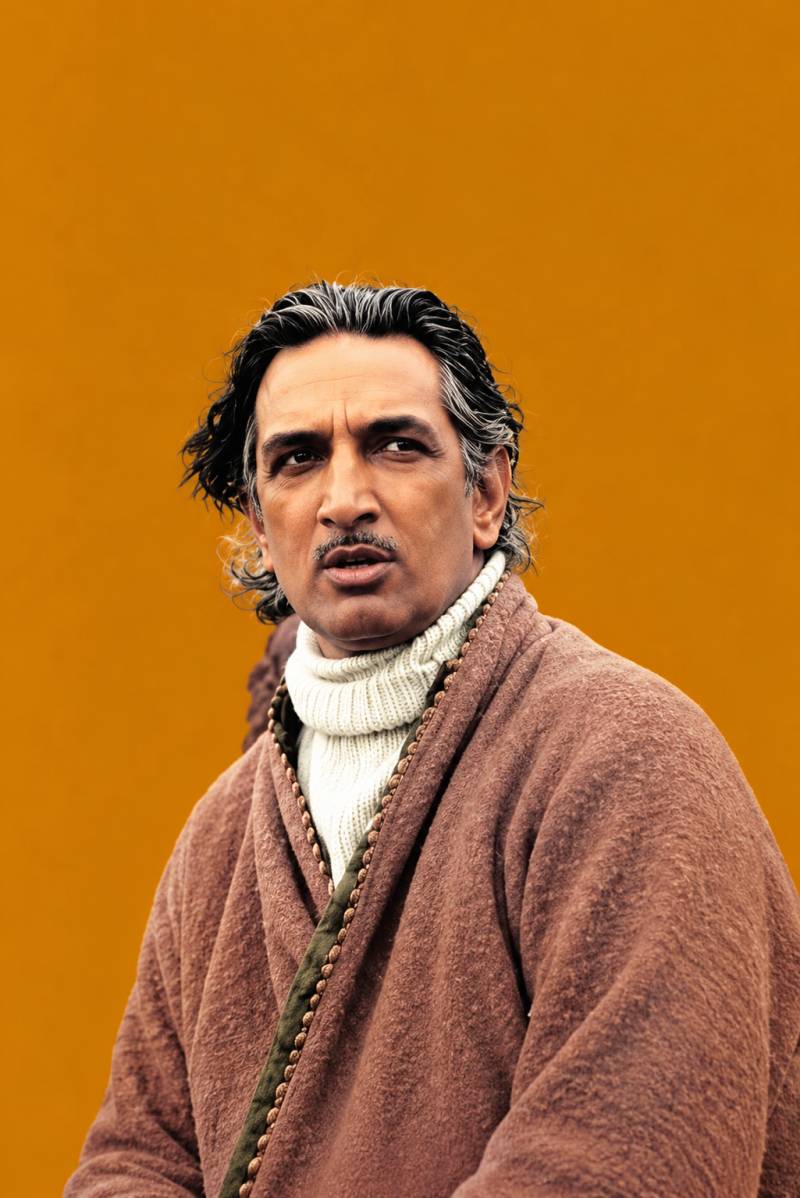
His generosity could be lavish, but his anger was unpredictable; his affection could be genuine, but his appetite for control was immense. Wealth enabled his eccentricities, celebrity protected him from criticism, and professional admiration made it difficult for colleagues to question his behaviour. Svetlana's increasingly unhappy relationship with him ended in separation and, eventually, a divorce in 1974. Neither marriage produced children.
The early 1970s marked the beginning of his descent. In 1971, his mother died, and so did Winnicott. Khan's grief over both was profound. He wrote to his friend Robert Stoller that he had enjoyed a protected childhood and must now learn to become an adult. He was forty-seven. The pain was intensified when he discovered that Winnicott had appointed his widow, rather than Khan, as literary executor. Khan experienced it as a profound rejection after years of devotion. His drinking worsened, his relationships deteriorated and his behaviour became erratic.
His cancer appeared in the mid-1970s, followed by repeated treatment and major surgery. He lost his position as a training analyst, and his standing within the British Psychoanalytical Society declined. The publication of When Spring Comes in 1988 proved decisive. One of its clinical narratives contained antisemitic material. Even those who admired his theoretical contributions found it increasingly difficult to defend him. Some biographers have since suggested that Khan may have suffered from a mood disorder.
His final years were lonely and painful. The once-commanding voice, was severely diminished by surgery for advanced cancer. The man who had lived among great actors, celebrated writers, royal acquaintances and the intellectual aristocracy of Europe was reduced to an existence far removed from the dazzling society. The tragedy was intensified by the persistence of his intellect. Even as his body failed, he continued to think, write and attempt to impose meaning upon the disorder in his own life.
Lyallpur never deserted him - beneath the cultivated European identity, his attachment endured. The family estates were managed by his manager, Aashiq, and his half-brother Salahuddin. A little-known account associates them with the establishment of the Rex Cinema in Lyallpur. He had contemplated returning to Pakistan with Svetlana after her retirement. Friends recalled his dream of establishing a foundation in Lyallpur to promote psychoanalysis. He never wholly belonged to London where he had adopted the lifestyle of colonial rulers, yet remained conscious of being an outsider in their world. His princely status were an attempt to defeat that estrangement; perhaps it provided a stage upon which to perform the identity he wished to inhabit.
On June 7, 1989, Masud Khan died in London, aged sixty-four. His body was returned to Faisalabad, the former Lyallpur, for burial. He had wished to rest beside the father whose presence had shaped so much of his early life. This is an irony more poignant than a novelist could invent. He wrote of hidden selves, cumulative injuries and the yearning to be understood, while his own identity remained a restless construction of memory, ambition, fantasy and longing. After forty-three years in London, the celebrated expatriate returned to the soil from which he had once departed with inherent confidence.
Masud Khan remains one of the great paradoxes of psychoanalysis. He was neither merely a genius betrayed by a jealous establishment nor merely a prince whose brilliance concealed trauma. He was gifted, vulnerable and domineering; capable of uncommon clinical insight. His writings deserve intellectual celebration; his treatment of patients demands clinical appraisal. Both truths must survive if the story is to be told with integrity. From the dusty playing fields of Lyallpur to the glittering salons of London, Masud Khan lived several lives within one.
For Lyallpur, now Faisalabad, a city which has given the world remarkable sons and daughters, Masud Khan deserves remembrance not merely as a celebrated psychoanalyst, but as a fascinating human being who carried something of its spirit into the wider world. The City of the Clock Tower, the canals and the endless fields, had produced, a prince of the human mind. Amid the many names which history has allowed to fade, his is surely the one worth calling home.