

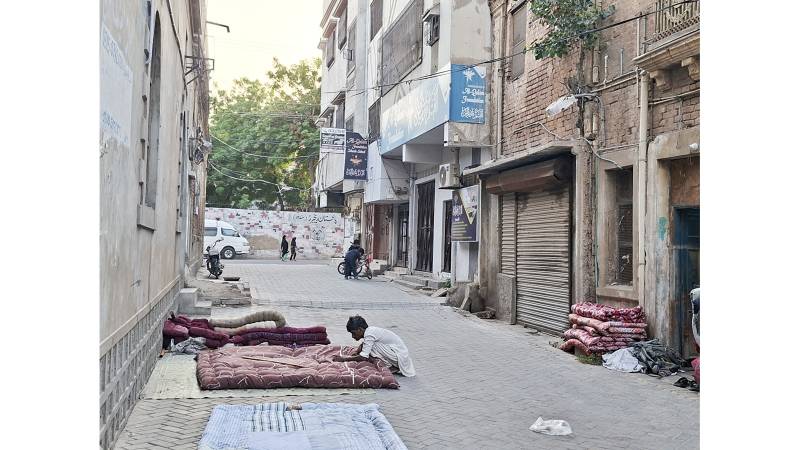
Cities have a polymorphic and ambivalent character; they can survive drastic demographic, political, and economic challenges. Yet they are also vulnerable, because these challenges can bring about rapid, unprecedented transformations in their original character. The rapid pace of commercial and trading activities has particularly contributed to a multitude of problems in old and downtown urban localities across Pakistan. Hyderabad city in Sindh is a case in point, as the partition of the subcontinent in 1947 and subsequent socio-economic events restructured its demography and urban morphology.
To illustrate these points, I am using the example of Hirabad, which was originally a well-planned residential area during the colonial era (1843–1947) and which gradually changed into a pre-eminently commercial neighbourhood. The radical transformation of Hirabad is not only a tale of change of urban form, but it speaks to our socio-political realities and economic priorities, too.
A Flourishing Planned Colony
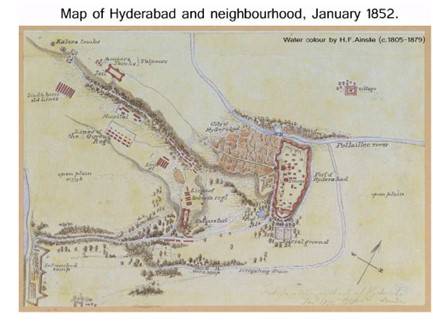
Hyderabad city was founded by Ghulam Shah Kalhoro in 1768 and served as the capital of the Kalhora (1701–1783) and later the Talpur dynasties (1783–1843). When the British conquered Sindh, they introduced infrastructural, administrative, and education-related reforms, and Hyderabad flourished and prospered during their rule. While the Sindhi Hindus served in important posts in both Kalhora and Talpur courts, they also faced religious discrimination and several socio-economic restrictions. This scenario changed during the colonial era, when the Hindus got more freedom and also gained considerable upward social mobility, excelling in education, civil service, and commercial ventures. Consequently, they became the backbone of British civil administration in colonial Sindh.
Until the 1880s, most of the population of Hyderabad was concentrated in the narrow streets of Shahi Bazar, around Pakko Qilo (Royal citadel), and in various neighbourhoods called chaarhis (inclines). The living pattern here was one- and two-storey houses packed into narrow alleys. By the 1900s, the old areas including Shahi Bazar were already overcrowded and dense. The educated and wealthy Hindu elite found this living pattern unsuitable and started looking for new places to live. Influenced by the colonial ideals of planned neighbourhoods with wide roads and spacious houses, the Sindhi Hindus also wanted to develop a new colony in which they could live according to modern aesthetic and architectural trends.
Cities can survive drastic demographic, political, and economic challenges – yet they are also vulnerable, because these challenges can bring about rapid, unprecedented transformations in their original character
The Hyderabad municipality was established in 1853, and it initiated the process of developing drafts and plans to construct new areas to accommodate the large number of people who came to Hyderabad in search of employment, or to ease the population density in the older quarters. Hence Hirabad was developed from around 1910, and it continued to expand until the late 1930s. The Talpur tombs, which were the resting place of the Talpur rulers, were also in its vicinity. According to some reports and anecdotes, Hirabad became known as the town of diamonds because of its wealthy inhabitants, who were jewellers, merchants, and bankers. However, Sindhi writer Bheroomal M Advani (1875–1950) opined that Hirabad was named after Rai Bahadur Diwan Hiranand Khemsingh Advani, a prominent personality of Hyderabad.
After Hirabad was established, one of its neighbourhoods, the Amil Colony, was reserved for the Amil Hindus, who were mostly civil servants. The protagonist in Quratul Ain Haider’s novella, Sita Hiran, Dr Sita Mirchandani, belonged to an Amil family and was born in pre-partition Hyderabad. Her grandfather was a lawyer who built a house in Hirabad. Sita’s father was a well-known doctor and had a flourishing medical practice in Karachi. During partition, the family was uprooted, migrated to India, and lost everything in the process. Sita’s father never recovered from the loss of his home, culture, and livelihood. The experience of partition, migration, and living in refugee camps made him sick, and he could not continue his practice. The family lived in a small, previously Muslim-owned house in Delhi’s Karol Bagh area in genteel poverty. These changes and the trauma of partition also affected Sita deeply, giving rise to her personal and psychological dilemmas.
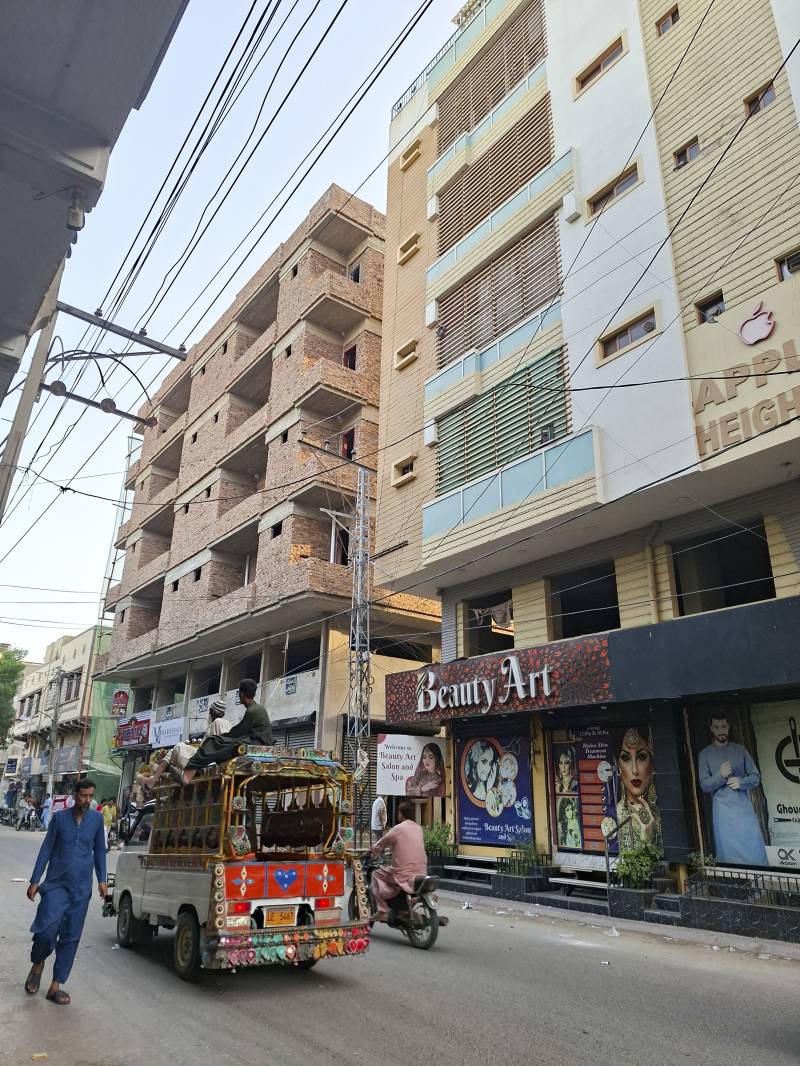
After its establishment, Hirabad became the new fashionable residential area of Hyderabad and had a proliferation of several beautiful houses. It had wide roads, paved streets, electricity, and a good drainage and sewage system. The houses were built keeping in view the climatic effects and had wind catchers or munghs that would transport cool breezes inside, and kept the houses well ventilated. Hirabad also had the first Ladies Club, Nari Sabha, which was established in the 1930s to provide social activities and gatherings for the ladies of the city.
The First Wave of Change
Syed Ahsan Shah belongs to a notable family of Hyderabad. He works with the Water and Sanitation Authority (WASA), and also holds agricultural lands in Matiari city, 32 kilometres away from Hyderabad. I met him through a common friend who arranged for an interview in his office. During the interview, Syed Ahsan shared that before partition, Hirabad was an exclusively Hindu locale, and the Muslims were not allowed to purchase property. Some of the Hindu residents were the murids (followers) of his grandfather. Hence, they freely intermingled with the murid families who used to come to their house in Matiari. During partition, when the Hindus started migrating to India, one of them offered Syed Ahsan’s grandfather to purchase their house. They believed that if a family friend purchased the house, it would be properly taken care of. So, the Shah family settled in Hirabad and are still living there.
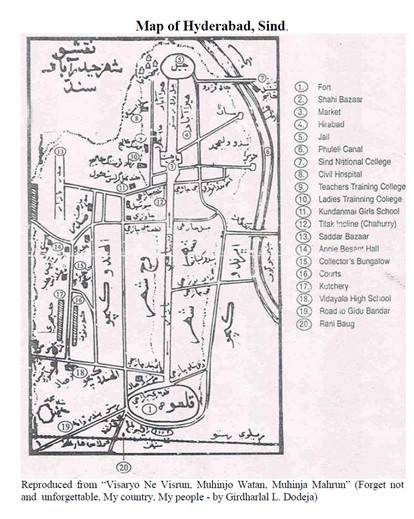
Hirabad suffered a fatal blow with the partition, where almost all of its residents had to leave their properties. The grand old houses were either purchased by Sindhi families or were occupied by Muslims, mostly Urdu-speaking migrants from India. Syed Ahsan shared that the new occupants belonged to the upper-middle classes, some of whom studied at Aligarh Muslim University. Because the houses were not divided up among several occupants, as usually happened to some old areas of Hyderabad, they remained intact and did not suffer any major changes or alterations. In addition, owing to the educated and influential Sindhi and Urdu-speaking families living there, Hirabad was still considered a prosperous neighbourhood.
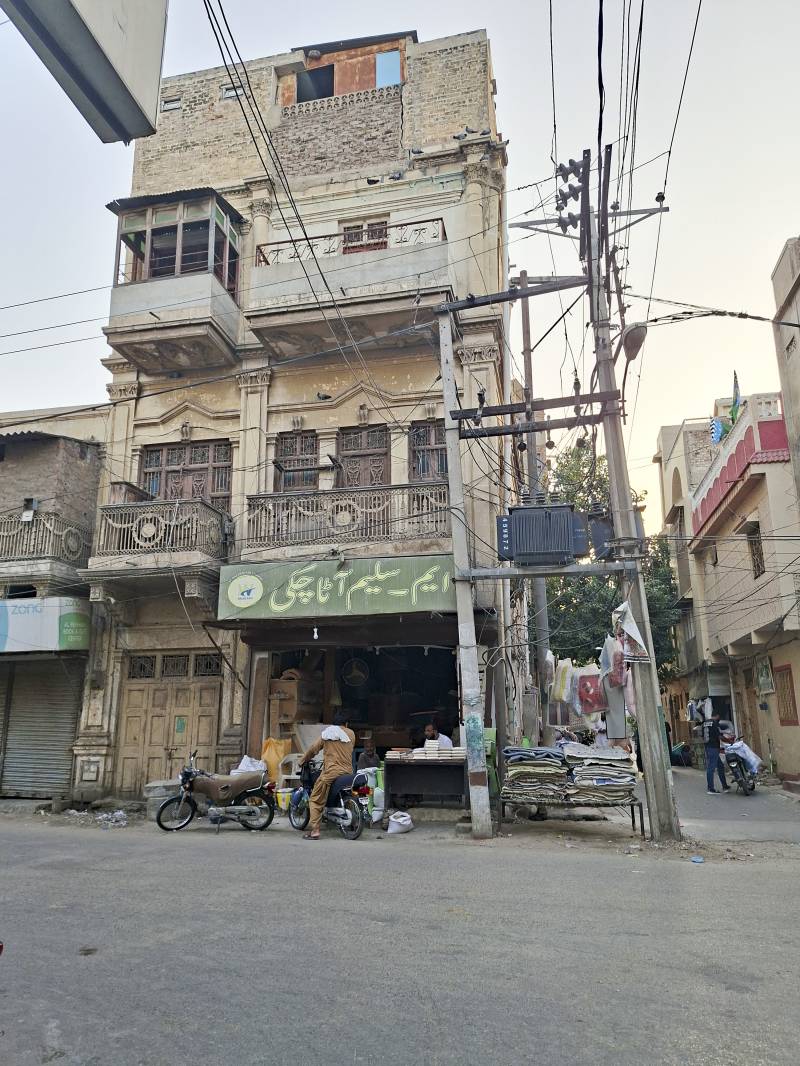
Because Syed Ahsan spent his childhood in Hirabad, he fondly remembers its peaceful ambience in those days and reminisced:
That time seems like a dream to me! When we used to be little children, the Hirabad that we saw: When we used to go to the school (St Bonaventure), there were water carriers who used to wash the streets with water. The drainage system was very good. There was no standing water; it used to flow out. There were sandstone-paved footpaths in the entire locality. Today, not even one per cent (of the past splendour) has remained.
The Second Wave and Commercialisation
The event of partition is considered responsible for the degradation of old, pre-partition areas of Hyderabad and Pakistan. However, in Hirabad’s case, post-partition, there has been a slow and gradual process of change in the political landscape, demographics, and commercialisation that contributed to its gradual decay and degradation. Syed Ahsan maintains that the Hirabad neighbourhood remained in good shape until 1988, after which the area underwent a negative transformation. He described that in the late 1980s, a Katchi Abadi, or slum, sprang up around Hirabad. This was the time of ethno-linguistic politics in Sindh. The people living in Katchi Abadi also acquired political and financial clout. This situation was further aggravated due to the ethnic riots between the Sindhis and the Urdu-speaking groups in the late 1980s and early 1990s. Syed Ahsan recounted that the riots did not cause any actual damage to the locality. But there was widespread fear and uncertainty, so Sindhi families started moving out to Qasimabad and other areas which offered more protection in those turbulent times. To seek better employment opportunities, many Urdu-speaking people also sold or rented their places in Hirabad and moved to Karachi.
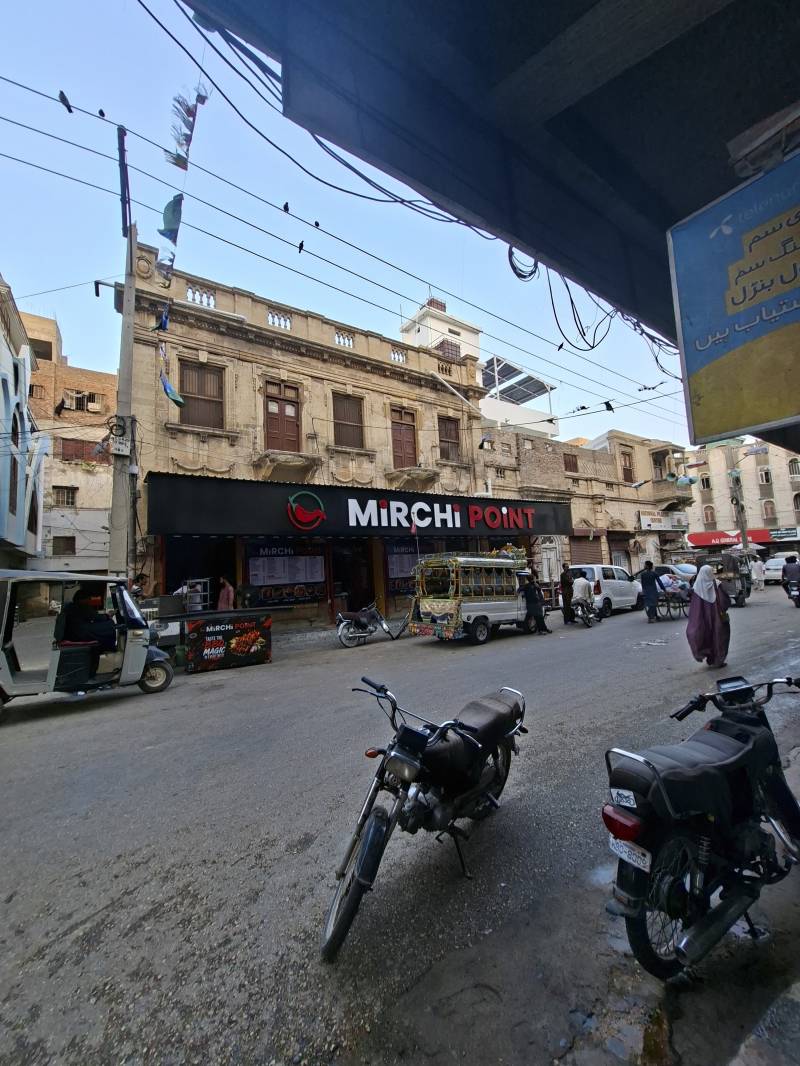
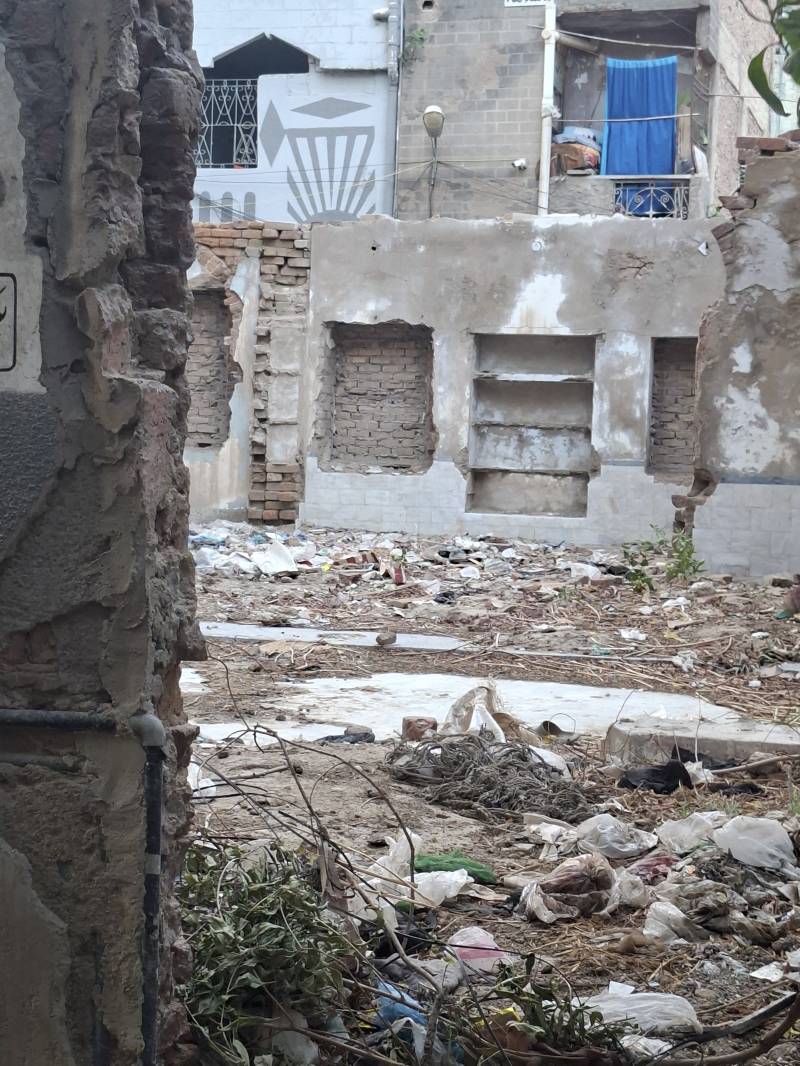
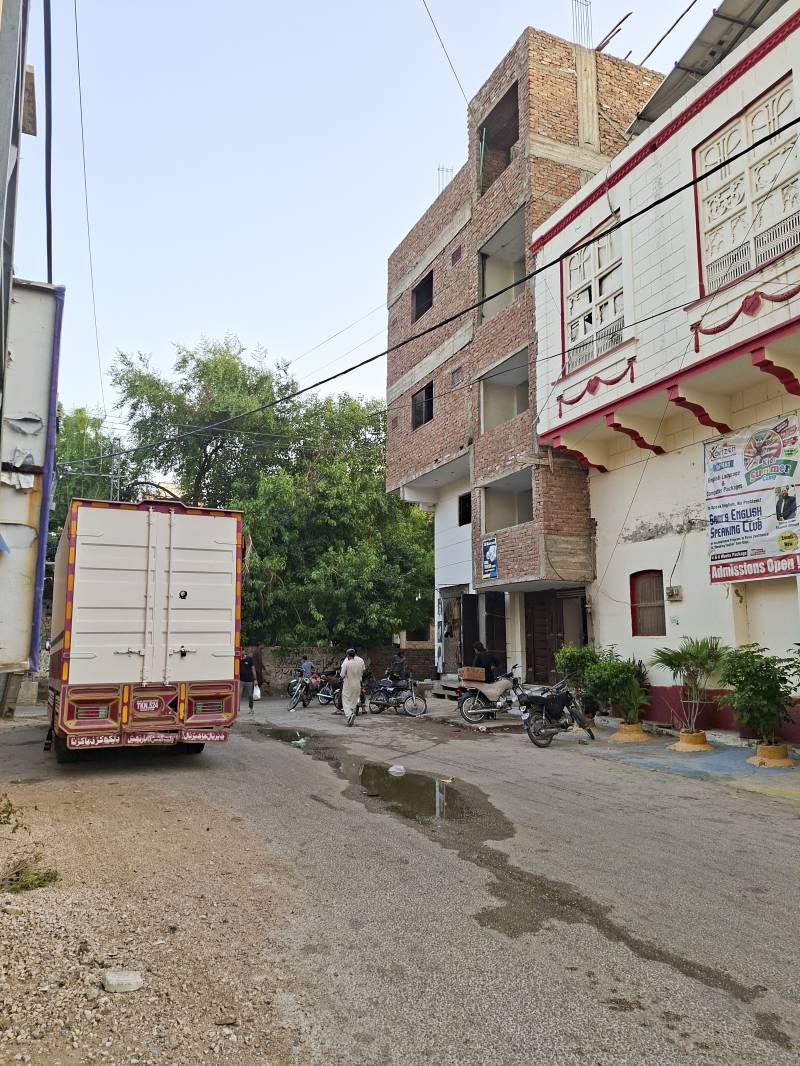
This second wave of migration accelerated the degradation of the social fabric of Hyderabad. This was the time when people from Katchi Abadi started purchasing some of the old properties. The new residents were either street vendors or informal businessmen, but they somehow acquired money due to their political involvement and were able to purchase the grand, old buildings and started moving to Hirabad. The vendors also initiated the commercialisation of the locality on a large scale. Some of the old houses were torn down to be replaced with plain, concrete structures, and their ground floors were converted to godowns and warehouses. Currently, Hirabad is a huge storehouse of sundry goods where large shipping containers, small Suzuki pickups, and other transport with loads of goods parked in front of the grand, old houses present a stark and sad contrast of old and new.
Syed Ahsan is upset at the state of affairs in his once-magnificent Hirabad locality. He poignantly shares in Sindhi:
Ta Maan panhji dhee ayen putt khay chawando ahyan, jo dukh theendo aa, budhaendo ahyan, ta tawahn uha Hirabad ditho hi nahay.
The sadness that I feel (by looking at Hirabad), I tell my daughter and son that you have not seen that (old) Hirabad.
Trade and commercial ventures contribute to people’s livelihoods and are the backbone of the national economy. However, converting old, residential areas with heritage and aesthetically significant buildings into commercial godowns and storehouses erases and defaces a city’s spatial memory. If we keep the nostalgic and aesthetic viewpoint aside, the excessive commercialisation of traditional localities gives rise to several social and environmental problems, such as noise, traffic congestion, solid waste, garbage accumulation, and many more. These issues cause health hazards, problems of sanitation, and are also detrimental to human health, peace of mind, and security. The noise, congestion, and pollution resulting from the commercial activities have forced Hirabad’s remaining residents to sell their properties to traders and move to suburban colonies so they can live peacefully. Hence, without proper planning and separation of commercial from residential activities, the Hirabad of old times would be like a dream that the new generations would be hardly able to remember.