

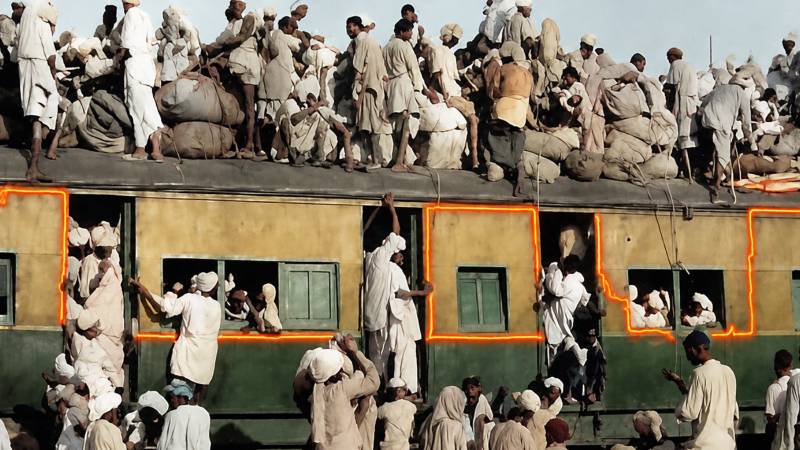
The Partition of British India in 1947 stands as one of the greatest human tragedies of the modern era. Decades later, its devastating repercussions continue to echo across South Asia. As a native of Punjab, the very heartland of this catastrophe, the grief borne by our elders feels deeply personal; a silent, heavy inheritance passed down through generations. The borders drawn in haste did not merely divide land; they fractured human lives, communal bonds, and centuries of shared heritage.
One such survivor of this cataclysm is Dost Muhammad, now around 95 years old. Sitting quietly today, his memory remains painfully sharp when recalled. He remembers vividly how ordinary men, women, and children—people who had lived as peaceful neighbors for generations, perished from sudden hunger, disease, and relentless violence. During his perilous journey from his ancestral home in Hoshiarpur to Gujranwala, he witnessed unforgettable horrors that no human mind should ever have to process. Among his most haunting memories are the countless lifeless bodies and severed limbs scattered along both sides of the railway tracks, a stark testament to the frenzy that swept the subcontinent.
His account is not an isolated narrative; it is the living story of millions. Historians estimate that up to one million people lost their lives during the migrations of 1947, while tens of thousands of women were abducted, displaced, and subjected to systemic violence. Thousands were forcibly converted or coerced into unwanted marriages as communities turned on one another. Desperate to protect what they perceived as family honor, many families took horrifying measures: men killed their own female relatives to prevent their capture, while scores of women jumped into deep wells to escape brutal assault. In the infamous tragedy of Thoa Khalsa in Rawalpindi, dozens of women reportedly leaped into a well together rather than face abduction. Across the length and breadth of Punjab, innocent children were separated from their parents, and entire lineages were wiped out overnight. Punjab ran red with blood, echoing with unanswered cries for safety and mercy. Who bears the historic responsibility for this immense devastation? Two major forces must be held accountable by history.
Among his most haunting memories are the countless lifeless bodies and severed limbs scattered along both sides of the railway tracks, a stark testament to the frenzy that swept the subcontinent.
First and foremost was the British Empire. In its desperate hurry to exit India following the strain of World War II, the colonial government displayed a tragic disregard for the human cost of its withdrawal. Sir Cyril Radcliffe, a British lawyer with no prior experience of Indian affairs or geography, was appointed to chair the Boundary Commissions responsible for partitioning Bengal and Punjab. Armed with outdated maps and census figures, he was given merely a few weeks to draw borders that would alter the destiny of millions. Lord Mountbatten defended Radcliffe’s lack of familiarity with India as a guarantee of strict impartiality. Yet, the consequences of this rushed decision-making were catastrophic. The colonial administration, after nearly two centuries of ruling the subcontinent, abdicated its duty to maintain law and order during its final hours, leaving vulnerable populations to pay for imperial haste with their blood.
Equally important was the political failure of the era’s indigenous leadership. In their fierce pursuit of political sovereignty and competing visions for the future, the leadership focused heavily on territorial division and power structures. Amidst the high-stakes political negotiations, the practical protection, safe transport, and security of millions of ordinary citizens received tragically inadequate attention. While political declarations were being finalized in elite council rooms, the countryside descended into anarchy. Political leaders on all sides failed to anticipate or prevent the scale of human suffering that followed their decisions.
Literary giants have long attempted to translate this overwhelming anguish into art. Abdullah Hussain’s masterwork Udaas Naslein (The Weary Generations) brilliantly depicts how macro-political upheaval destroys the inner world and quiet dignity of the common man. Similarly, Khushwant Singh’s Train to Pakistan vividly portrays the sudden, terrifying madness that consumed once-peaceful village neighbors. Yet, as literature repeatedly reminds us, true human grief remains ultimately ineffable—beyond the full capture of ink and paper.
Every August, both India and Pakistan celebrate their independence with immense fervor. Yet, amidst the patriotic celebrations, we often forget that both nations emerged from one of the bloodiest episodes in human history. How many letters written by men to their beloveds were buried in pools of blood? How many women waited in vain for partners who would never return? How many children spent the rest of their lives searching for homes they could never find again? An entire universe of dreams was shattered in the deafening echo of Partition. As we look to the future, we owe it to those who suffered to ensure that their memories are never erased and that the tragedy they endured is never repeated.