

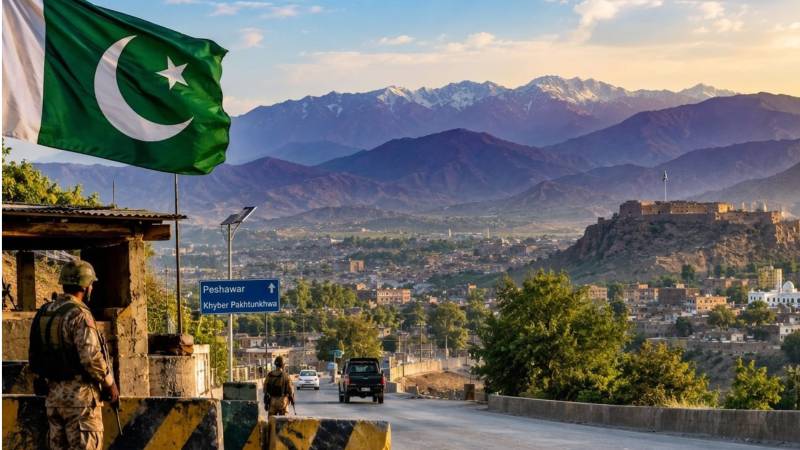
I was born and raised in this province. I have watched it change over the past few decades, not through reports or press releases, but through the everyday conversations of people who live here: shopkeepers in Bannu who once stayed open after dark now shutter early. Farmers in the southern districts speak of roads they no longer travel without checking who controls the checkpoints. University teachers in Peshawar describe departments that operate without full staff or salaries for months at a time. The elected government has been removed. Emergency and governor’s rule now hold Khyber Pakhtunkhwa. Some call the decision necessary. Others call it the theft of a mandate. I call it the end of a long experiment that failed too many of us.
From 2013 until this month, one party governed without interruption. It arrived with bold promises of a new model. What the province received instead was a slow, grinding decline in the things that matter most. Terrorism did not vanish. It returned and intensified. Security assessments presented to the federal cabinet recorded a nearly 200 percent rise in terrorist incidents between early 2024 and late September 2026. Police and other security personnel became the primary targets. Drone attacks, once rare, became frequent. More than nine thousand police posts stood vacant. Modern weapons, night-vision equipment and armoured vehicles remained scarce. The Safe City system never expanded in any meaningful way beyond Peshawar. Billions released through the National Finance Commission for counter-terrorism capacity produced neither the workforce nor the equipment required to hold the ground. In the southern districts and the former tribal areas, the state’s presence thinned until ordinary people measured safety by whether they could leave home after sunset. I have spoken to families who buried sons in those years. The numbers are not abstract.
The economic and social record is equally sobering. Poverty in the province climbed above the national average. Youth unemployment stayed high. Universities struggled with unpaid salaries and shrinking departments. Rural hospitals ran short of basic medicines and staff while political attention remained fixed on Islamabad. The Peshawar Bus Rapid Transit project, sold as a signature achievement, saw its cost rise sharply while reliability fell short of the claims made at its launch. Mineral resources, one of the few natural advantages this province possesses, continued to leak revenue through illegal extraction and weak collection of royalties. Provincial debt expanded. Local government institutions, starved of both funds and real authority, functioned largely as payroll mechanisms. Appointments often appeared driven more by loyalty than competence. Development schemes were announced with fanfare and then left incomplete or poorly executed. The cumulative effect was a province that felt increasingly abandoned by those who claimed to govern it in the name of the people.
There were limited gains. The Billion Tree programme restored forest cover in significant areas. Health coverage expanded for a period. Some police reforms were attempted. These efforts, however, stood against a larger pattern of administrative neglect, political preoccupation and institutional weakness. When the federal government finally acted, it cited a constitutional breakdown in the province’s capacity to function. Parliament has endorsed that assessment. Legal challenges will continue, as they should in a democracy. The practical truth is simpler. The people of Khyber Pakhtunkhwa cannot afford another decade of comparable results. I have watched too many young men leave for the Gulf or the cities of Punjab because there was no work here. I have seen too many parents keep children home from school when the roads became unsafe. That is not politics. That is the daily cost of failure.
None of these measures requires ideological conformity. They require competence, continuity and the discipline to measure results instead of claiming credit.
Governor’s rule and the advisory structure that supports it have almost no margin for delay. The first constitutional window is two months. Extensions remain possible, yet each carries political cost. If the new arrangement cannot produce visible improvement in security and basic services inside that window, the decision will be remembered as overreach rather than remedy. Failure is not theoretical. It will fall on the institutions now responsible and on the citizens who have already paid enough. The work required is neither mysterious nor glamorous. It is the ordinary, exacting labour of administration that this province has been denied for too long.
Security must come first. Vacant police posts need to be filled with properly screened and trained officers rather than political placements. The Counter-Terrorism Department requires modern equipment, forensic capacity and operational independence from day-to-day political pressure. Intelligence cooperation among provincial police, federal agencies and the military must become routine rather than occasional. Border management with Afghanistan needs sustained coordination instead of intermittent campaigns. Communities in the southern and former tribal districts require consistent protection that does not depend solely on temporary military presence. Extortion, illegal checkpoints and the free movement of militants cannot be accepted as the price of temporary calm. The rule of law demands that no individual or network, regardless of local influence or political connection, stands beyond the reach of courts and police.
Economic recovery must proceed alongside security. Agriculture still supports the majority of households. Repair of irrigation systems, reliable access to seed and fertiliser, and better market connections for small farmers will improve daily livelihoods more quickly than any single large project. Transparent licensing and royalty collection in the mineral sector can halt revenue loss and generate legitimate local employment. The southern corridor of the China-Pakistan Economic Corridor has remained incomplete for years; finishing the missing segments and securing the routes would open trade and jobs without inventing new schemes. Skills training must be linked to actual demand in construction, logistics, light manufacturing and information technology rather than producing graduates without clear employment paths. Public works that can be finished in months, not years, should take priority so that citizens observe progress rather than announcements.
Governance itself requires repair. The advisory council should publish clear performance indicators and report against them publicly. District administrations need both resources and the authority to deliver services without constant reference to Peshawar or Islamabad. Once the emergency framework permits, local government elections should restore elected bodies that are properly funded and empowered. The justice system must dispose of cases more quickly, especially those involving land, commercial disputes and violent crime. Corruption is not an abstract slogan; it is the steady extraction of public money through inflated contracts, ghost employees and selective enforcement. Existing audit findings should be acted upon rather than filed away.
None of these measures requires ideological conformity. They require competence, continuity and the discipline to measure results instead of claiming credit. The federal government has assumed responsibility. It now owns the outcomes. If security improves, if schools and clinics begin to function reliably, and if young people find work that keeps them from either the gun or the road out of the province, the decision will be judged by those results. If the same pattern of drift continues under a different label, the judgment will be equally clear and more severe.
I write this as a citizen who has watched his province slide and as a journalist who has recorded the evidence of that slide. Pakistan cannot carry a province of roughly forty million people that remains a lasting security burden and an economic drag. The residents of Khyber Pakhtunkhwa have endured enough cycles of promise followed by disappointment. They need fewer speeches and more institutions that work. Good governance is not a phrase to be repeated until it loses force. It is the only practical course remaining. The present arrangement has been given authority and limited time. It must now demonstrate that both can still produce results. For once, this province deserves a path toward genuine security, stability and prosperity.