

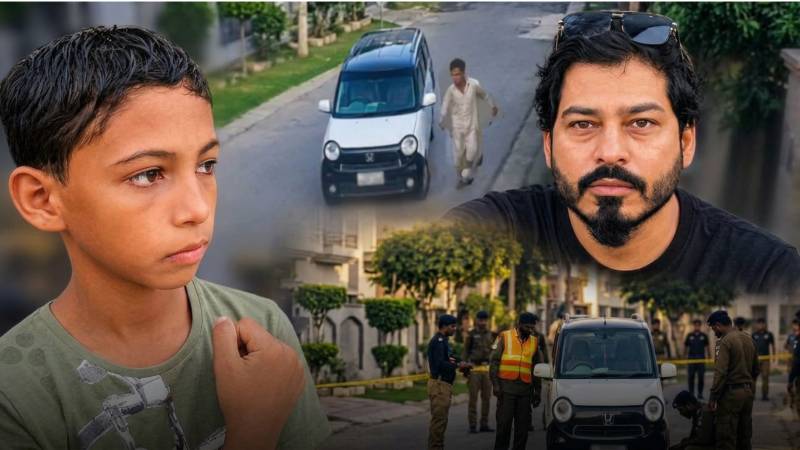
The sudden death of 15-year-old Wasim Abbas from Muzaffargarh created a stir on social media. A day later, the person allegedly responsible for the incident also lost his life while reportedly attempting to flee along with his associates. Overall, the incident has raised questions about the haste of administrative institutions and the negligence of welfare organizations. Ignoring these issues could lead to more incidents of a similar nature.
Wasim Abbas’s uncle, Jafar Hussain, says that they are residents of Basti Mondka, Mauza Daulatpur, located 30 kilometers from Muzaffargarh city. After Wasim Abbas’s father died when he was nine years old, Wasim’s mother was married to him. Wasim’s maternal grandfather took care of him for the first two or three years, while his uncle subsequently supported him for some time. With the mutual consent of his maternal grandfather and uncle, Wasim was admitted to Idara-e-Khudi, a welfare organization in Multan, five years ago. He studied there up to the eighth grade and lived at Hamdard House, an orphanage operating under the same organization.
According to Shoaib Haider, General Secretary of Idara Khudi, Wasim Abbas insisted on being given an opportunity to learn electrical work. However, they enrolled Wasim in the ninth grade and allowed him to learn a trade while continuing his education. After satisfying themselves about Tauqeer Nazir, an electrician and contractor, they handed the child over to him. At that point, Wasim had only been learning the work for a few days.
However, this account does not match the statement Tauqeer gave at the scene of the incident. On that occasion, Tauqeer said that the child had run away before and that they would catch him and bring him back. This creates the impression that the child has been working with him for a long period. Nevertheless, the owner of Idara-e-Khudi can still be questioned about the matter so that the facts and underlying causes of such incidents can be investigated and measures taken to prevent their recurrence.
It is worth mentioning that Wasim Abbas’s younger brother, Sajjad Hussain, and his younger sister, Fatima, are also studying at Idara-e-Khudi. His cousin, Nadeem, also lives there. According to Nadeem, Wasim had not returned to the institution since he went to learn trade. Another child residing at the same institution had also been working with this contractor and was brought back following the incident.
Regarding children's training and employment opportunities, Waseem Abbas, former head of skill development at the Child Protection and Welfare Bureau (CPWB), says that the institution has made proper arrangements in this regard. He says that CPWB, in collaboration with a welfare organization, Human Appeal, has signed agreements with well-known market brands. Children above the age of 16 are provided opportunities for vocational training or formal employment at these establishments. The Bureau itself ensures further monitoring and the implementation of its child protection policy, while younger children receive training within the institution.
The state should establish an organised system to identify abandoned children and take full responsibility for their upbringing, ensuring that they can grow into productive citizens.
However, in the present case, apart from the verbal claim by the welfare organization's General Secretary that an inquiry had been conducted, no written agreement or evidence was presented to establish that any conditions had been write down to ensure the children's safety or the standard of their training before they were handed over to the contractor.
Waliullah Maroof, a well-known social activist who helps reunite missing people with their families, says that he has been raising questions about the performance of shelter homes since 2020. His concerns are based on the presence of missing people in these facilities and the inhumane treatment they experience. He demanded that the state establish an organized system to identify such abandoned children and take full responsibility for their upbringing. He said that all these children could become highly productive citizens.
Regarding child labor, the 2025 annual report of the National Commission on the Rights of Child states that more than 8.6 million children aged between five and 17 are engaged in labor across the country. To ensure a safe environment for children, the Child Protection and Welfare Bureau rescued 6,919 children from 17 districts and provided them with accommodation.
According to Section 20-A of the Child Protection and Welfare Policy, children's shelter homes must be registered with the Child Protection Bureau. An application for the formal registration of this orphanage has been submitted to the Child Protection and Welfare Bureau. However, the application was rejected, and the institution has since been sealed. The 15 children residing at Hamdard House were rescued by the Child Protection and Welfare Centre and transferred to its shelter home.
According to the 2025 annual report of the National Commission on the Rights of Child, no comprehensive data is available on the number of shelter homes operating across Pakistan. Nor is it possible to estimate the number of children residing in these shelter homes, as many of these facilities are unregistered. Meanwhile, a total of 80 shelter homes operated by Aghosh Homes, SOS Villages, Edhi Homes, Pakistan Sweet Homes and Social Welfare are active across the country.
Asiya Arif, Executive Director of the Society for the Protection of the Rights of the Child, says that the Social Welfare Department should map shelter homes across the country. Data on the children living in these institutions should be made public so that missing children can be reunited with their families more easily. She further says that child protection and social welfare bureaus, along with welfare organizations, should establish joint regional boards and work together to set targets, covering everything from children's training in these shelter homes to helping them become economically active citizens. This would help prevent further incidents of this nature. All places where children reside or receive vocational training should comply with child safeguarding policies that provide children with a safe environment, so that children do not feel compelled to run away from these places.