

In September 1955, Pakistan joined the Baghdad Pact, a mutually assured defence agreement of Iraq, Turkey, and the UK, with Iran joining later. That alliance would eventually evolve into CENTO. Seventy years on, Pakistan has once again signed a mutual defence agreement, this time with Saudi Arabia.
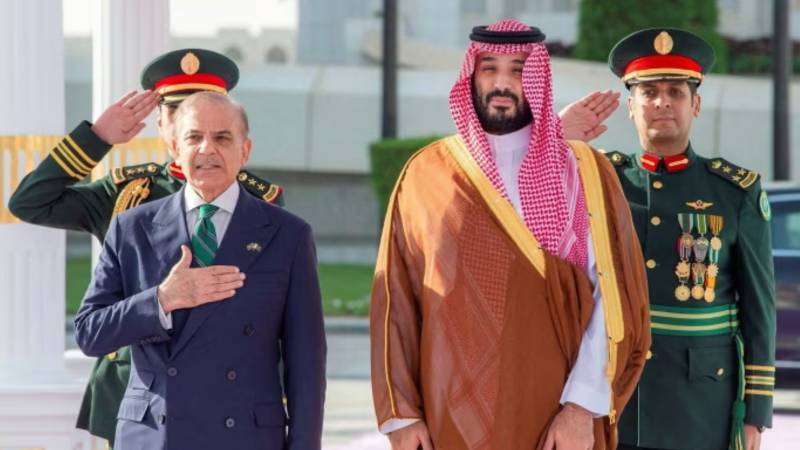
The timing and backdrop of the 'Riyadh Pact' make it particularly significant, representing arguably the most pivotal defence agreement Pakistan has signed in decades and the first time the country has put its nuclear capabilities on the line. Gulf states are scrambling to consolidate their defences after the U.S. defence guarantee was shaken following Israel’s attack on Qatar. Against fluttering flags, a warm photo-op featuring Pakistan’s prime minister and the Saudi crown prince, and a screening of the Pakistani flag on the towering Kingdom Centre, Pakistan has stepped into a familiar phase, one it has navigated before, though the outcome this time remains to be seen.
Pakistan signed its first mutual defence agreement in May 1954 with the United States, largely as a result of its cooperation during the Korean War. The following year, Pakistan joined SEATO, often referred to at the time as the Asian NATO, and simultaneously became a member of the Baghdad Pact. Both pacts were U.S.-centred, and Pakistan was one of the few countries to participate in both. Their primary purpose was to contain Soviet influence in member states. However, internal disagreements and lack of cohesion weakened their effectiveness, and both organisations eventually dissolved in the 1970s, with Pakistan exiting SEATO in 1973 after it failed to provide support during the Pakistan-India war of 1971.
Separately, Pakistan has long sought to build security partnerships beyond its borders. Back in 1959, with Chinese incursions looming large, Ayub Khan proposed a joint defence pact with India; despite his repeated insistence, Indian Prime Minister Jawaharlal Nehru rejected the proposal. Fast forward to 1982, and Pakistan was already cementing ties with Saudi Arabia, deploying 20,000 troops as part of a Bilateral Security Cooperation Agreement. By 2004, its role in the War on Terror earned it the title of Major Non-NATO Ally from the United States.
Pakistan’s location in a volatile region has kept its defence strong and made it a key player in past defence alliances. But to measure whether the new partnership will succeed, we can break the analysis down into three key points.
If Pakistan and Saudi Arabia succeed in building a disciplined, structured, and action-oriented alliance, with joint commands, standing forces, and long-term programmes, it could redefine Gulf security for decades
First, the mutual defence pact is explicitly aimed at countering Israel, not India, much like CENTO was directed against the Soviet Union rather than regional neighbours. This distinction is important because it frames the alliance around a shared external threat rather than regional rivalries. History, however, warns us about the perils of such agreements.
Even well-structured alliances have struggled to uphold their mutual defence commitments. SEATO and CENTO, for example, offered no support to Pakistan during the conflicts of 1965 and 1971. Furthermore, the limitations of such pacts were underscored by the Johnson Letter, in which U.S. President Lyndon B. Johnson warned Turkey against intervening in Cyprus, stating that NATO would not come to Turkey's aid if the Soviet Union retaliated. The letter shocked Turkey and highlighted a crucial lesson: even formal alliances can have conditions, which can alter according to the political dynamics.
Second, the agreement offers Pakistan and Saudi Arabia an opportunity to expand their cooperation beyond purely military matters. Just as SEATO once supported the establishment of the Graduate School of Engineering in Thailand and research labs in East Pakistan, the two countries could collaborate on joint educational programmes, research centres, and professional exchanges.
Such initiatives would allow Pakistan to supply labour where Saudi Arabia needs it for diversification, while Saudi Arabia could provide employment opportunities for surplus Pakistani labour. Without broadening the partnership beyond the military, the pact risks being short-lived, as regional dynamics shift rapidly. By diversifying cooperation and creating a strong, diverse base, the pact can become a sustainable, long-term alliance rather than a temporary military agreement.
Third, to maximise the pact’s effectiveness, it is crucial to establish joint commands and standing forces, including a Supreme Allied Commander-type position to oversee operations. Permanent units under integrated command structures would enable rapid and coordinated responses to threats, avoiding reliance on temporary arrangements or political disagreements in times of crisis.
Historical conflicts in the region, such as the 1967 and 1973 wars, were not lost due to Arab weakness but largely because of disunity among Arab forces. Israel capitalised on this lack of coordination to dictate the course of events. Strong joint command and integrated forces under the agreement could prevent similar failures and ensure decisive, unified action.
Hence, the Riyadh Pact is both an opportunity and a test. If Pakistan and Saudi Arabia succeed in building a disciplined, structured, and action-oriented alliance, with joint commands, standing forces, and long-term programmes, it could redefine Gulf security for decades. Yet history reminds us that ambitions alone are not enough. This pact has the potential to be more than a ceremonial agreement; it could become a blueprint for regional security, especially in the face of Israeli adventurism. The agreement will be judged not by symbolism, but by how well Pakistan and Saudi Arabia turn it into action.