

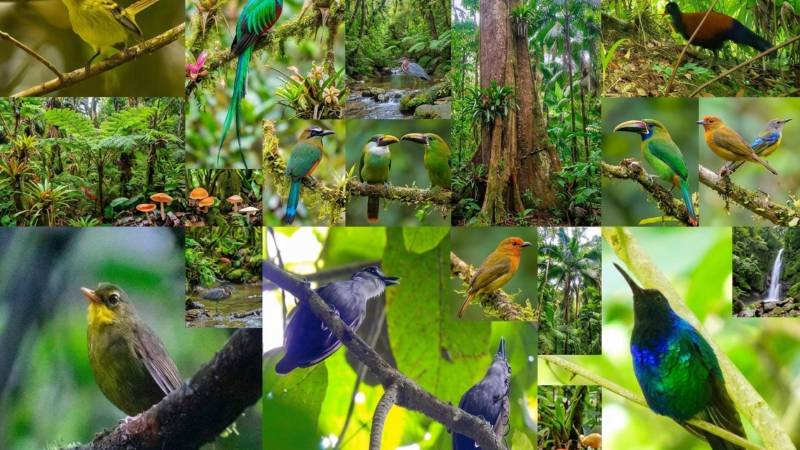
We all remember waking up to the soft melody of a koel perched beneath a grandmother’s bougainvillea, an elegant morning dove stretching out its tunes deep within the thorny canopy of a kikar, or the soft, familiar chirps of a house sparrow from its nest in the ventilator fan. These were the sounds of Pakistan. Sounds we now associate with nostalgia.
Why have those soft mornings been replaced by the rasping honk of a Mehran or the loud gurgle of a concrete mixer at a neighborhood construction site? Why do our eyes open to the violent shrill of a digital alarm and the swift morning rush of raging motorcycles?
Surprisingly, the answer isn’t as simple as global climate change, nor as straightforward as the footprint of urbanization.
In return, for decades, we had a city that managed to maintain its green forests, its native acacia and shisham trees, and its hundreds of species of resident and migratory birds much better compared to the majority of Pakistan’s urban landscapes. Doxiadis proved that physical expansion alone is not the threat. Man is not intrinsically an enemy to nature; we are a part of it, and we can design spaces where non-human life thrives alongside human ambition.
I would argue that corruption is also not the sole reason the birds no longer sing, although it plays a massive role. When urban development authorities launch plans that uproot ancient natural sanctuaries like Bari Imam’s forested outskirts, or when public land on the Margalla hills is reallocated for commercial and administrative expenditures, the last remnant of the philosophy of Doxiadis slowly collapses.
As native trees like Peepal and Kikar are replaced by non-native ornamental flora, city planners create what ecologists consider ‘green deserts’, landscapes that visually satisfy humans but are functionally dead to local avian wildlife.
Across the country, the tragedy deepens. The historic rivers have dried up, and instead of the flowing Ravi of classical Punjabi poetry stands vast, empty, isolated plains of broken civilization and sewage sludge. Instead of Gwadar’s pristine, bio-diverse coastal plains stands an oil-infested shore with struggling local fishing communities, and amid the breathtaking limestone mountains of Balochistan stands heartless resource exploitation and environmental neglect. But even that institutional greed is not the whole story. It is not the ultimate reason for the birds’ silence. Not entirely.
So what has been causing this sudden cut-off from nature? Why have the days where you traced leaves and recognized the distinct call of a yellow-vented bulbul been narrowed down to an occasional summer hike, while a bird’s chirp has become something you actively notice as a rare event rather than a permanent soundtrack to life?
The core scientific reason behind this psychological and ecological severance is explained well by the "Shifting Baseline Syndrome", a concept first coined by marine biologist Daniel Pauly, and expanded by American ecologist Robert Michael Pyle as the "Extinction of Experience."
According to veteran Pakistani naturalist Dr. Zahid Baig Mirza, author of A Field Guide to the Birds of Pakistan, the issue is not simply that birds have flown away; rather, urban development has dismantled the structural layers of their habitat. As native trees like Peepal and Kikar are replaced by non-native ornamental flora, city planners create what ecologists consider "green deserts", landscapes that visually satisfy humans but are functionally dead to local avian wildlife.
By clearing natural brushwood, paving over soil where earthworms and grubs emerge, and replacing indigenous fruiting trees with sterile aesthetic landscaping, we cut the foundational links of the urban food web.
By planting native trees in our courtyards, preserving open soil, designing bird-friendly spaces in our homes, and teaching the next generation to recognize the subtle notes of a morning warbler, we can begin to rebuild what was lost.