

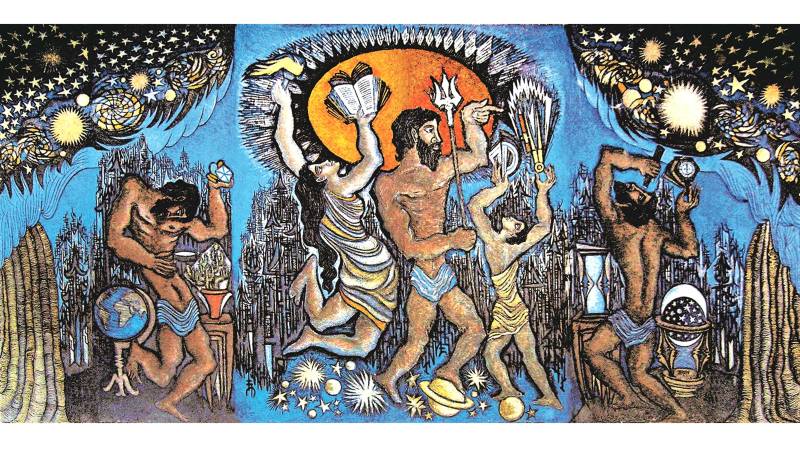
Art and culture, are the identity of a nation. By all measures, Sadequain (30 June 1930 – 10 February 1987) was the finest ambassador of the nation’s identity. He was a polymath; a confluence of Picasso, Michelangelo, Khayyam and Yaqut. The likes of him are not born for centuries. His work was unique like none other, innovative, and by all measures, difficult to duplicate.
The 95th birth anniversary of Sadequain, one of the most iconic cultural figures in Pakistan’s history, is both a moment of celebration and deep reflection. It is, as Charles Dickens once wrote, "the best of times and the worst of times." On one hand, we commemorate a man whose art once adorned the grandest walls, whose calligraphy redefined tradition, and whose name was known across all five continents. On the other, we mourn the neglect, betrayal, and erasure he suffered in the years following his death – a fate unworthy of a national treasure.
Sadequain, born on 30 June 1930, was a natural-born artist and poet, who burst onto the Pakistani art scene in the 1950s with explosive energy and singular vision. His work was instantly recognised for its bold lines, unique symbolism, and powerful themes. In his lifetime, Sadequain achieved a level of fame and reverence unparalleled by any other Pakistani artist. He was a household name, admired not just by the intellectual elite but also by ordinary citizens who saw in his art the reflection of their own cultural and spiritual aspirations.
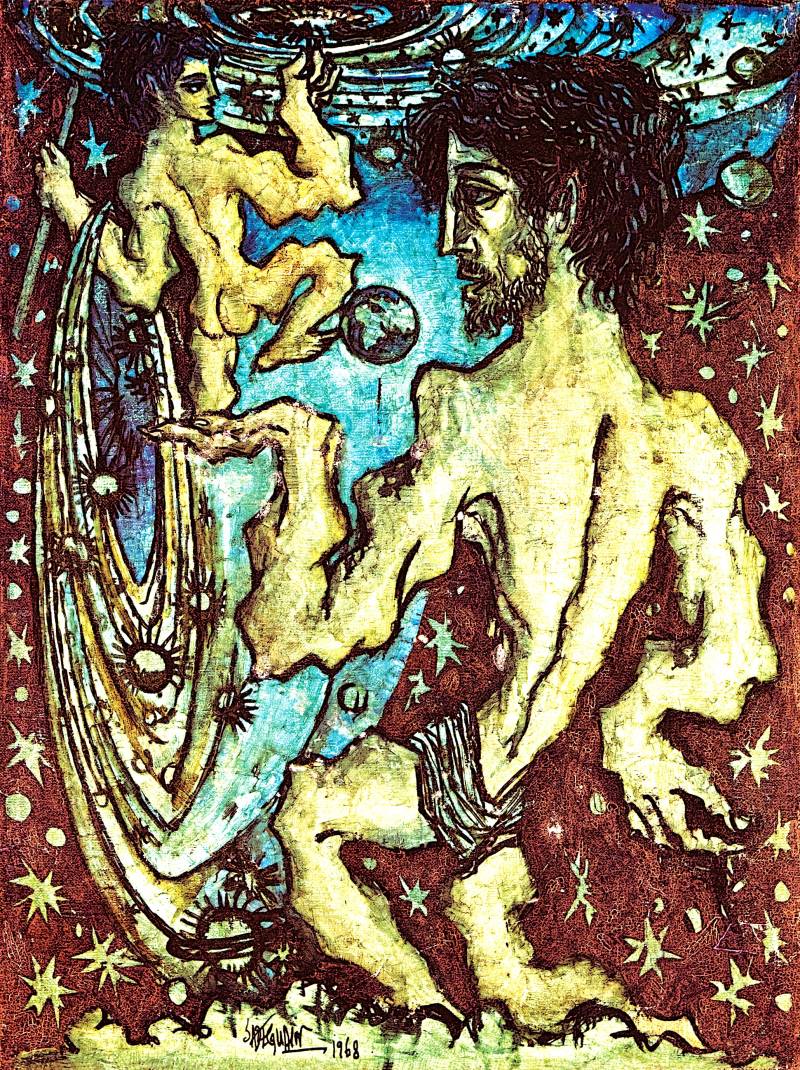
His acclaim was not confined within the borders of Pakistan. Sadequain exhibited his work in Paris, New York, London, Delhi, Montreal, and all over the Middle East, becoming one of the few Pakistanis whose impact was truly global. He was awarded four of Pakistan's most prestigious national awards: Tamgha-e-Imtiaz, Pride of Performance, Sitara-e-Imtiaz, and Nishan-e-Imtiaz for his lifelong contributions to the arts - an honour no other artist has collectively achieved.
The night he died, his studio at Frere Hall was ransacked and looted. The incident was reported in major newspapers, but to no avail. Precious paintings were stolen in the dark, and none were recovered
Sadequain adorned the ceilings of the Lahore Museum and State Bank of Pakistan with monumental murals. He illuminated the walls of Frere Hall in Karachi with sprawling masterpieces that combined calligraphy, philosophy, and social commentary in a symphony of visual brilliance. He did not sell, but in most cases donated his masterpieces to the institutions.
The Pakistan Postal Service issued a commemorative stamp in his honour, and the State Bank of Pakistan even featured his image on currency - an acknowledgement of his unmatched contribution to the country’s cultural heritage, an honour no other Pakistani can claim.
Three art institutions in Pakistan proudly bore his name in Karachi, Lahore, and Islamabad - testament to his legacy and influence. These institutions, however, now stand as silent witnesses to a complicated and painful aftermath of his passing
On February 10, 1987, Sadequain passed away in Karachi. What followed was a sad chapter in Pakistan’s art history - a rapid, calculated erosion of his legacy at the hands of opportunists and profiteers. The night he died, his studio at Frere Hall was ransacked and looted. The incident was reported in major newspapers, but to no avail. Precious paintings were stolen in the dark, and none were recovered.
His residence Sibtain Manzil, which should have been preserved as a national monument or converted into a museum, was instead embezzled and sold. Even his dream project, the Sadequain Institute of Art, fell into the hands of those who had no business touching his vision. It was converted to a marriage hall and later bulldozed to dust.
In Karachi - his hometown where he began his career and where three major art institutions are named after him - his birthday would pass without mention. The silence is deafening. It was as if the cultural gatekeepers had collectively agreed to erase him from public consciousness.
But hopefully, not all is lost. This article marking his 95th anniversary will hopefully renew public interest and attract young artists and scholars who will rediscover Sadequain, and critics and historians will revisit his work with new eyes.
Most importantly, his story - of both triumph and betrayal – must be told in full. Not just as a cautionary tale but as a tribute to a man who gave his life to art, asked for nothing in return, and in the end, gave us more than we ever deserved.