

The demand for creating new provinces in Pakistan has once again gained momentum. Its proponents argue that smaller provinces would improve administration, address regional grievances and ensure better distribution of resources. These arguments deserve consideration. However, the question is whether Pakistan, in its present economic and political circumstances, can afford to embark upon such a far-reaching constitutional exercise.
My objection is not to the creation of new provinces in principle. There may be genuine administrative reasons for dividing an existing province. But such a decision must be based on demonstrable administrative necessity, financial feasibility and political consensus. It should not become an instrument of political bargaining. Pakistan is already facing serious economic difficulties. The existing provinces struggle to meet their administrative and developmental obligations. Where would the resources come from to establish additional provincial governments? Every new province would require its own secretariat, assembly, cabinet, bureaucracy and supporting administrative institutions. These would not be one-time expenses. They would create permanent financial obligations.
Consider a simple example. Constructing another house does not merely require resources to build it. One must also arrange money to maintain it. The same principle applies to a new province. Establishing another administrative unit is one thing; sustaining it is quite another. Before undertaking such an exercise, its financial implications must be properly assessed.
There is also a wider national situation that cannot be ignored. Pakistan faces serious security challenges on its eastern and western borders. Relations with India remain hostile, the situation along the western border demands constant attention, and developments involving China and Iran require careful diplomatic handling. In these circumstances, opening another contentious debate that could deepen political and inter-provincial tensions is hardly a wise priority.
The peculiar case of Sindh
The resistance to creating another province in Sindh is a case in point. A considerable section of political opinion in the province opposes its division. Provincial identity, historical association and concerns about political and economic influence cannot simply be brushed aside. A decision taken without genuine consensus could generate resentment rather than resolve regional grievances.
What makes the Sindh debate particularly interesting is that it appears to contradict a conventional political science argument concerning geographical distance from the seat of power. Ordinarily, one would expect people living in geographically remote areas to demand a separate province because of their distance from the provincial capital. The underlying reasoning is understandable: bringing the administrative and political centre closer to the people would make governance more accessible and allow them greater participation in decision-making. A new provincial capital would also bring political offices, administrative authority and associated privileges closer to previously neglected regions.
However, Sindh presents an unusual situation. Several geographically distant areas of the province are opposed to its division, whereas some political voices in its metropolitan centres advocate the creation of a separate province comprising Karachi and Hyderabad, the two major urban centres of Sindh. This presents a rather interesting political paradox. If the principal justification for creating smaller provinces is to bring government closer to geographically distant populations, why are some of the very people living farthest from Karachi opposed to the proposal, while demands for a separate province emerge from the metropolitan centres?
This contrast warrants serious examination. It raises the possibility that the debate is not exclusively about administrative convenience or the accessibility of government. Political influence, control over economic resources, demographic considerations and the location of the power centre may also be influencing the demands. There is an important distinction between creating a province to address the grievances of neglected geographical regions and carving out a new province around major urban and economic centres. The two propositions may have entirely different political motivations.
The point is not that every demand originating from an urban centre is necessarily driven by political or economic interests. Rather, the peculiar circumstances of Sindh demonstrate why the motives behind provincial restructuring must be examined carefully. If administrative decentralisation is the genuine objective, the interests and preferences of the geographically distant populations cannot be ignored.
Provincial boundaries are connected with the federal structure, political representation and the distribution of constitutional powers. Their alteration requires considerably more than political enthusiasm. A referendum cannot replace constitutional procedure, nor can popular opinion dispense with the requirement of obtaining the constitutionally mandated consent of the concerned Provincial Assembly.
A referendum cannot replace the Constitution
Some proponents of new provinces have suggested that a referendum could ascertain the wishes of the people and provide a way forward. This argument reflects a superficial understanding of the constitutional position. A referendum and a constitutional amendment serve different purposes. Article 48(6) provides a mechanism for holding a referendum on a matter of national importance. It requires the Prime Minister to refer the matter to a joint sitting of Parliament. If approved, the matter may be referred to the people in the form of a question answerable by yes or no.
However, this provision does not authorise anyone to bypass the constitutional procedure prescribed for altering provincial boundaries. A referendum may ascertain public opinion, but it cannot, by itself, create a province or amend the Constitution. Article 239(4) specifically requires an amendment affecting the limits of a province to secure the approval of the concerned Provincial Assembly by a two-thirds majority of its total membership before presidential assent.
It is surprising that those advancing the referendum argument overlook this elementary distinction. The Constitution is not a document whose requirements can be displaced by invoking the popular appeal of a referendum. If the constitutional procedure is clear, why suggest an alternative that cannot achieve the intended constitutional result? A referendum may have a consultative or political value, but its outcome cannot dispense with the constitutional requirements. Popular opinion and constitutional procedure are not competing alternatives. Both must be respected.
What the Supreme Court said about provincial boundaries
The constitutional history of Article 239 deserves particular attention. The original Constitution of 1973 contained a specific safeguard under Article 239(7). It provided that a constitutional amendment having the effect of altering the limits of a province could not be passed by the National Assembly unless it had first been approved by the concerned Provincial Assembly through a resolution supported by at least two-thirds of its total membership.
This provision was subsequently replaced through the constitutional changes introduced in 1985. Under the present arrangement, a constitutional amendment bill may originate in either House of Parliament. It must secure a two-thirds majority in both Houses. If it affects provincial boundaries, approval by a two-thirds majority of the total membership of the concerned Provincial Assembly is additionally required before the bill can be presented to the President for assent.
The difference is significant. Under the original arrangement, the consent of the affected province preceded passage by the National Assembly. Under the present arrangement, parliamentary passage comes first, followed by provincial approval before presidential assent. The constitutional requirement of provincial consent remains intact, although its position in the legislative sequence has changed.
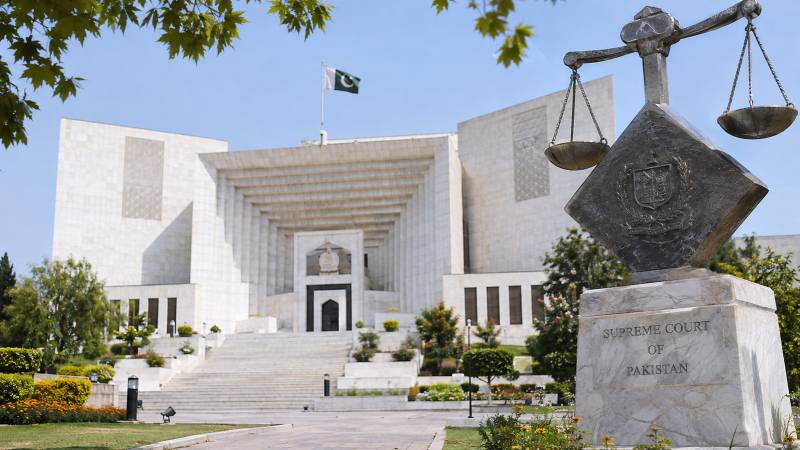
This historical distinction was specifically discussed by the Supreme Court in Mahmood Khan Achakzai v. Federation of Pakistan (PLD 1997 SC 426). While examining the original Article 239, the Court observed that its seventh clause reflected the anxiety of the Constitution-makers to ensure that provincial boundaries could not be altered without the consent of the concerned Provincial Assembly by a two-thirds majority.
The Court also connected this constitutional safeguard with the experience of the separation of East Pakistan. That observation is important. It demonstrates that the framers did not regard provincial boundaries as ordinary administrative arrangements that could be altered casually. They recognised the political sensitivity of territorial changes and the need to protect the federation against decisions taken without the consent of the province concerned.
This constitutional history should be a lesson for those who treat the creation of new provinces as a simple administrative exercise. Provincial boundaries are connected with the federal structure, political representation and the distribution of constitutional powers. Their alteration requires considerably more than political enthusiasm.
Are there other motives behind the debate?
There is another aspect that deserves serious political scrutiny. Is the present demand for new provinces exclusively motivated by administrative considerations, or are there other political objectives behind it? The timing and simultaneous nature of these demands raise legitimate questions. If the objective is genuinely to improve administration, why is the debate being presented as a nationwide exercise involving the creation of several provinces? Shouldn't the discussion begin by identifying specific areas where existing administrative arrangements have demonstrably failed?
There is also a concern that the demand for new provinces could become a bargaining instrument in the wider debate over the Eighteenth Amendment and the distribution of financial resources between the federation and the provinces. The Eighteenth Amendment inserted Article 160(3A), which provides that the share of the provinces in each National Finance Commission Award shall not be less than the share given to them in the previous Award. This constitutional protection is an important part of the present fiscal arrangement.
It is therefore legitimate to ask whether the debate over new provinces is also intended to reopen the question of provincial financial autonomy and the distribution of resources between the federation and the provinces. Could the demand become a political bargaining chip for revisiting the financial arrangements secured through the Eighteenth Amendment? This is a question that proponents of provincial restructuring should address. The creation of new provinces must not become an indirect means of weakening the constitutional protection of provincial autonomy or reversing the existing fiscal balance without an open and reasoned constitutional debate.
The lessons of history and the real problem
The history of the subcontinent offers an important example. Bengal was partitioned in 1905, ostensibly on grounds of administrative convenience. The British administration argued that the province was too large to be governed efficiently. However, the decision generated serious political opposition. In 1911, the partition was annulled. In 1912, the eastern and western parts of Bengal were reunited, while Bihar and Orissa were constituted as a separate province and Assam was reorganised.
This episode demonstrates that territorial restructuring cannot be viewed in isolation from its political consequences. Administrative convenience may provide a legitimate reason for reorganising a province, but the political and social consequences of such a decision can extend far beyond its original purpose.
If the genuine objective is better administration, the question should be why existing institutions have failed and whether their weaknesses can be addressed without creating additional provincial governments. Pakistan's more immediate problem is the failure to devolve authority to the people at the grassroots level. Article 140-A requires provincial governments to establish local government systems and devolve political, administrative and financial responsibility to elected local representatives. Yet meaningful devolution remains an unresolved challenge.
If people in remote districts cannot access public services or exercise meaningful administrative authority, why should the first solution be another provincial government? Why not strengthen local institutions and transfer the powers and resources that the Constitution already requires provinces to devolve? A smaller province governed through the same political culture, bureaucratic practices and institutional weaknesses may produce little improvement. Changing boundaries does not automatically change the quality of governance.
Pakistan should not close the door to new provinces forever. There may come a time when genuine administrative requirements make such restructuring necessary. But that decision must be supported by financial feasibility, constitutional compliance and national consensus. At present, the country has far more pressing economic, political and security challenges. The priority should be to strengthen existing institutions, improve governance and empower local governments rather than initiate another divisive constitutional controversy. Pakistan does not necessarily need more provinces. It needs better governance, stronger institutions and a genuine commitment to the constitutional distribution of powers.