

There’s no place like home, but when people return to Pakistan from a trip to Europe, or anywhere in the western world, they wax nostalgic about the quality of life they had while away. They remember how easy it was to be out in the city, walking on the ubiquitous sidewalks, in a space of their own, even in a crowded city, sauntering to a cafe for coffee or browsing books at a street side stall. Frequent traffic lights made it possible to cross the street at a ground level crosswalk rather than having to look for an overhead pedestrian bridge or risking injury while scurrying across the road, dodging cars.
In Pakistan, a woman’s life is often constrained not just by the walls of her home, the confines of a car, or the burqa, but also by traditions and outdated notions of modesty with which she can no longer relate. Many women admire how, in Western cultures, their public personas are less dictated by the male gaze and the standards of a patriarchal society. It is hardly surprising, then, that an increasing number of female students accepted into universities in Europe or America are reluctant to return to Pakistan. Every year, Pakistan ranks among the worst countries in the world for women, escaping the very bottom by only a place or two.
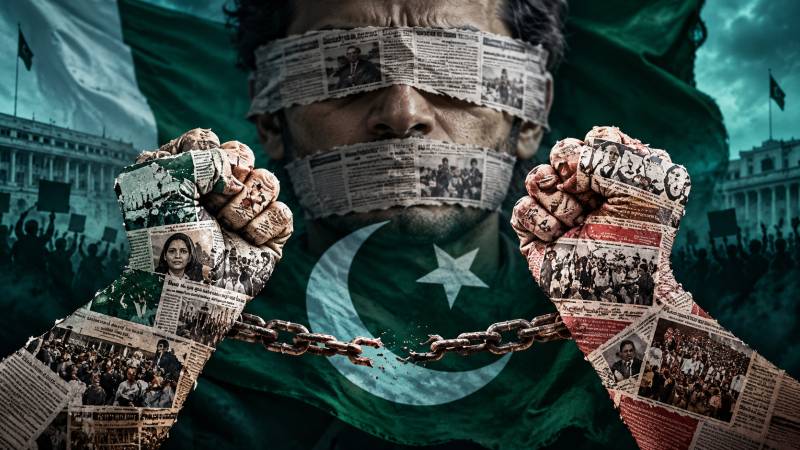
Pakistani journalists rue the fact that they have to consider the vagaries and thin skins of the powerful whenever they pick up their pen or open their mouths on TV or social media. While their counterparts abroad have only to follow fair journalistic standards without having to worry about their personal safety, or risking imprisonment. What they are all talking about and longing for is freedom. Existence without freedom will take you only so far as an individual and it will always be a drag on a country’s development. Yet, many in Pakistan are a bit confused about what constitutes real development, or at least are unaware about crucial aspects of it. And it’s not just the ruling elites. During a recent Pakistan Bangladesh cricket series I got curious about which of the two is more developed, certainly not a question that can have a definitive answer. Still I asked some people about what they thought and the answer was almost unanimous that Pakistan was more developed.
Instead of inviting criticism to leave open the possibility for improvement, Big Brother has overreached and has unwittingly discouraged enterprise, entrepreneurship and individual endeavor— key ingredients for economic and social progress.
Consider that Bangladesh leads Pakistan in literacy rate, per capita GDP, poverty reduction and women participation in workforce. It had also done land reforms early on in it’s life, bringing a measure of equality to society. Perhaps Pakistan does have a somewhat better infrastructure, as it seems like its focus has always been on building roads. Look at any city and you will see underpasses and overpasses spawning up like an invasive species devouring greenery, and creating heat. Also, Pakistan has more advanced armed forces. In other words, while Pakistan has been building roads and its military Bangladesh has focused on social and human development.
Pakistan’s ranking on World Bank’s human development index roughly tracks its performance as a women friendly country. This is especially ironic because the human development index was developed by a Pakistani economist. I can’t help but think that in Pakistan appearances matter more than substance— if you have better roads you are more developed. Although, if you go deeper into any city you will see that the roads aren’t all that good, but depth doesn’t matter when all is about dikhawa. Perhaps Pakistan looks better because compared to Bangladesh its streets are less congested— Bangladesh still has one of the highest population density in the world, even if they have controlled their population growth rate, which remains rampant in Pakistan.
What’s highly worrying is that freedom and social development are always in decline in Pakistan. Successive ruling setups impose new laws that curb civil liberties. Instructions are given to TV channels about what they can air, social media is monitored, movies are banned and theater plays are becoming harder to enact. State’s insecurity breeds the same in society and that’s a recipe for mediocrity. Instead of inviting criticism to leave open the possibility for improvement, Big Brother has overreached and has unwittingly discouraged enterprise, entrepreneurship and individual endeavor— key ingredients for economic and social progress. It’s not just the state that is stifling, Pakistan has always had a built-in cultural pressure for conformity to tradition and status quo— ‘what will people say,’ is often the guiding principal for behavior and decisions; entire lives are lived through the suffocation of the other’s gaze. Tribal strings bind individuals to what has always been, eliminating the possibility of our own moonshots. Escape velocity is the speed at which an object thrown up toward the sky would escape earth’s gravity and not fall back. The escape velocity Pakistan needs to evade mediocrity and improve quality of life for its citizens is freedom.