

From October 5 to October 11, 2026, I had the extraordinary opportunity to visit Iceland at the invitation of the University of Iceland and the Arctic Circle Assembly, thanks particularly to Professor Jón Geir Pétursson of the School of Engineering and Natural Sciences and the Environment and Natural Resources Graduate Programme. Having studied geography at the master’s level and maintained a longstanding interest in political geography, I was conscious of Iceland’s strategic significance. The recent debate surrounding a possible American ‘grab’ of Greenland had further highlighted the geopolitical importance of the Arctic. My family, however, imagined Iceland as a remote, ice-covered wilderness and worried that the journey might prove arduous. In reality, the trip was remarkably smooth, and the warmth of my hosts made it memorable. Ahmed Nawaz, my doctoral student, and his wife welcomed me to Reykjavík, demonstrating the enduring value of relationships that extend beyond the classroom. I remain deeply grateful to Professor Pétursson, the University of Iceland, its Rector, and everyone who made the visit possible.
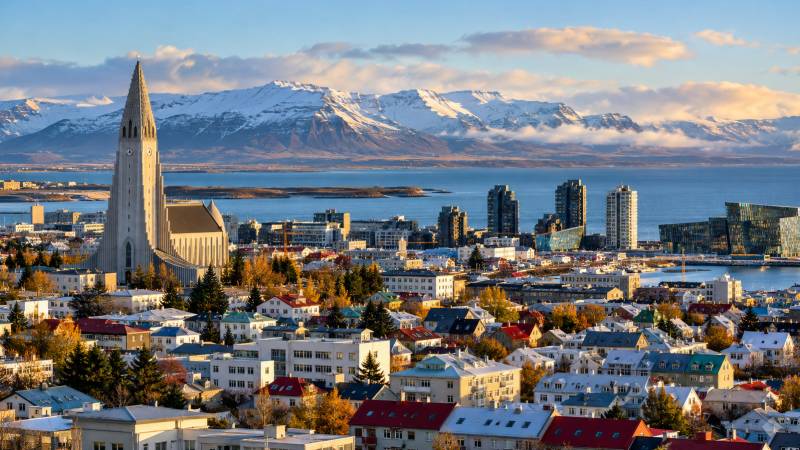
Iceland proved serene, scenic and remarkably clean. Its volcanic landscape, dark lava fields, snow-covered mountains and striking natural environment offered a fascinating contrast. The country has a population of approximately 400,000, nearly half of whom reportedly live in and around Reykjavík. The Pakistani community has also grown in recent years, with an estimated 3,000 Pakistanis now living in Iceland. Despite its relatively small size, Reykjavík is lively, culturally vibrant and increasingly international. Iceland is also an expensive destination, yet, remarkably, it has American military bases but no McDonald’s. Held from October 8 to 10, the Arctic Circle Assembly brought together presidents, prime ministers, foreign ministers, policymakers, researchers, academics, business leaders and senior government officials. Its plenary sessions featured prominent international figures, while specialised panels explored scientific research, environmental change and geopolitical developments.
The Assembly was an extraordinary learning experience. Presentations covered Arctic ice melt, glaciers in the Hindu Kush–Karakoram–Himalaya (HKH) region, biodiversity conservation, indigenous communities, sustainable livelihoods, technological innovation and emerging geopolitical rivalries. What impressed me most was the Assembly’s ability to bring scientific inquiry, policy analysis and geopolitical debate into a common forum. These discussions demonstrated how environmental change, technological innovation, economic interests and strategic competition are increasingly interconnected. Addressing these challenges requires multidisciplinary research and international cooperation.
A principal purpose of my visit was to participate in the doctoral supervisory committee of Ahmed Nawaz, a doctoral student at the University of Iceland. Ahmed previously completed his Executive Master’s at the Centre for Public Policy and Governance, Forman Christian College University, before pursuing further studies in Iceland. His research focuses on the relatively understudied Protected Areas of northern Pakistan. Under the supervision of Professor Pétursson, Ahmed has developed a theoretically rigorous, data-driven research design. The supervisory committee also includes Professor Thomas Barry, Dean of the School of Humanities and Social Sciences at the University of Akureyri, and myself.
After more than a year of online meetings, we met in person on October 6 to review Ahmed’s research design and academic publications. We also discussed opportunities for collaborative research and graduate-student exchange programmes involving universities in Pakistan. The experience was intellectually stimulating and highlighted the potential for sustained academic cooperation between Pakistan and Iceland. Such partnerships can strengthen research capacity, facilitate knowledge exchange and develop new approaches to environmental governance. Ahead of the Assembly, the University of the Arctic and the University of Iceland jointly organised their annual pre-Assembly conference, Arctic Challenges: Navigating a Changing Arctic, on October 7. I was invited by the University of Iceland’s Institute of International Affairs to deliver a keynote address examining the connections between global glacier regions and the implications for sustainable development and governance in Gilgit-Baltistan (GB).
I highlighted six interconnected challenges.
First, geographical isolation is giving way to strategic connectivity. Historically, difficult terrain and limited transport infrastructure left northern Pakistan relatively isolated. The Karakoram Highway, followed by roads, tunnels, bridges, telecommunications and China–Pakistan Economic Corridor infrastructure, has transformed connectivity, expanded market access and strengthened Pakistan–China relations. Technology has not eliminated geography; it has changed its effects. The challenge now is to manage interdependence, resilience and governance.
Second, mountain governance must become risk-based. Earthquakes, landslides, glacial activity and extreme weather demonstrate that infrastructure cannot simply be built and forgotten. Development planning must account for environmental and climatic risks and ensure that roads, bridges and transport corridors remain safe and functional.
Third, climate-resilient infrastructure must become a development priority. Connectivity brings economic benefits but also creates dependence on critical transport networks. A road failure can disrupt tourism, trade, public services and entire regional supply chains. Environmental monitoring, early-warning systems and risk-informed planning should therefore be integral to infrastructure development rather than afterthoughts.
Fourth, tourism must generate sustainable local benefits. Tourism is diversifying livelihoods beyond agriculture, livestock and remittances, creating opportunities in hospitality, transport, guiding, handicrafts and digital services. Yet uncontrolled tourism can increase waste, water stress, unsafe construction, land prices and environmental degradation. The objective should be to retain economic benefits locally, involve communities in decision-making, expand opportunities for women and young people, and protect the environmental assets that attract visitors.
Fifth, mineral wealth must benefit local communities. Gilgit-Baltistan’s mineral and gemstone resources offer economic opportunities, but informality, weak safety standards and limited local processing constrain their potential. Growing international demand for critical minerals could increase the region’s strategic importance. Without equitable revenue distribution, local employment, environmental safeguards and community participation, however, resource extraction could deepen existing inequalities.
Finally, mountain development cannot be separated from geopolitics. The Kargil conflict of 1999, the Siachen dispute, the 1962 India–China war and the border clashes of 2020 demonstrate that mountain geography does not prevent conflict. Roads, tunnels, bridges and communication networks serve civilian development but can also enhance military mobility and strategic access.
Although the Arctic and the Third Pole differ in geography, political context, and patterns of human settlement, both face mounting challenges from environmental change. Sharing scientific knowledge, institutional experience, and policy innovations could help both regions develop more effective approaches to glacier protection, climate adaptation, and sustainable livelihoods.
Mountain governance, development and geopolitics are therefore intertwined. Connectivity, sovereignty, security and civilian resilience must be managed together, recognising the interdependence of economic opportunity, environmental protection and regional stability. Professor Pétursson moderated the session and emphasised the importance of HKH glaciers for water security, biodiversity and local livelihoods. Professor Silja Bára Ómarsdóttir, Rector of the University of Iceland, attended the discussion and delivered the concluding remarks.
Another Pakistan-related session, held during the Assembly on October 9, was titled The Arctic and Hindu Kush–Karakoram–Himalaya: Glacier Landscape Governance. Jointly organised by the Shafqat Institute for Pakistan and Emerging Geopolitics (SIPEG), the University of Iceland and the University of Akureyri, it examined climate change, natural hazards, biodiversity conservation and sustainable livelihoods. Moderated by Professor Pétursson, the panel included Hamza Farrukh, Chairperson of the Pakistan Climate Change Authority; Professor Tom Barry; Ahmed Nawaz; Leifur Örn Svavarsson, an Icelandic mountain guide; and myself.
We explored the possibility of establishing a Third Pole–Arctic Circle Knowledge Platform to facilitate research collaboration and knowledge exchange between these geographically distinct but environmentally interconnected regions. Although the Arctic and the Third Pole differ in geography, political context and patterns of human settlement, both face mounting environmental challenges. Sharing scientific knowledge, institutional experience and policy innovations could strengthen glacier protection, climate adaptation and sustainable livelihoods. Professor Pétursson hosted a dinner in Reykjavík on October 7 in honour of Dr Musadik Malik, Pakistan’s Minister for Climate Change and Environmental Coordination, and Hamza Farrukh. The gathering provided an opportunity for frank discussions about international research collaboration across the world’s cryospheric regions.
Both the Minister and the Chairperson expressed interest in research partnerships and interdisciplinary research clusters. Professor Barry suggested exploring existing collaborative frameworks, particularly those offered by the University of the Arctic and Nordic research cooperation. On October 10, Dr Malik addressed a plenary session, highlighting Pakistan’s climate vulnerabilities and the human and financial costs of climate-related disasters. He outlined a vision involving a virtual Green University, a Green Cloud and Green Fields to encourage scientific collaboration, knowledge-sharing and innovative climate solutions. He also expressed a commitment to improving scientific data accessibility and fostering what he described as an “ecology of innovation.” This is a promising vision, but its success will depend on translating ideas into institutional arrangements, accessible scientific data, collaborative research programmes and sustained partnerships among governments, universities, research institutions and local communities.
The Assembly was founded in 2013 by Ólafur Ragnar Grímsson, President of Iceland from 1996 to 2016. Its philosophy is to bring Arctic and international partners together under a “large open tent” to facilitate dialogue and strengthen decision-making. Among the plenary speakers, Canada’s Foreign Minister Anita Anand offered particularly interesting perspectives. She endorsed Prime Minister Mark Carney’s description of a global order undergoing “rupture” and presented Canada as a middle power seeking to shape the emerging international environment. Her emphasis on international law, state sovereignty, territorial integrity and multilateral cooperation reflected the challenge facing middle powers: preserving international norms while navigating strategic competition among great powers.
Greenland’s Foreign Affairs Minister, Mute H. Egede, delivered another significant message under the theme “Nothing About Greenland Without Greenland”. With a population of approximately 56,000, Greenland seeks to retain agency over its political future, natural resources and cultural identity despite its growing strategic importance. Egede emphasised that its indigenous population would not remain a spectator in decisions affecting its future. The Faroe Islands’ Prime Minister, Beinir Johannesen, similarly illustrated how small societies can acquire strategic significance because of their geographical location. Situated in the North Atlantic between Iceland and Norway, the islands occupy an important maritime space within the Kingdom of Denmark.
I was also intrigued by the participation of Türkiye’s Deputy Minister of Industry and Technology, Muhammet Kasım Gönüllü, who spoke on the theme “Türkiye: A New Arctic Player?” Türkiye’s involvement reflects the widening geographical reach of Arctic diplomacy and raises questions about the strategic ambitions, technological interests and international partnerships of middle powers. The Arctic is no longer exclusively a concern for states located within or immediately around the region. It is increasingly a focus of wider geopolitical, technological, economic and strategic competition. The Assembly took place at Harpa, Reykjavík’s striking concert hall and conference centre, whose expansive glass windows offer spectacular views of the old harbour, Faxaflói Bay and the North Atlantic Ocean.
Although most of my time was devoted to the Assembly, I also visited Hallgrímskirkja and the Perlan Interactive 4D Museum. The latter offered an immersive experience of volcanic eruptions, glacial landscapes, snowy mountains and the Arctic Ocean. These experiences reinforced my appreciation of Iceland’s extraordinary natural environment and the care with which its people have preserved it. I returned to Lahore with a compelling reflection on the coming decade. By 2035, designing governance frameworks capable of managing two concurrent disruptions—environmental and geopolitical will be a defining global challenge. Arctic decision-makers, particularly the Nordic Five and Baltic Three, as well as policymakers in the United States, China and Russia, will need to address these challenges together.
Environmental risks cannot be managed without considering strategic realities, just as geopolitical competition cannot be pursued without regard for ecological sustainability. Reykjavík, an emerging “Arctic Singapore” in my imagination, could become a hub of innovation, cutting-edge research, energy and resource exploration, and the evolving Arctic maritime corridor. The Northern Sea Route and China’s broader Polar Silk Road ambitions could further increase the region’s economic and strategic significance. Realising this potential, however, will require reconciling economic opportunity with environmental protection, geopolitical competition and the interests of local communities. Iceland’s geographical position, research institutions, natural resources and international connections give it considerable potential to serve as a bridge between the Arctic and the wider world. Beyond the academic discussions and policy debates, I will cherish the friendships, the generosity of my hosts and the opportunity to experience the enduring value of academic collaboration across countries, disciplines and generations.