

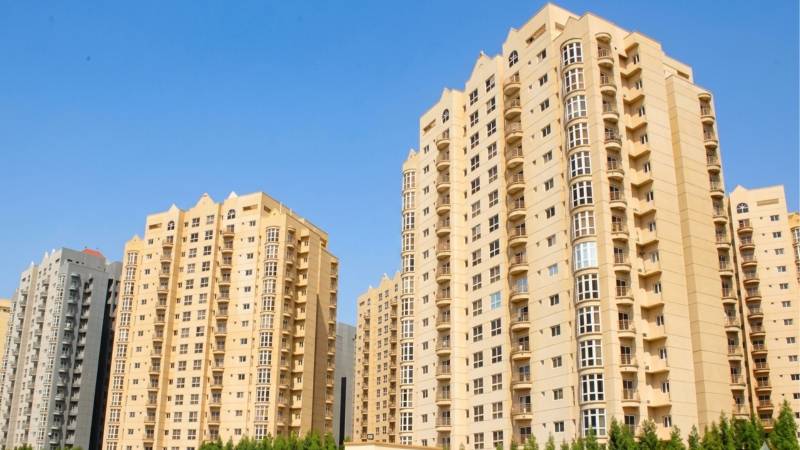
Pakistan's real estate sector reportedly holds assets worth Rs.20tn; however, its economic contribution remains trapped beneath layers of informality and fraud. Government figures show a dire picture: 69% of housing societies operate without proper registration, with fraud cases exceeding Rs.300bn. Moreover, the gap for the potentially collectable real estate tax in 2020-21 alone stood over Rs.500bn, while remittances worth $28bn were reportedly poured into this opaque market. These numbers tell a story of crisis, the solutions to which are already in the books.
This dormant capital can be mobilized by implementing the tools scattered across Pakistan’s legal framework, institutional architecture, and policy initiatives. From digital grievance systems to mandatory quotas, the foundations of a transparent real estate market exist, needing only the political will to enforce them.
One prime example is the Real Estate Regulatory Authority (RERA). Designed after successful international models, it was made to bring transparency, accountability, and consumer protection to this sector. For sponsors/agents who failed to register or falsify information, the RERA Act 2020 imposed strict penalties, including fines of up to Rs. 500,000 and prison sentences of up to 3 years. It established a clear legal basis for regulating developers, licensing agents, and protecting buyers. Unfortunately, though passed in 2021 and later recognized in other policy documents, RERA remains inactive 6 years later.
In parallel, to address the country's housing shortage, the government introduced the Naya Pakistan Housing and Development Authority (NAPHDA). Its mandate was to serve as a central coordinating body by accelerating utility connections and approvals for eligible schemes while offering fee rebates of up to 80% to sponsors of low-income plots. The institution's record, however, tells a cautionary story. Against an original target of 5 million homes, NAPHDA facilitated roughly 58,000 units over four years at a total cost of Rs. 2bn. In April 2026, the Federal Cabinet approved its dissolution under a broader rightsizing agenda, while the housing deficit it was created to address remains at approximately 10 million units. Merely dissolving the entity isn't enough. We need a public audit to investigate the execution gap and identify structural flaws, ensuring any successor body avoids repeating the same institutional mistakes.
The recognition that paper-based systems facilitate fraud, alongside government mandates for office digitization, has driven significant digital transformation within the real estate bureaucracy.
Moreover, the recognition that paper-based systems facilitate fraud, alongside government mandates for office digitization, has driven significant digital transformation within the real estate bureaucracy. In 2024, the Punjab Housing and Town Planning Agency (PHATA) launched its Program Management Information System (PMIS), a centralized digital platform for tracking housing scheme approvals, monitoring compliance, and maintaining transparent records. Building on this, under the Affordable Private Housing Schemes (APHS) Act 2025, they also introduced their Grievance Redressal Mechanism (GRM). This allowed citizens to file online complaints against developers, track real-time status, and receive updates on enforcement actions. This aimed to reignite buyer confidence in this sector by providing them with a formal channel to plead and receive justice accordingly.
With the increase in population and to control the resulting urban sprawl, the drafted National Housing Policy 2025 mandated 40 to 50% of land in new housing societies to be reserved for apartment buildings. This measure is aimed at pushing development toward vertical expansion rather than horizontal encroachment, saving precious farmland. Pakistan's urban trajectory could fundamentally change its course if this regulation is enforced.
The most recent addition to this framework is Pakistan's National Urban Strategy, being developed in collaboration with UN-Habitat. Formal consultations began in May 2026, catalyzed significantly by the 2025 floods that killed over 1,000 people nationwide. The strategy's stated aim is to integrate climate resilience into urban land use and housing supply. It is the right ambition. It is also still in consultation. Whether it moves from workshop to enforcement is the same question this piece asks of every instrument before it.
The biggest problem plaguing Pakistan’s real estate sector - the practice of selling files for non-existent plots is being realized and addressed. With new regulations including imposing licensing bans and fines up to Rs. 10,000/Kanal for illegal selling. An additional mechanism of development-based partial release has also been introduced. Under this, the developers are required to mortgage either 100% of the land or submit 30% of the estimated development cost with their respective regulating authorities, with release tied to stages in development.
On the topic of mortgage, Pakistan's housing finance market has long been a point of weakness, with penetration of just 0.3%, compared with India’s 11.2% and Malaysia’s 44%. However, this issue has been realized at the state level, as evident from recent initiatives between the government and the State Bank of Pakistan. The Wazir-e-Azam Apna Ghar Program, targeted at a Rs.5bn subsidy for FY2025-26, is designed to not only reduce the down payment burden but also extend loan tenures and offer monthly instalments comparable to rent payments. As such, housing finance has shown steady improvement, reaching Rs.221.95bn by the end of January 2026, up by 11.02% over last year.
Meanwhile, the Securities and Exchange Commission of Pakistan (SECP) has registered 3 new Real Estate Investment Trust (REIT) schemes in January 2026 alone, bringing the total to 28. These efforts aspire to stabilize this sector through better documentation, formalization, improved governance, and enhanced investor protection.
We are not the only country that faces this challenge. Other nations have faced the same and formed various models to overcome it. Take, for instance, Dubai's Land Department(DLD); it offers a template which has helped it make its mark as a real estate investor’s dream destination. Its well-enforced regulations of mandatory project registration and specifications, and the 100% deposit requirement of buyer’s money into escrow accounts have eliminated the siphoning of funds that defines Pakistan's file culture. Moreover, India faced the same obstacle and overcame it by implementing its own RERA Act in 2016. It mandated project registration, required developers to deposit 70% of buyer funds into escrow accounts, and imposed strict penalties for delays and false promises. The regulations and provisions of Pakistan’s RERA Act 2019 are eerily similar, with the only difference being enforcement.
To conclude, Pakistan's real estate sector does not require another committee, task force, or any new Act. What’s required is the indiscriminate enforcement of the existing laws. What’s required is for the already built digital platforms (PMIS and GRM) to be fully operational. And the penalties on paper to be imposed. The blueprint for a transparent, formalized, and inclusive real estate market is not a distant aspiration. It is scattered across the country's policy documents, waiting for the political will to turn words into action. The tools exist. The question is whether the institutions wielding them will be given the mandate and the muscle to act.