

In every country I’ve visited—be it the orderly lanes of the United Kingdom, the fluid decency of Dubai, the civic discipline of the United States, or the deeply structured Saudi cities—one principle stands unshaken: public roads belong to the people. Authority flows from service, not superiority. But in Pakistan, particularly in Lahore, Islamabad, and Karachi, our roads have become arenas of humiliation—daily reminders of how far we’ve drifted from the ideals of dignity, equality, and public order.
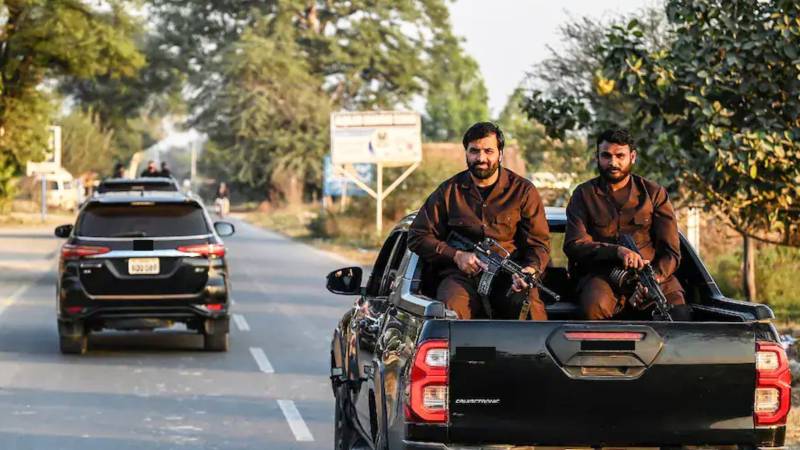
A culture has taken root that is as grotesque as it is dangerous: the culture of protocol. Four-by-fours scream down main boulevards, headlights flashing, sirens howling, traffic lights overridden with the flick of a switch by lower-ranking police officers deputed as modern-day Pharaohs. The common citizen—on a motorbike, in a small car, a child walking to school—is made to wait, to fear, to shrink before a passing motorcade, the purpose of which is often nothing more than a lunch meeting or a photo op.
Let us call it what it is: a systematic humiliation of the people, disguised as security or officialdom. The very officers who enforce this mockery—CCPOs, CTOs, SHOs, assistant commissioners—carry no constitutional right to bypass civic order. They switch off traffic lights not in response to any credible threat, but to manufacture an aura of authority. Their subordinates treat road users with disdain, harass motorcyclists as if they are criminals, while elite convoys glide past in air-conditioned detachment.
This isn’t just a traffic issue. It is a reflection of a broken civil contract. In a country where elected officials, judges, military officers, and civil servants are meant to serve the people, what kind of insecurity compels them to flee from the public gaze behind tinted windows and armed escorts?
It’s not Baghdad. It’s not Kabul. There are no rooftop snipers in Cantt Lahore. There is no insurgency in the Blue Area of Islamabad. So what justifies this everyday siege mentality?
The protocol culture is a display of importance meant to elevate the few and sideline the everyday citizen
Ironically, these very elites—when out of power—cannot even afford petrol for a 1000cc car. Their performance has yielded no Nobel Prizes, no world-changing inventions. They did not invent insulin or the iPhone. They have contributed little to science, civil rights, or innovation. And yet, they demand to be worshipped on the roads as if their lives alone carry value.
Even worse is the decay among the citizenry, caused by decades of unmanaged governance. Motorcyclists ride helmetless, often without mirrors, licences, or even functioning brake lights. Drivers violate lanes with impunity. Fancy number plates and illegal VIP stickers mock the state’s writ. This is not just a breakdown of enforcement. It is the triumph of jungle law—survival of the most powerful, and death of the common right.
Skyscrapers, GDP charts, or media spectacles do not measure a nation’s prosperity. It is reflected in the everyday order of its streets: the safety of its pedestrians, the predictability of its intersections, the courtesy between drivers. In Pakistan, the absence of this discipline has become systemic. It has bred an environment where the child walking to school has less value than a bureaucrat running late for tea. Where a patient in an ambulance is forced to wait for an MPA’s motorcade to pass.
We must ask: Why is everyone always in a hurry? Why can’t ministers, judges, IGs, and chief secretaries manage their time? Why are they always late—and why must the nation suffer for it?
The answer is not efficiency. It is a theatre. The protocol culture is a display of importance meant to elevate the few and sideline the everyday citizen.
But it doesn’t have to be this way.
In the UK, DVLA governs licensing with precision and accountability. In Dubai and Singapore, integrated road and traffic authorities deploy AI, smart enforcement, and citizen-friendly systems to manage the most complex road networks on Earth—without fear, without humiliation, and without elite fanfare. In Australia, traffic laws are sacred. In the United States, a local mayor waits in line at a traffic signal like any other citizen. There is no fleet of sirens for those who haven’t earned it.
We need a Road Traffic Authority (RTA)—not traffic police issuing licences, not wardens whistling in chaos, not protocol officers flipping switches at every intersection. We need a unified, modern, AI-backed traffic governance ecosystem that integrates licensing, enforcement, urban design, education, and emergency response. An institution that trains and certifies drivers, that penalises impersonation and fancy plates, that restores walking rights to our children, that builds footpaths as they exist in London, Dubai, Riyadh, or Singapore.
It’s time to dismantle this protocol circus. Not just because it wastes time, money, and dignity—but because it symbolises everything that’s gone wrong with our civil order. A state that chokes its streets to display power is a state that has forgotten its purpose.
Let us begin with the road. Let us reclaim civility. Let us remind every police officer, bureaucrat, and political appointee that the road is not theirs to dominate—it is the people’s right. And no one, regardless of rank or file, should be above the red light.
The time has come for a republic of order, not arrogance. A system of mobility, not mockery. And a new covenant with the citizen, where every streetlight shines equally on the powerful and the powerless alike.