

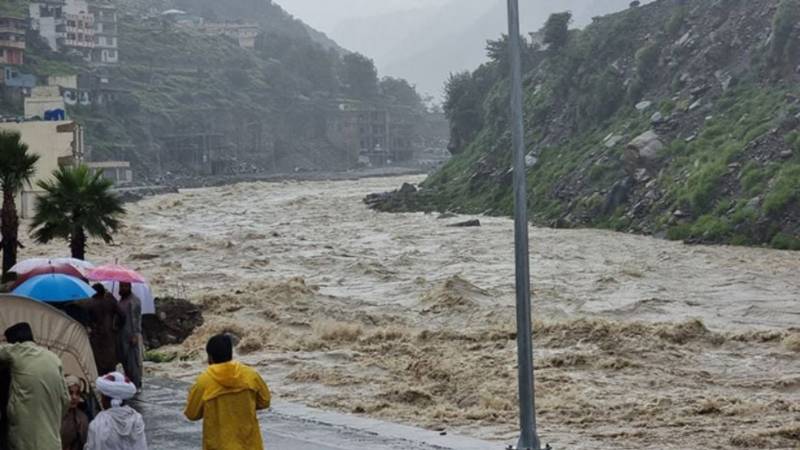
The beautiful valley of Swat—once a symbol of peace, tourism, and natural splendour—now bears the scars of yet another tragedy. A family of 12 tourists from Sialkot and Daska became victims of the Swat River’s sudden surge. Moments of children playing and parents smiling turned into disaster within seconds as the flood swept everything away. This was not merely an accident—it was a devastating confluence of climate change, neglect, administrative failure, and public unawareness.
The Swat River, fed by the Ushu and Gabral rivers in Kalam Valley, along with glaciers and lakes such as Mahodand, Kundol, Shahi Bagh, Spin Khwar, and Indrap, experiences rapid water surges during heavy rain or rising temperatures. In these mountainous regions, the hard ground’s limited absorption capacity means rainwater quickly funnels into streams and rivers. Often, the rainfall does not occur directly at the disaster site but many miles away—sometimes over 100 km—yet the floodwaters can reach lower areas within hours, causing widespread destruction. Adding to this peril, phenomena such as Glacial Lake Outburst Floods (GLOFs) and cloudbursts are becoming increasingly frequent, difficult to predict, and devastating in consequence.
Despite this rising threat, our preparedness remains alarmingly inadequate. In areas like Swat, glaciers are melting at an accelerated pace, weather patterns have become erratic, and rainfall intensity is increasing—undeniable indicators of climate change. Yet, no government institution has ever published a climate analysis of the frequent Swat River floods, nor has any report incorporated proactive climate research. These disasters are not simply “natural calamities” but are instead the direct result of human negligence and a glaring absence of climate adaptation.
Despite the ambitious goals of the Billion Tree Tsunami project, which also encompassed the Swat district, it failed to prevent the deadly Swat River deluge that claimed 12 lives. This tragedy laid bare the critical flaws in Pakistan’s climate adaptation strategy: tree planting alone cannot prevent flash floods without integrated water management, robust early warning systems, and essential infrastructure upgrades. The project focused on long-term reforestation while overlooking immediate mitigation measures such as reinforced riverbanks, catchment area stabilisation, and real-time weather monitoring.
Rampant deforestation in Swat’s upper valleys exacerbates runoff and increases the likelihood of landslides and flash floods
Further exacerbating the crisis is rampant deforestation in upper Swat due to illegal logging and unregulated construction, which worsens runoff and increases landslide risk. Meanwhile, poor disaster preparedness left both tourists and locals dangerously exposed. While climate change intensifies glacial melt and cloudbursts, Pakistan’s response remains overwhelmingly reactive. Without scientific flood modelling, comprehensive community training, and rigorously enforced zoning laws, even ten billion trees will not avert the next catastrophe. The Swat tragedy underscores that ecological restoration must be paired with engineering solutions and policy reform—otherwise, such initiatives risk becoming symbolic gestures in the face of escalating climate threats.
The Swat River deluge also exposed a major failure in media responsibility: the glaring absence of proactive climate journalism in Pakistan. While media outlets and political opponents were swift to exploit the disaster for headlines and political gain, not a single investigative report had warned about Swat’s escalating flood risks in advance. The media’s coverage remained reactive and sensational—heart-wrenching footage of drowning victims, emotional testimonials from survivors, and endless political blame games—but no foresight. Where were the analyses of glacial melt trends, erratic rainfall patterns, or vulnerable infrastructure before the tragedy occurred? Why did no journalist investigate illegal riverside construction, deforestation in catchment areas, or the lack of early warning systems until lives were lost?
The unfortunate truth is that much of Pakistan’s media landscape prioritises spectacle over prevention. Meanwhile, politicians exploit disasters for point-scoring, conveniently ignoring the real culprits: institutional neglect and a broken climate-reporting ecosystem. Until journalism transitions from “mourning the dead” to “saving the living,” Swat—and the country at large—will continue to pay a heavy human cost.
This tragedy was not an unavoidable “act of God”, but the direct result of poor planning, weak governance, and climate negligence. To avert future catastrophes, Pakistan urgently needs a multi-layered strategy that integrates technology, policy reform, infrastructure investment, and comprehensive public awareness campaigns.
A critical first step is implementing advanced Flood Early Warning Systems (FEWS). Most flood-related fatalities occur due to a lack of prior warning, and the current systems are outdated and unreliable. Real-time sensors must be installed along the Swat River’s tributaries, including Ushu, Gabral, and Mahodand Lake, to closely monitor rising water levels. Complementing this, satellite-linked weather forecasting is essential to predict dangerous cloudbursts and GLOFs with greater accuracy. Once data is collected, automated systems should issue SMS and radio alerts to notify locals and tourists at least 6–12 hours ahead of potential flooding. Sirens should be installed in high-risk tourist areas such as Kalam, Malam Jabba, and Bahrain to provide immediate audible alerts.
Simultaneously, stringent enforcement against deforestation and illegal construction is essential. Rampant deforestation in Swat’s upper valleys exacerbates runoff and increases the likelihood of landslides and flash floods. Unregulated construction—particularly hotels and roads near riverbanks—further obstructs natural water flow. To address this, illegal logging must be banned and monitored via satellite imagery, with harsh penalties for violations. Unauthorised riverside constructions, including hotels and bridges that breach environmental laws, must be demolished. The government should enforce strict “no-build zones”, maintaining a minimum buffer of 50–100 metres from riverbanks. Additionally, efforts to restore natural floodplains and remove existing encroachments are crucial for ecological resilience and long-term flood control.
Regrettably, media coverage remains focused on disaster aftermaths, failing to sufficiently warn the public beforehand. Both tourists and residents remain largely unaware of the flood risks in the region. To correct this, proactive climate journalism and public education must be prioritised. Journalists should be trained in climate risk communication and encouraged to report on potential threats before disasters occur. Mandatory weather alerts must be broadcast across social media platforms, television, and radio well ahead of the monsoon season. Prominent multilingual warning signboards should be placed at popular tourist spots, while community workshops on flood preparedness can equip locals with essential knowledge and skills.
The government can, and must, prevent future tragedies along the Swat River. But this requires a fundamental shift from reactive mourning to proactive prevention. The solutions exist. What is missing is the political will and sustained public pressure to see them implemented.
The question is no longer whether we have the tools to act. The question is whether we will act at all—or wait passively for the next preventable disaster to strike.