

Iran’s Foreign Minister’s visit to Islamabad on April 24th and 25th, and perhaps a third by the time this piece is published, is all positive. When we say there is always a silver lining in something awful that happens, this is that moment for us as Pakistanis and the region as a whole. We are witnessing in real time a huge shift in global power politics.
On these very pages, I wrote a piece about the need for Pakistan to invest in its regional relations with Iran, Russia and Central Asia, along with China. At that time, it was considered a naïve, unfeasible and unrealistic ask, and I was told ‘geopolitics and our compulsions won’t allow this’.
Today, we have an opportunity to thaw our economic and political relationships with Iran and Russia. The two have been in cold storage for far too long, and the natural and symbiotic relations need to be invested in. The Iranian pipeline was constantly stalled due to American sanctions and prioritising the American relationship over Pakistani needs and national security.
That has all changed with Iran’s successful push back and determination against the global bully. It has opened up a very large canvas of opportunities for half the world. Japan, Korea, and select European countries have all begun exploring trading and engaging with Iran. The opening of third-party trade between Iran and Pakistan is an example.
Eventually, India will realise its hatred against Muslims will have to be managed for its own national interests. The welfare of citizens defines national interests.
Pakistan’s national interests have always been to have strong, good relations with its neighbours; Iran, with whom we share a large border on the west, as we do on the east with India. Although our economic and trade relations with Iran are limited (formal legal trade), the opportunities are endless.
Already, we are utilising an Iranian grid to power the towns and cities of western Balochistan. The food and oil from Iran are smuggled and available across Balochistan. Iran’s Sistan province, which shares tribal affiliations on our side, can become an example of a better development model for us. The education and infrastructure are much better in Iran, something the Pakistani state can learn to replicate to quell disquiet in minority communities.
Unlike in Pakistan, the non-Persian ethnic groups have a sense of being part of Iran, a national identity which they are proud of, in spite of sub-national identities (Azeri, Balochi, and Kurdish primarily). This has a lot to do with the provision of education, health and modern amenities as citizens in a modern world in which they can navigate independently with dignity.
Never before has Pakistan had an opportunity to be on the right side of history (and morality) and also in alignment with its people’s welfare (national interests) simultaneously
With Russia, Pakistan has enormous opportunities to explore, which we have not given the fear of the Americans. I have written on this matter specifically before. Today it makes no sense to impede Russians who want to invest in Pakistan and Pakistanis who can avail learning and investment opportunities in Russia.
Genuine security is integrated with economic and cultural synergies. I believe we share a lot more with our regional neighbours than our existing transactional relationships with countries with whom we have no historical or cultural linkages.
Never before has Pakistan had an opportunity to be on the right side of history (and morality) and also in alignment with its people’s welfare (national interests) simultaneously. This is a win-win opportunity while Pakistan is playing an important role in mediating a dangerous, spiralling conflict.
This conflict has laid bare the reality of which countries and nations are natural allies of which countries (including ours), not because they want them or like them but because geography and the future demand it to be so, if the welfare of the existing nations is to be secured within existing borders.
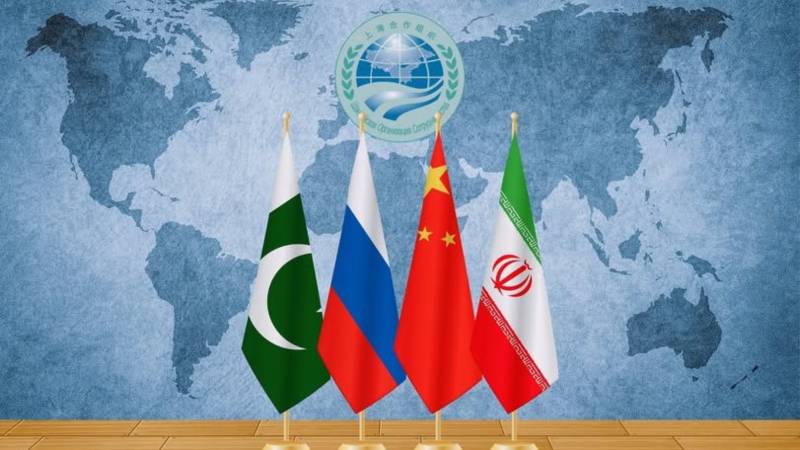
Nations come and go; history has seen the collapse and formation of many borders, with countries disappearing. Pakistan is a young nation amongst the 192 countries we have today. For Pakistan to remain strong, intact and viable, it must strengthen itself first; simultaneously secure its friends in the neighbourhood. This means mutually assured development. Mutually assured security. A common future of success and opportunities for Pakistanis, Iranians, Central Asians, Russians and Chinese. This was the mirage which is now more than a possibility.
Educated Pakistanis, with two functioning ports feeding China, Russia and Central Asia, while their educational systems and skills training and discipline teach us the way forward. Pakistan’s security establishment can offer its umbrella westwards to stave off potential threats as well. What is critical is that Pakistan secures its citizens’ security internally.
This cannot happen with pretorian or draconian measures of oppression. Some have argued for a presidential (one-man control) system in Pakistan in light of the growing militarisation of governance in Pakistan. In this undemocratic measure, they dishonestly suggest this is the Chinese model.
China’s model was based on bottom-up meritocracy and service delivery, and investment in human development of every Chinese. In fact, education and women’s emancipation from gendered roles were perhaps the first investments the Chinese made to ‘break the shackles’ of mental and physical slavery, releasing the potential of China for all to see.
When Pakistanis use the phrase ‘Chinese model’, they have no intention to replicate the investment in human development and the devolution of genuine power to the union council levels; rather, to legitimise consolidated power in one man’s hand like a monarch. This is not the way to release the potential of 250 million Pakistanis who are semi-literate and challenged by a myriad of issues, the least of which is a lack of a common national purpose.
Both Iran and China are civilisational nation-states; they have thousands of years of ‘who they are’. Pakistan has yet to allow that conversation to happen amongst its many people. Without that freedom to do so, it will remain a challenge whether we have a common future or whether we are in it together.
Improving our relationships with Iran, Russia and China will help us in that challenge as well.
Pakistan shares a Persian and Turkic heritage as it is. Developing a network of transportation between our countries, which would enable trade, tourism and two-way opportunities for growth, will only help all of us more.
Pakistan has played the B team for the Arabs for too long. Today, we have an opportunity to pivot and think about Pakistan first and our own interests without sacrificing our linkages and friendships in most of the Gulf states.
In putting the welfare of the people at the centre of policymaking, everyone benefits in our region. Long-standing irritants and disputes between Iran and Turkey, and Turkey and Russia, will also have to be addressed for the greater good of all. This sounds naïve and unrealistic in the past, but today we stand at a point in history which has provided an opportunity to make this dream come true.
The Foreign Minister Araghchi’s travels to Pakistan, Oman, Russia, and speaking to the Saudis and China, always in the loop, have really triggered hope that this regional realignment and integration is a real opportunity.
Mutually assured prosperity. Together we stand stronger. Will we see this happen? I hope so.